

The Queue for a Perfect Shot
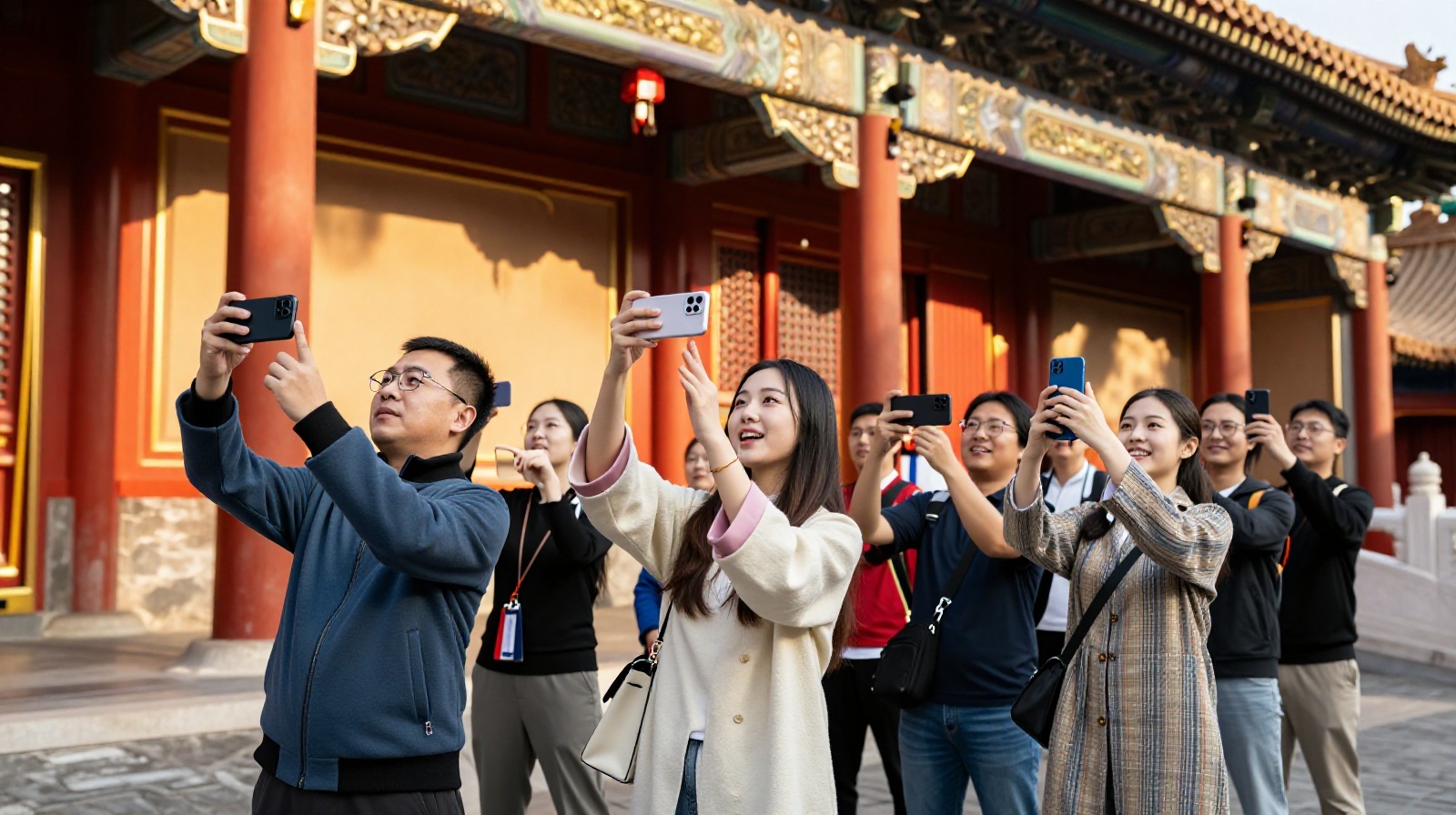
It’s mid-morning at the Forbidden City in Beijing. The crowds are thick, but not everyone is looking up at the ancient eaves or listening to the guide’s history lesson. Instead, hundreds of people are crouching low, holding smartphones high above their heads, and clicking shutter sounds that echo like rain.
I watch a young woman from Shanghai spend ten minutes adjusting her stance in front of a red pillar. She isn’t posing for a stranger; she is composing a shot to post on WeChat Moments later that evening. When she finally takes the picture, she smiles, shows it to her friend, and then immediately moves on. The moment was not about seeing the history; it was about capturing proof that they were there.
If you come from the US or Europe, where travel is often framed as a private journey of self-discovery, this behavior can seem puzzling. Why document so much? Why share with such intensity? The answer lies in a different relationship between memory, social connection, and digital life.

The Digital ‘Check-In’ Culture
In the West, you might take a photo to remember a trip. In China, taking a photo is often a prerequisite for the experience itself. This is driven by platforms like WeChat and Xiaohongshu (Little Red Book), which function as both social networks and lifestyle guides.
When Chinese travelers visit a cafe in Chengdu or a museum in Xi’an, they are participating in a ritual known as ‘daka’ (打卡). The term literally means to clock in. It’s the digital equivalent of stamping a passport, but for life events. If you don’t post a photo with the right location tag and aesthetic filter, did the experience really happen?
This isn’t just about vanity. For many, sharing a ‘daka’ moment is a way of saying, “I am here, I am part of this culture, and I can afford to enjoy it.” In a society that values collective identity, these photos serve as social currency. They signal membership in the modern middle class and connect individuals to their peer groups.

Collecting Moments vs. Living Through Them
There is a famous observation: Western tourists often say, “I’m here to experience the moment.” Chinese tourists often seem to think, “I need to collect the evidence of the moment.” This isn’t an either-or choice; it’s a different way of processing reality.
Consider a family dinner at a hot pot restaurant in Chongqing. The steam rises, the spicy broth bubbles, and friends laugh. In China, before anyone eats a single piece of meat, someone pulls out their phone to film the bubbling pot or snap a picture of the entire table’s spread. This is not ignoring the food; it is honoring the social gathering.
The photo becomes a tangible anchor for a fleeting memory. In a rapidly changing society where cities transform and lifestyles shift in years rather than decades, these digital archives provide a sense of continuity. They prove that life is moving forward, but also that you are present in this specific time and place.

From Self-Expression to Community Belonging
The psychology behind the shutter click has evolved. Twenty years ago, a camera was a tool for personal memory. Today, a smartphone is an extension of social identity. The ‘like’ button on WeChat or Xiaohongshu provides immediate feedback and validation.
This shift reflects a broader cultural move from individualism to what sociologists might call “networked individualism.” Your experiences are valid and meaningful because your network sees them. A photo of a child learning to ride a bike in a park isn’t just for the parents; it’s a broadcast to grandparents, cousins, and friends that says, “Look at our family life. We are happy.
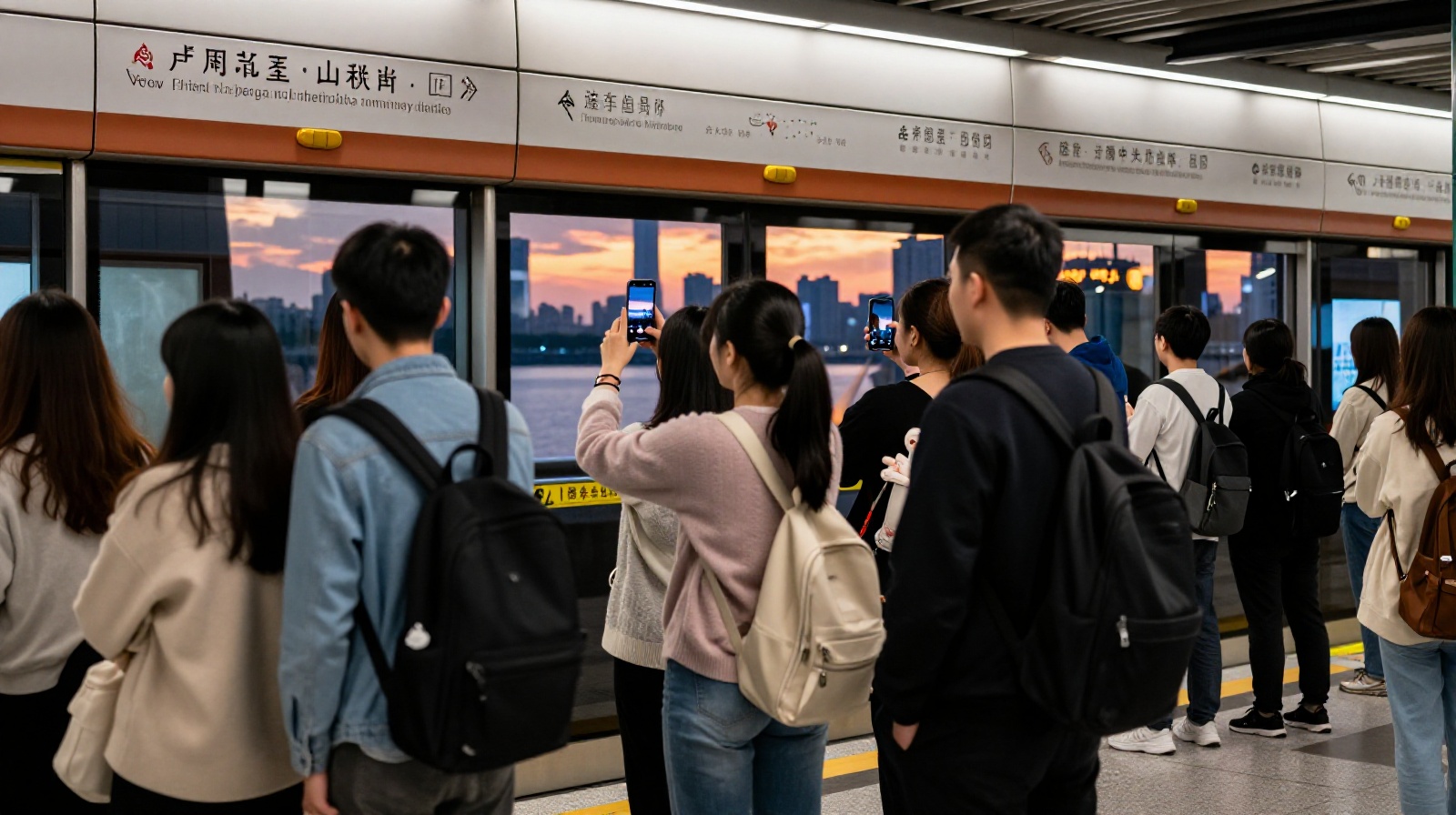
Even during daily commutes on the subway or waiting in line at a hospital, Chinese people capture scenes. It’s not always about grand landscapes. Sometimes it’s a beautiful sunset over a construction site, a stray cat sleeping in a market, or a delicious bowl of noodles from a street vendor. These small snapshots stitch together a narrative of daily life that feels shared and real.
Why It Matters to Understand
When you see Chinese tourists taking dozens of photos, don’t mistake it for superficiality. It is a complex social behavior rooted in how modern China navigates the tension between rapid change and personal connection.
The photo is not just an image; it is a message. It says, “I was here,” “This matters to me,” and “We are connected.” For foreign visitors, recognizing this intent can transform their view of Chinese tourism from a confusing habit into a fascinating window into how people in China construct meaning, build community, and celebrate life in the digital age.