

Beyond the Stereotypes: Life on Lugu Lake
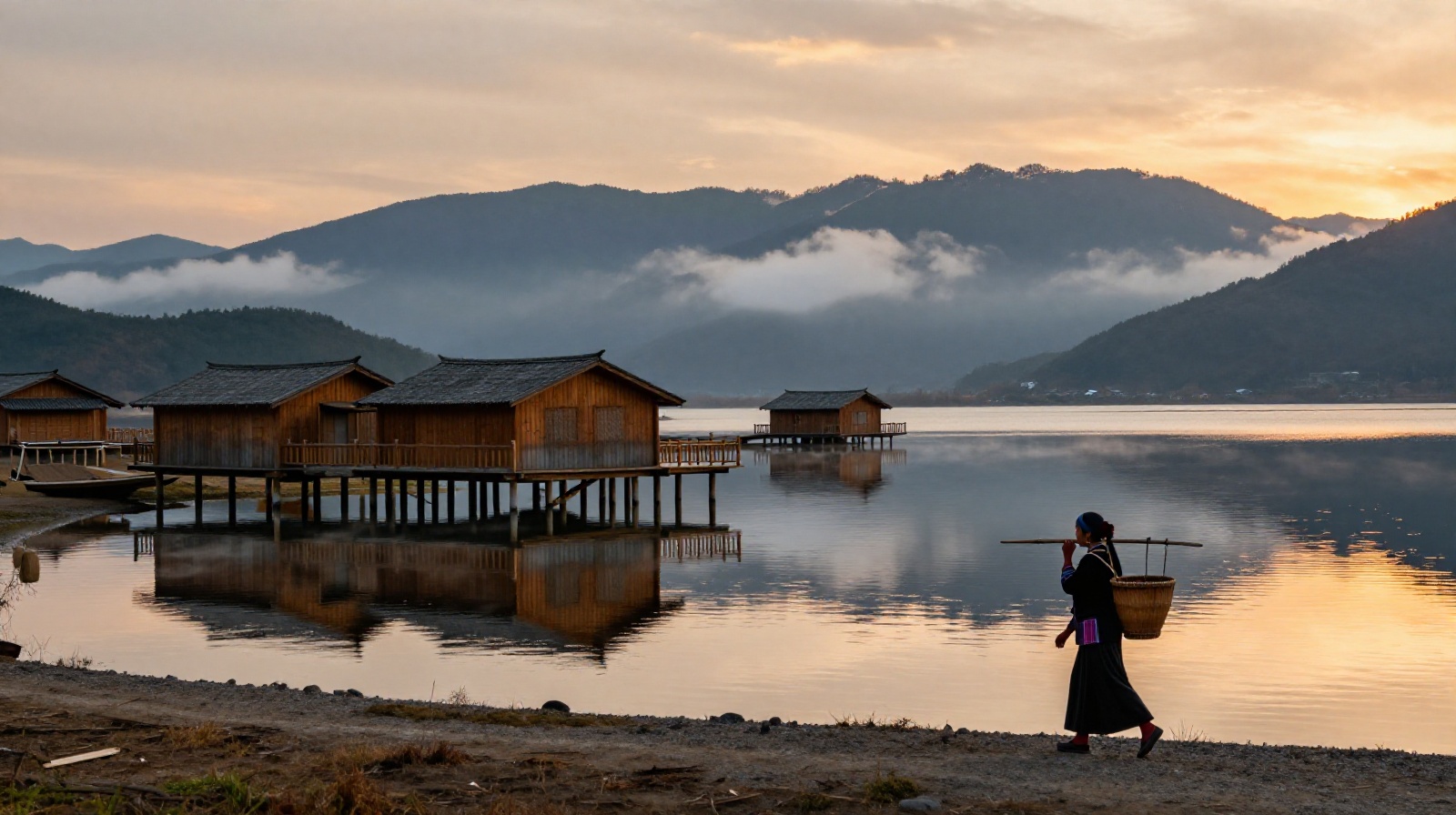
Most people picture China as a sea of high-speed trains, neon-lit skyscrapers, and bustling megacities. But if you drive an hour from the nearest major city to the edge of Lugu Lake in Yunnan Province, that image dissolves into mist-covered waters, wooden stilt houses, and a society that operates on rules completely different from the rest of the country.
Here lives the Mosuo people, an ethnic group often described as “matriarchal.” For decades, outsiders have been fascinated by their customs, sometimes misinterpreting them through a lens of exoticism or misunderstanding. But stepping into a Mosuo home reveals something far more grounded: a functional, stable family system built on cooperation rather than romantic obligation.
What Does “No Marriage” Actually Mean?
The most common question outsiders ask is simple: “How do they raise children without fathers?” The answer lies in their traditional custom of zouhun, or “walking marriage.”
In the Mosuo system, men and women are not legally married to each other. They do not live under the same roof as a couple. Instead, a relationship is formed through visits at night; a man might visit his partner’s home, stay the evening, and return to his own mother’s house before dawn.
Crucially, there is no shared household economy. A man does not support his children with money from his own wallet in the traditional sense; instead, he supports his sisters’ children (his nieces and nephews) within his own maternal family. The child belongs to the mother’s family. The mother, her brothers, and other female relatives raise the child together.
“My father was a kind man who visited my mother sometimes,” says Tashi, a 30-year-old local teacher. “But I grew up knowing that my uncles were the ones who fixed my bike, paid for my school books, and taught me how to fish. In our culture, ‘father’ is not just about biology; it’s about who shows up every day.”
Women at the Center of Power
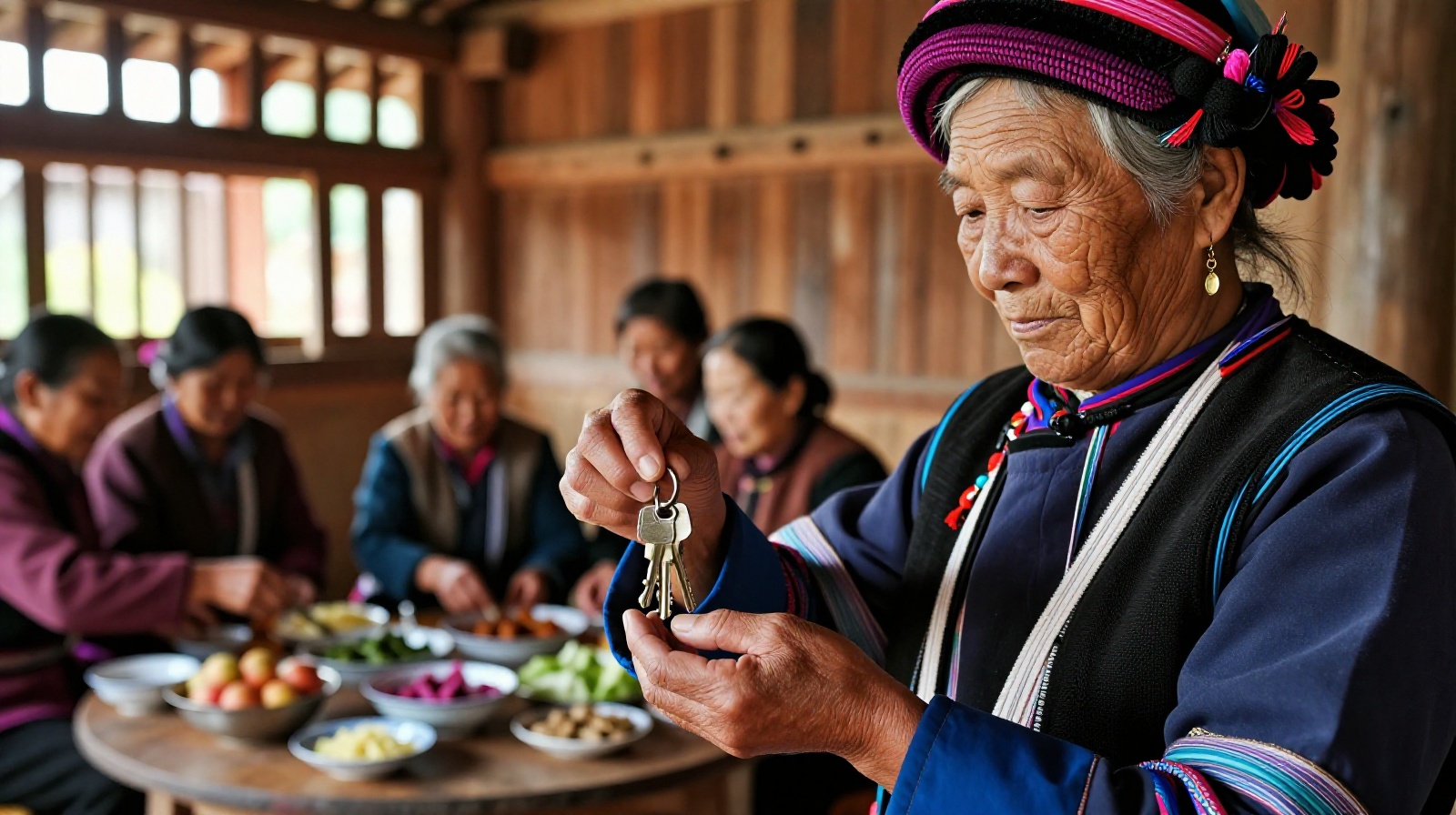
This isn’t a society where women are merely “respected” in a polite sense; they hold structural power. The Daba, or matriarch, is usually an older woman with deep wisdom and experience. She manages the family’s finances, decides how resources are distributed, and often holds the keys to the main gate.
In a Mosuo household, property does not pass from father to son. It stays within the maternal line. If a mother dies, her daughters inherit the house, the livestock, and the land. Brothers work alongside their sisters but do not claim ownership of these assets. This system ensures that wealth never leaves the family unit, preventing the fragmentation of resources that often happens in patriarchal inheritance models.
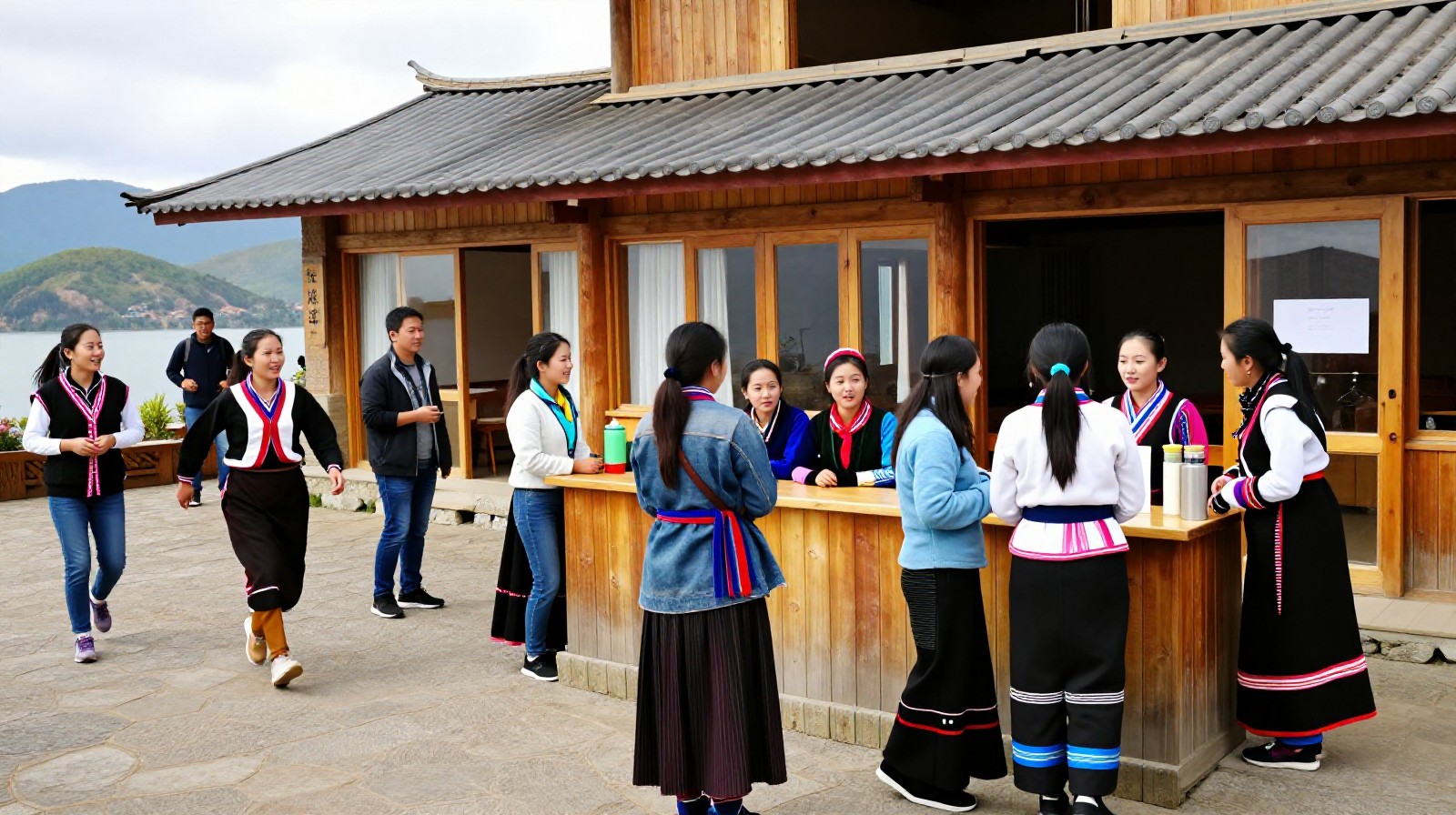
When you walk through the village of Shuimu (Water Village), you’ll notice women doing most of the heavy lifting—not just metaphorically. They run the guesthouses, manage the daily accounts for tourists, and lead the community festivals. The social structure is designed to protect them from economic instability in old age.
Modern Waves and Cultural Resilience
Lugu Lake is no longer isolated. With a new highway connecting it to the mainland, tourism has exploded. Today, you can find high-speed internet in local guesthouses and young people returning from cities like Lijiang or Kunming. This modernization brings challenges.
Some younger Mosuo are questioning traditional zouhun. Marriage is becoming more common among the youth, influenced by Han Chinese culture and the desire for legal recognition of relationships. Some families have shifted to monogamous marriages where couples live together, blending the old ways with new realities.
Yet, the core value remains: the family comes first. Even in mixed households, many Mosuo women retain significant influence over household decisions. The culture isn’t a frozen museum exhibit; it’s a living, breathing system that adapts while holding onto its heart.
A Window into Diversity
Visitors often come expecting to see “primitive” customs or performative rituals. Instead, they find a community grappling with the same issues as anyone else: how to balance tradition with progress, how to raise happy children in a changing world, and how to maintain dignity in the face of globalization.
The Mosuo story challenges the idea that there is only one way to organize a family. In a world where divorce rates are high and single-parent households struggle for support, the Mosuo model of collective childcare offers a compelling alternative perspective. It reminds us that social structures are flexible, not fixed laws of nature.
As I sit in a wooden lodge overlooking the lake at sunset, watching a group of young women laugh as they prepare dinner while their brothers play with children nearby, it becomes clear: this isn’t just about “women ruling.” It’s about a society that chose stability, community, and mutual care over rigid gender roles.