

The Morning Ritual in Concrete
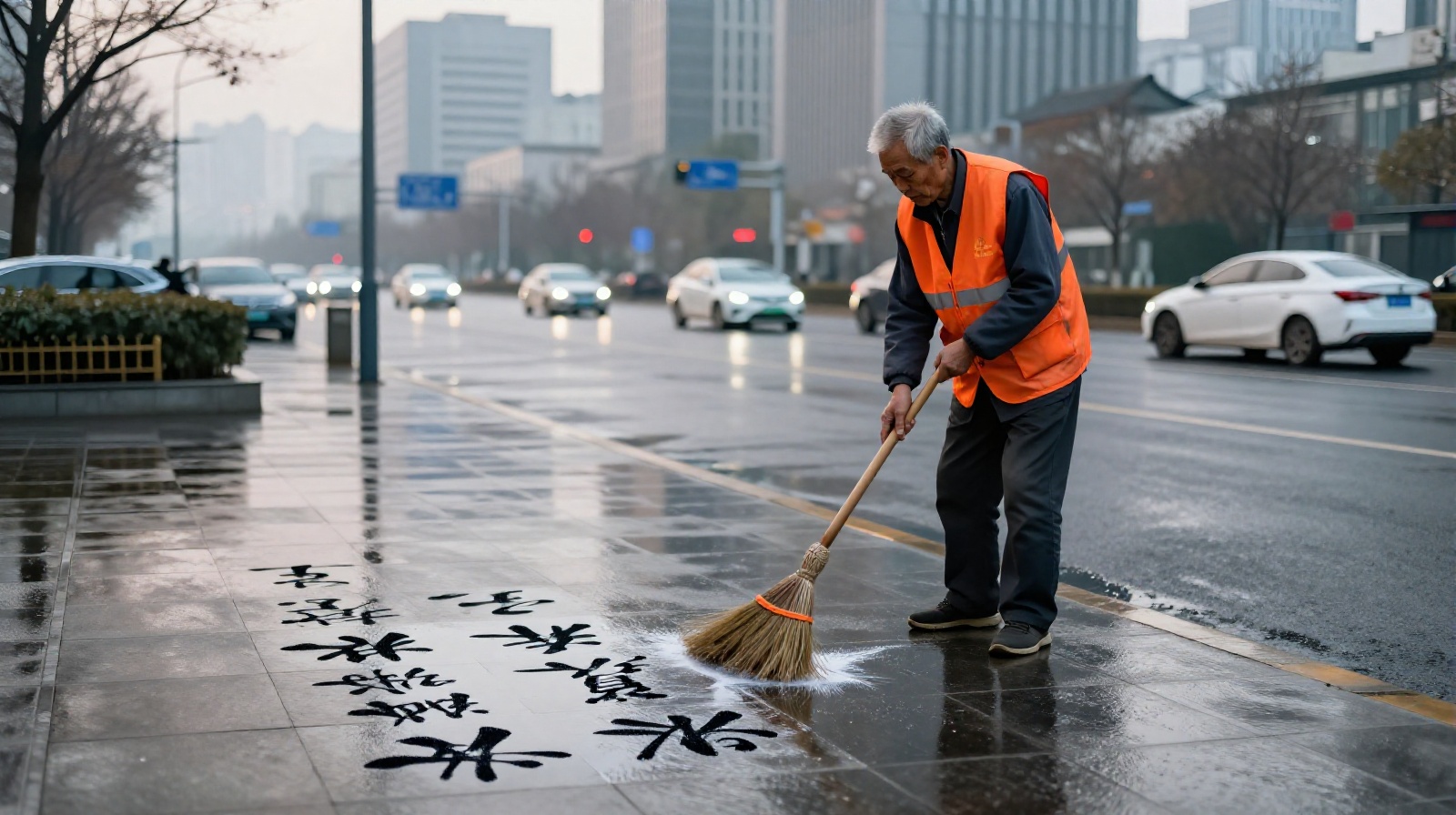
At 6:15 AM, the air in downtown Shanghai is still cool and smells of damp asphalt. The streetlights flicker off one by one as the first delivery scooters buzz past. Here, amidst the silence before the rush hour, Li Wei sweeps the sidewalk with a rhythm that sounds like a slow drumbeat. He isn’t just cleaning; he is writing.
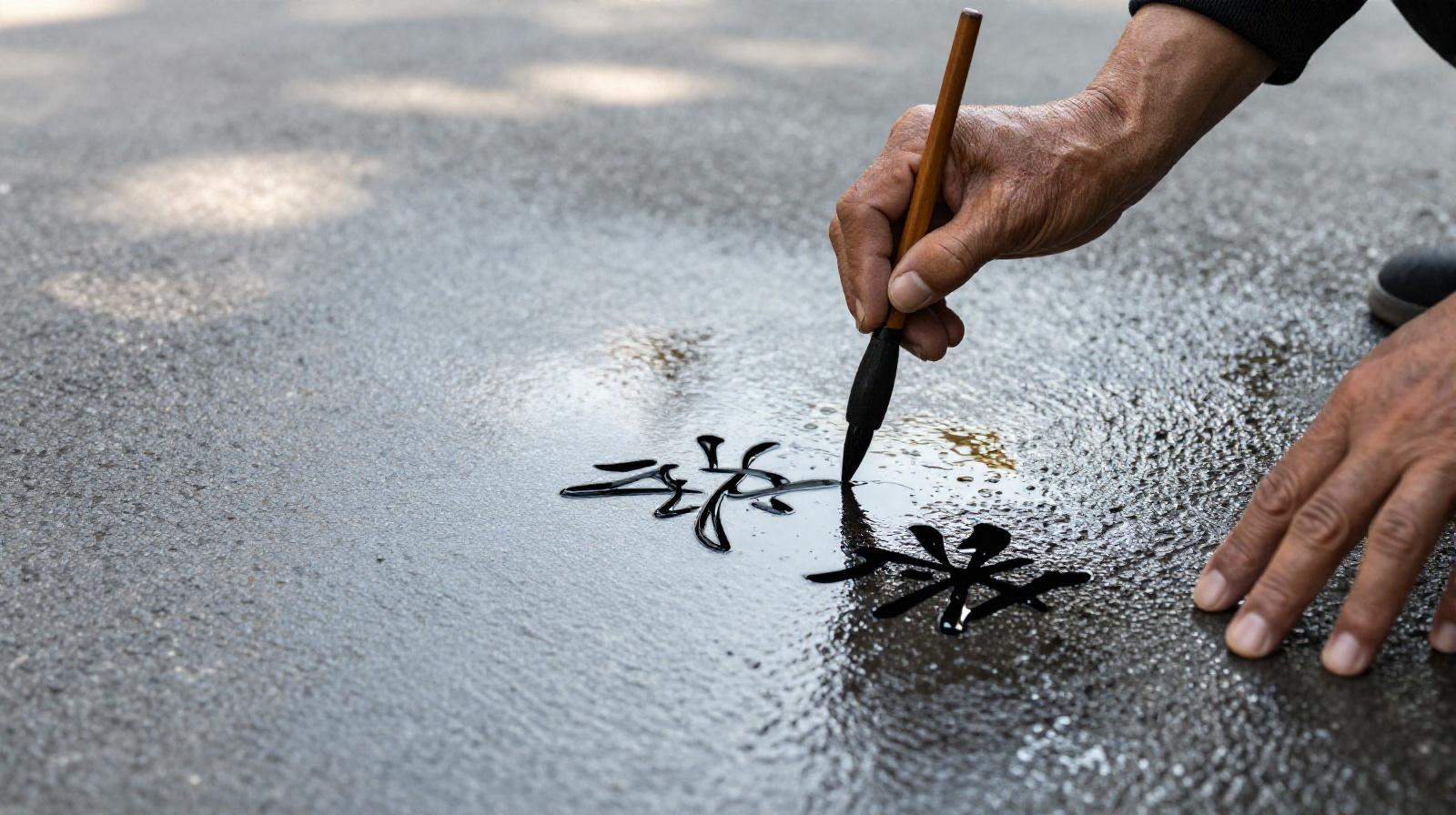
Li, 68, wears a faded orange vest and a cap pulled low over his eyes. His broom, stiff bristles worn down from years of use, glides across the concrete. But before he sweeps away the dust, he dips a small bucket into a nearby fountain. With a steady hand, he draws characters on the wet pavement. These aren’t random strokes. They are lines from Tang Dynasty poetry or original verses about the morning mist and passing birds.
Art in the Public Eye
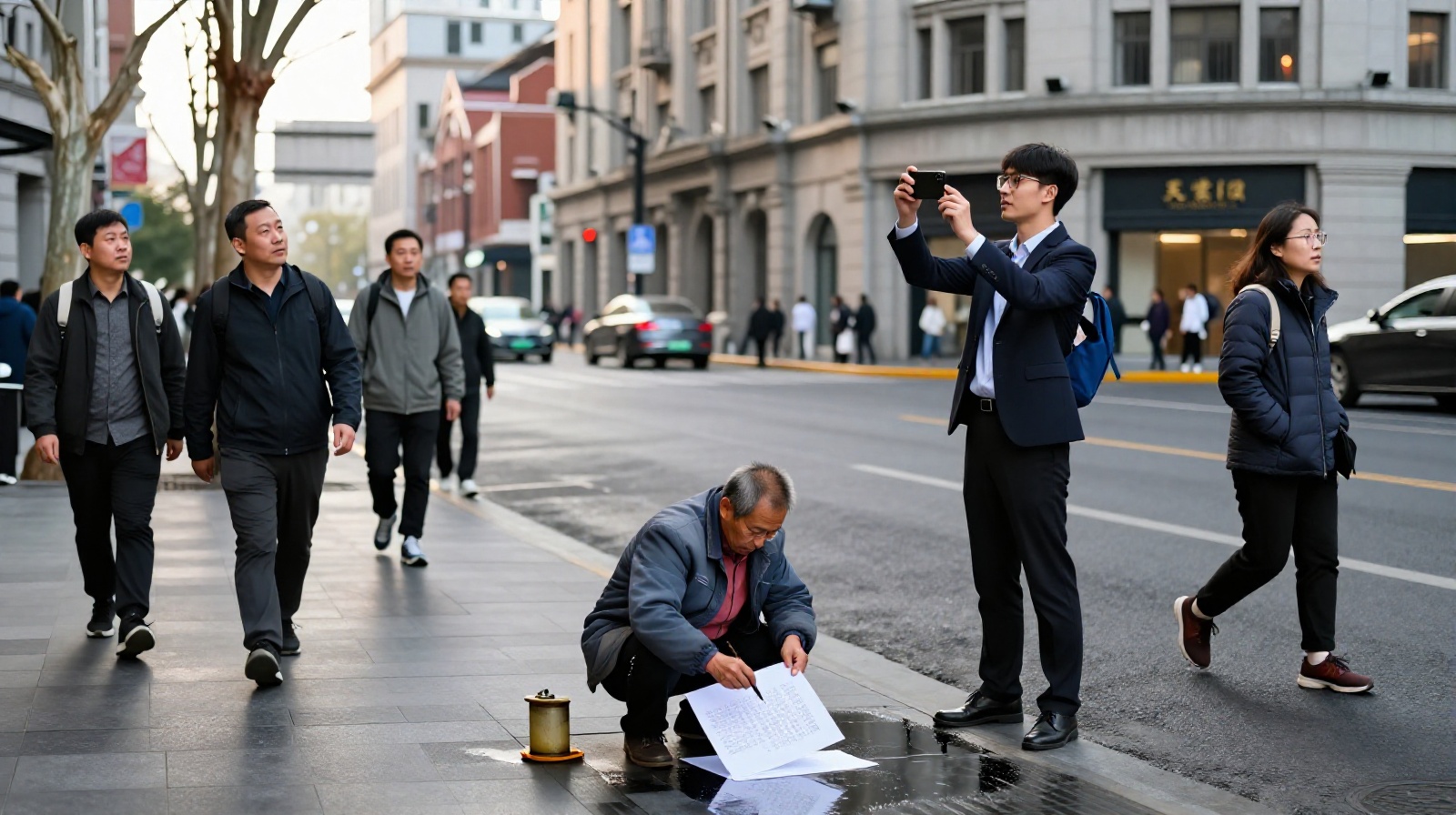
For most commuters rushing to the subway, Li is invisible—a background figure in their daily commute. But for those who slow down, his work reveals a surprising layer of urban culture. A young office worker once paused to photograph Li’s latest poem: “The moon sleeps, but the street sweeper wakes.” The image went viral on social media, sparking debates about what it means to find beauty in routine labor.
Li doesn’t see himself as an artist. He grew up in a rural village where poetry was recited by candlelight during festivals. Now, he says, the city is his classroom. “The ground is my paper,” he explains, wiping sweat from his forehead. “The water is my ink. When the sun hits hard, the poem disappears. That’s the point. It’s meant to be fleeting, like life itself.”
Beyond the Stereotype
Western media often portrays Chinese laborers as faceless cogs in a massive industrial machine. Li Wei challenges this narrative. His story is not about economic statistics or rapid urbanization; it’s about human dignity and the quiet resilience of ordinary people. In a city where efficiency reigns supreme, his act of “wasting” time to write poetry feels like a gentle rebellion.
Locals have begun to respect him more than before. Some leave small bottles of water near his bucket. Others simply nod as they pass. A nearby café owner even started offering free tea to Li every morning, calling it a “tax for the city’s soul.” This interaction highlights a shifting dynamic in modern Chinese society: the growing recognition that creativity and meaning are not reserved for the elite, but exist in the margins of daily life.
The Fleeting Legacy
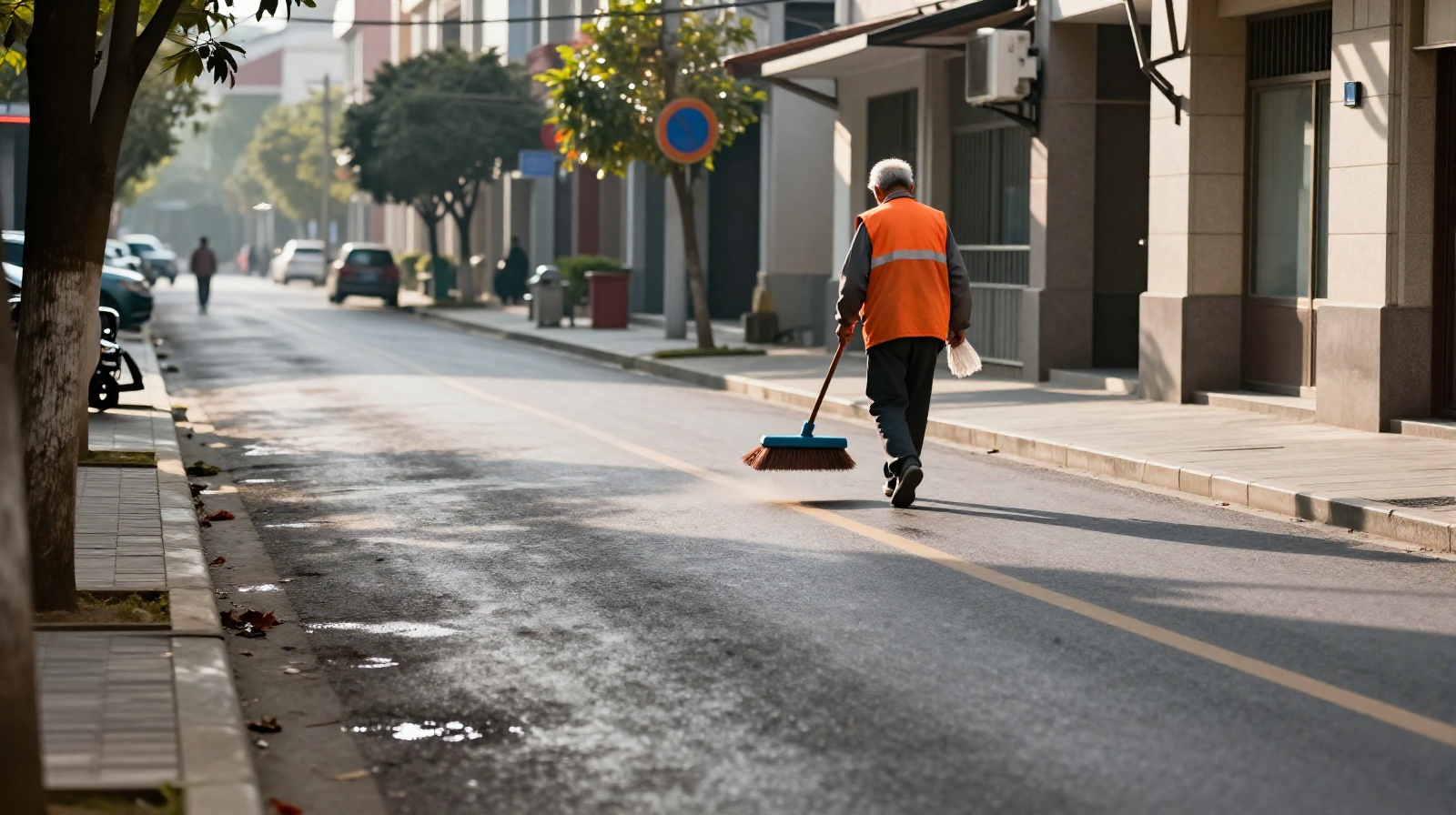
By 8:00 AM, the sun is high, and Li’s poems have evaporated into thin air. The street is clean again, ready for the next wave of traffic. Yet, the memory of those words lingers in the minds of those who saw them. In a world obsessed with permanence—digital posts that never delete, buildings that stand for centuries—Li offers a different philosophy.
He teaches us that art doesn’t need a gallery or a price tag. It just needs a moment of attention and a willingness to see the extraordinary in the ordinary. As he sweeps away the last traces of his morning’s work, Li smiles. “Tomorrow,” he says, “I will write again.”