

When the Streetlights Hum: A Mid-Night Experiment
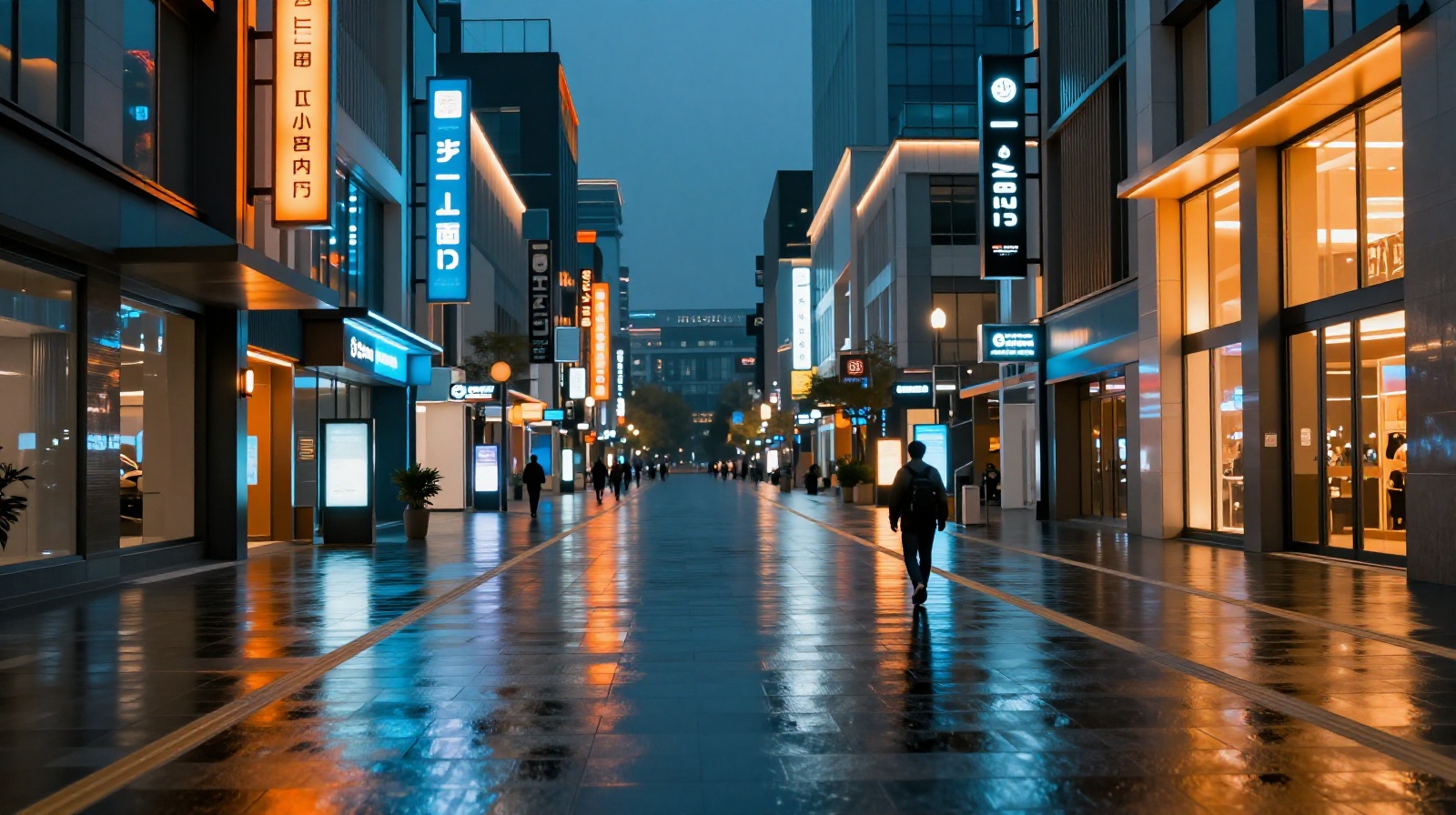
The air in Shenzhen tastes like salt and fried dough. It’s just past midnight, but the streets of Nanshan District are not empty. They hum. The neon signs of convenience stores cast a cool blue glow on wet pavement. I adjust my scarf against the coastal humidity and start walking. This isn’t a tourist trail; it’s a random walk to test a question that often comes up in Western media: Is China safe at night? To answer this, I need more than statistics. I need to see how people actually live when the sun goes down.
Shenzhen: The City That Never Sleeps, Literally
In Shenzhen, the concept of “night” feels different. It’s 12:30 AM in Nanshan, and a delivery rider on an electric scooter weaves through traffic with practiced ease. He checks his phone, not for orders, but to check the weather app before heading to his next stop.
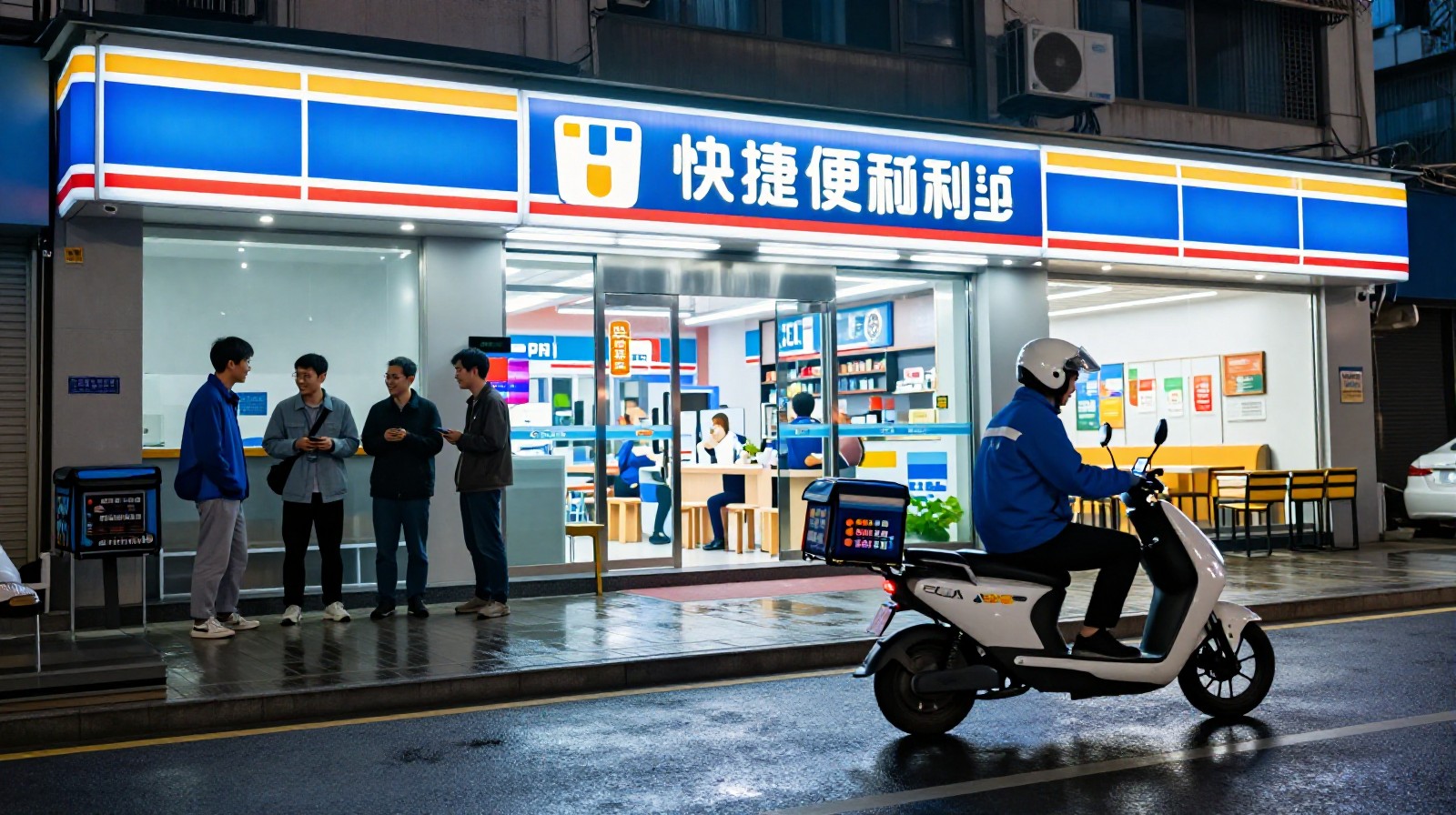
The streetlights here are bright—so bright they sometimes feel clinical. But it’s the people that tell the real story. A group of young engineers is still out near a coffee shop, laughing about code. A security guard in a crisp uniform nods at me as I pass. There’s no tension, just the routine energy of a city built on speed and efficiency. The only “danger” here is stepping into traffic too quickly. In Shenzhen, safety feels less like a law and more like a default setting.
Chengdu: Nightlife That Feels Like Home
By the time I reach Chengdu, the vibe shifts from high-tech to slow-burn. It’s 1 AM in Tianfu Square. The air is thick with the scent of chili oil and hot pot steam.
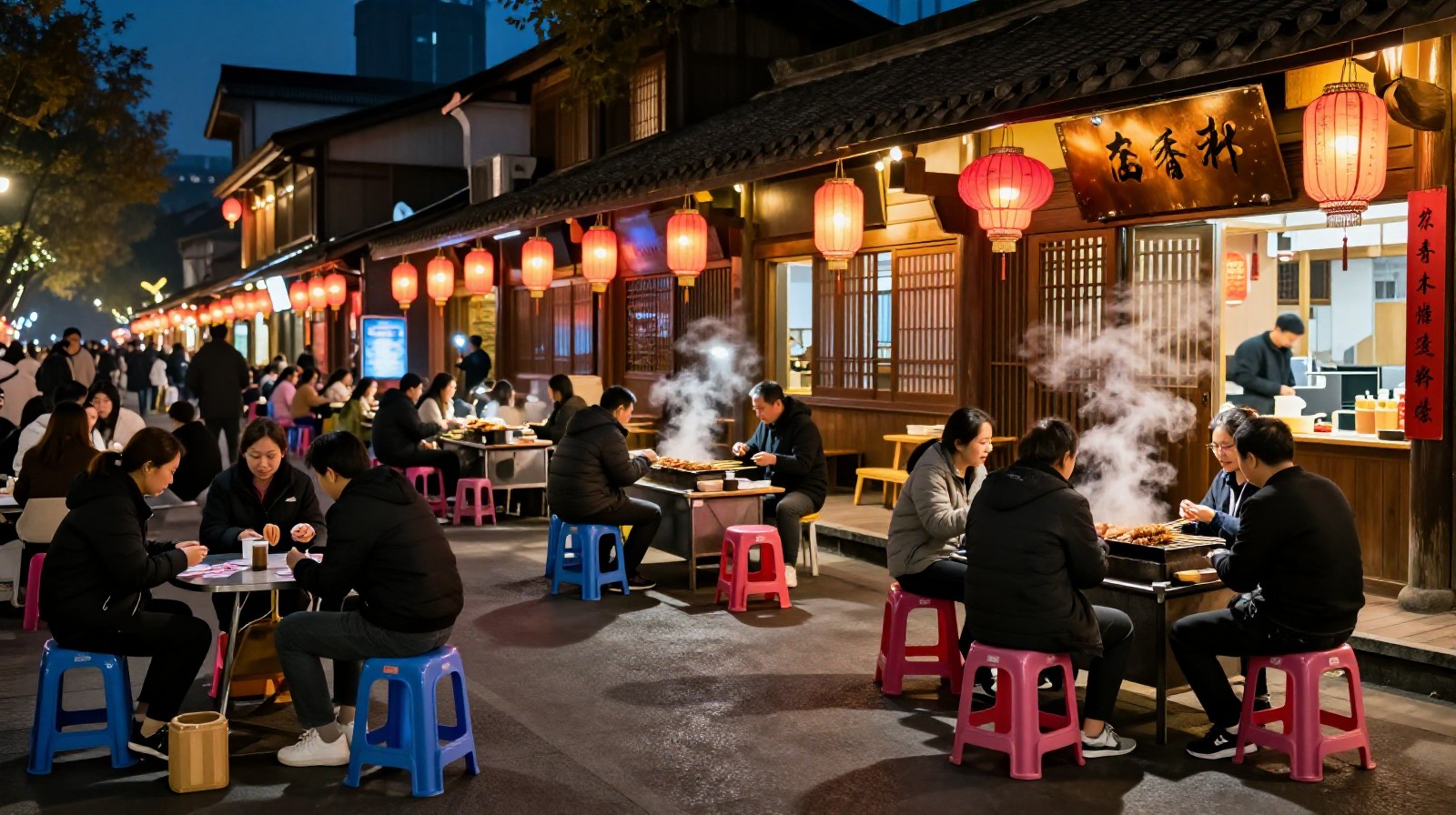
Here, the night doesn’t end; it transforms. Street vendors are still grilling skewers, their flames dancing under red lanterns. I see a group of locals playing cards on a plastic stool outside a tea house, shouting over the noise of the city. A police officer is sitting calmly at a small booth nearby, chatting with a vendor. It’s not a performance; it’s just part of the neighborhood.
The safety here feels organic. You don’t need to look over your shoulder because everyone seems to know their neighbors. The lights are warmer, softer than Shenzhen’s clinical white. Even when I felt a bit lost in a maze of old alleys, a passerby stopped to give directions with a smile. In Chengdu, the night is safe because it feels familiar.
Xi’an: History Under Modern Lights
Xi’an at midnight is a collision of eras. The ancient city walls loom in the dark, but the modern district nearby is ablaze with LED screens and smart streetlights.
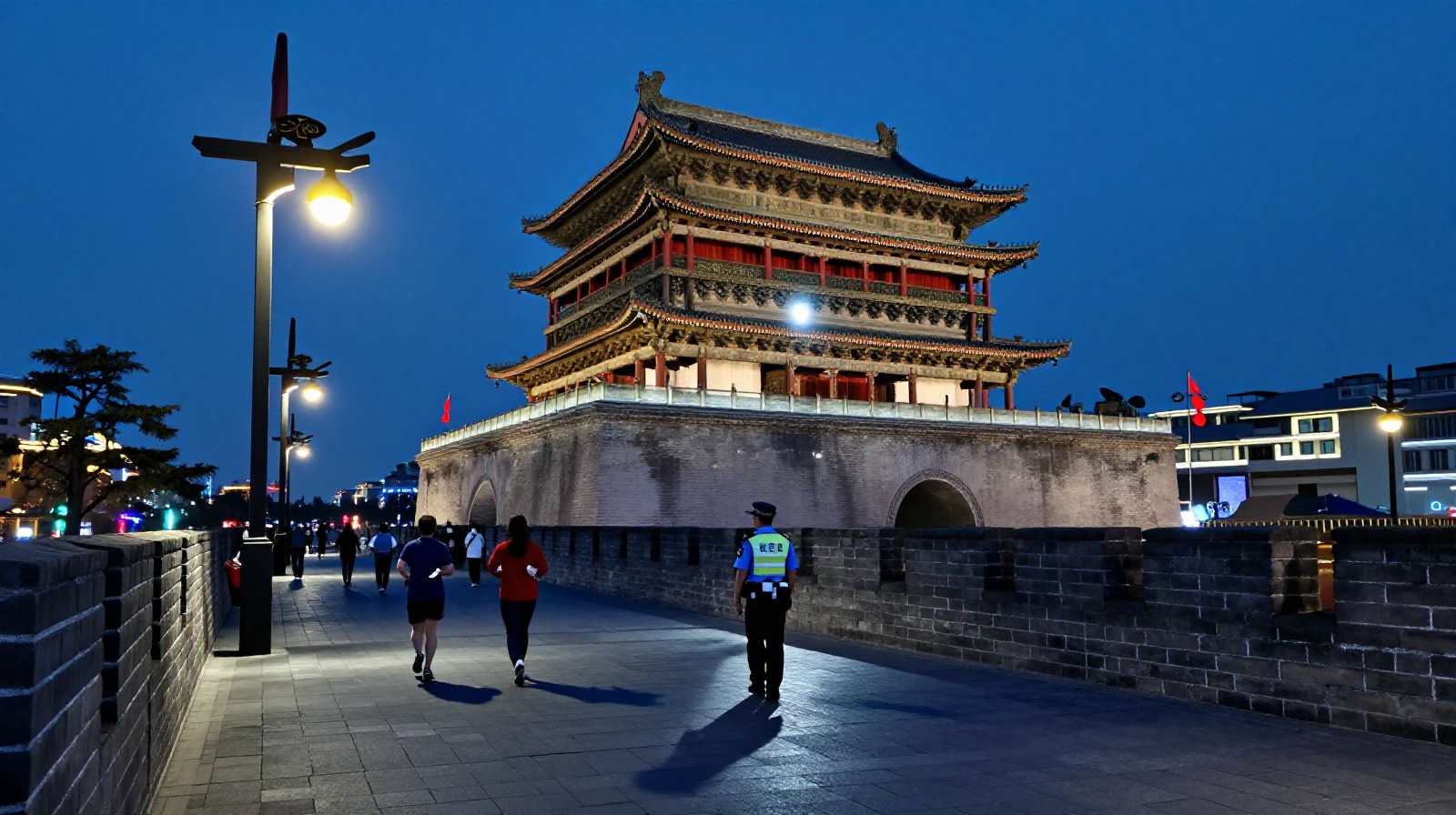
I walked near the Bell Tower. It’s not just a tourist spot; locals are jogging on the wide sidewalk, listening to podcasts or music through earbuds. The police presence is visible but unobtrusive—officers patrolling on foot in uniform, checking IDs with a casual wave. I noticed something interesting: even in quieter corners, there were still people out. A woman walking her dog, a couple strolling hand-in-hand.
The safety here feels historical and modern at once. The city is watched over by both ancient walls and new technology. It’s not about fear; it’s about the comfort of knowing that help is always nearby, whether it’s a neighbor or a smart camera system.
Shanghai: The Neon Jungle That Never Sleeps
Shanghai at midnight is a different beast entirely. In Pudong, the skyscrapers pierce the sky, and the streets below are wide, clean, and eerily quiet compared to other cities.
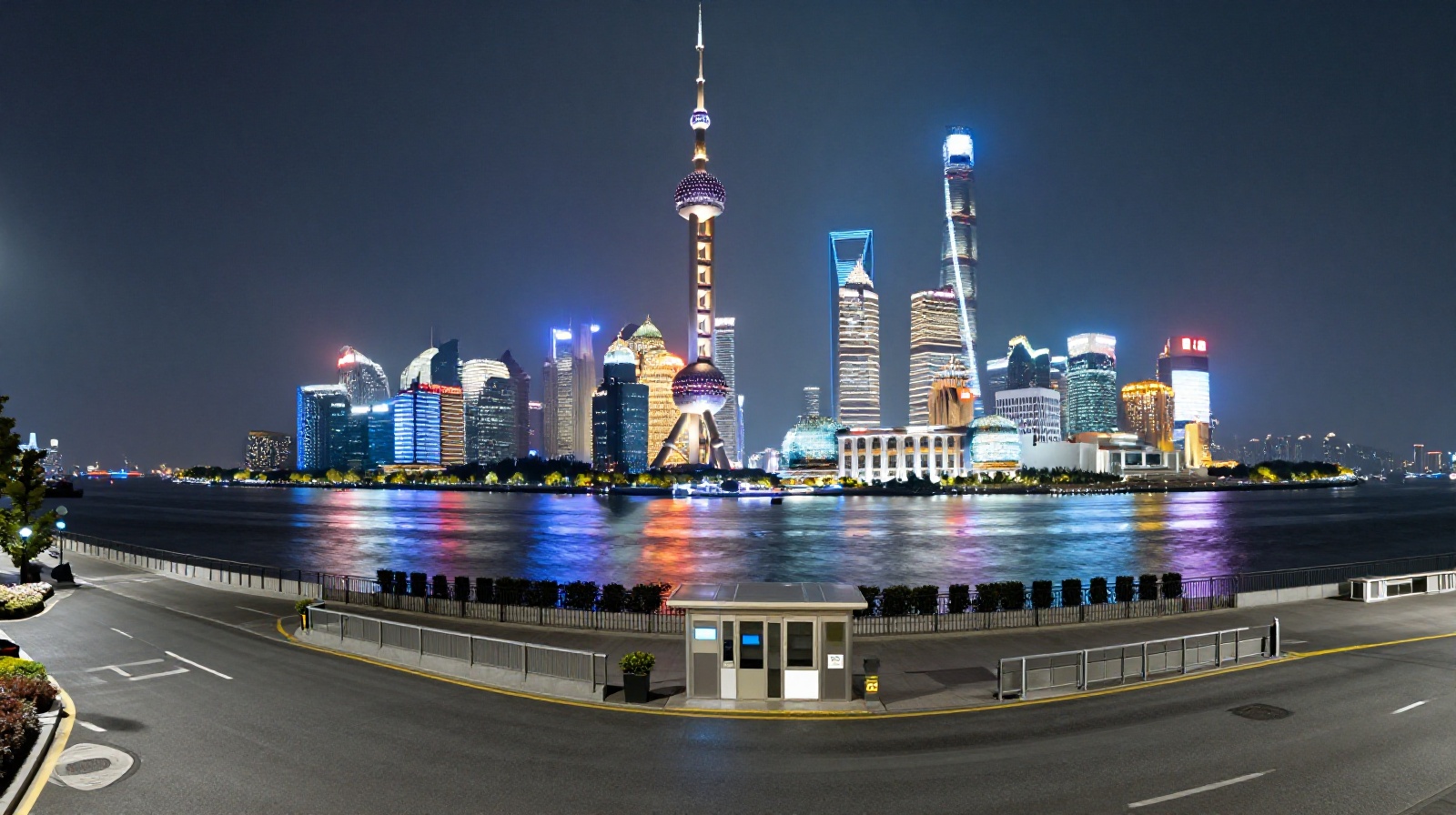
I walked along the Bund. The lights reflect off the Huangpu River, creating a mirror image of the skyline. It’s 1:30 AM, and I’m one of very few people out. But there’s no sense of isolation. A security guard in a high-tech booth monitors the area via screens that cover multiple blocks.
The safety here is structural. The city is designed for order. Streetlights are perfectly spaced, cameras are everywhere, and the streets are clean enough to eat off. Yet, it feels less “human” than Chengdu or Xi’an. It’s a safe, sterile environment where life moves fast even at night.
Harbin: The Silent Snowy City
Finally, I arrived in Harbin. It was 1 AM in January. The temperature was -20°C. The air was so cold it burned my lungs.
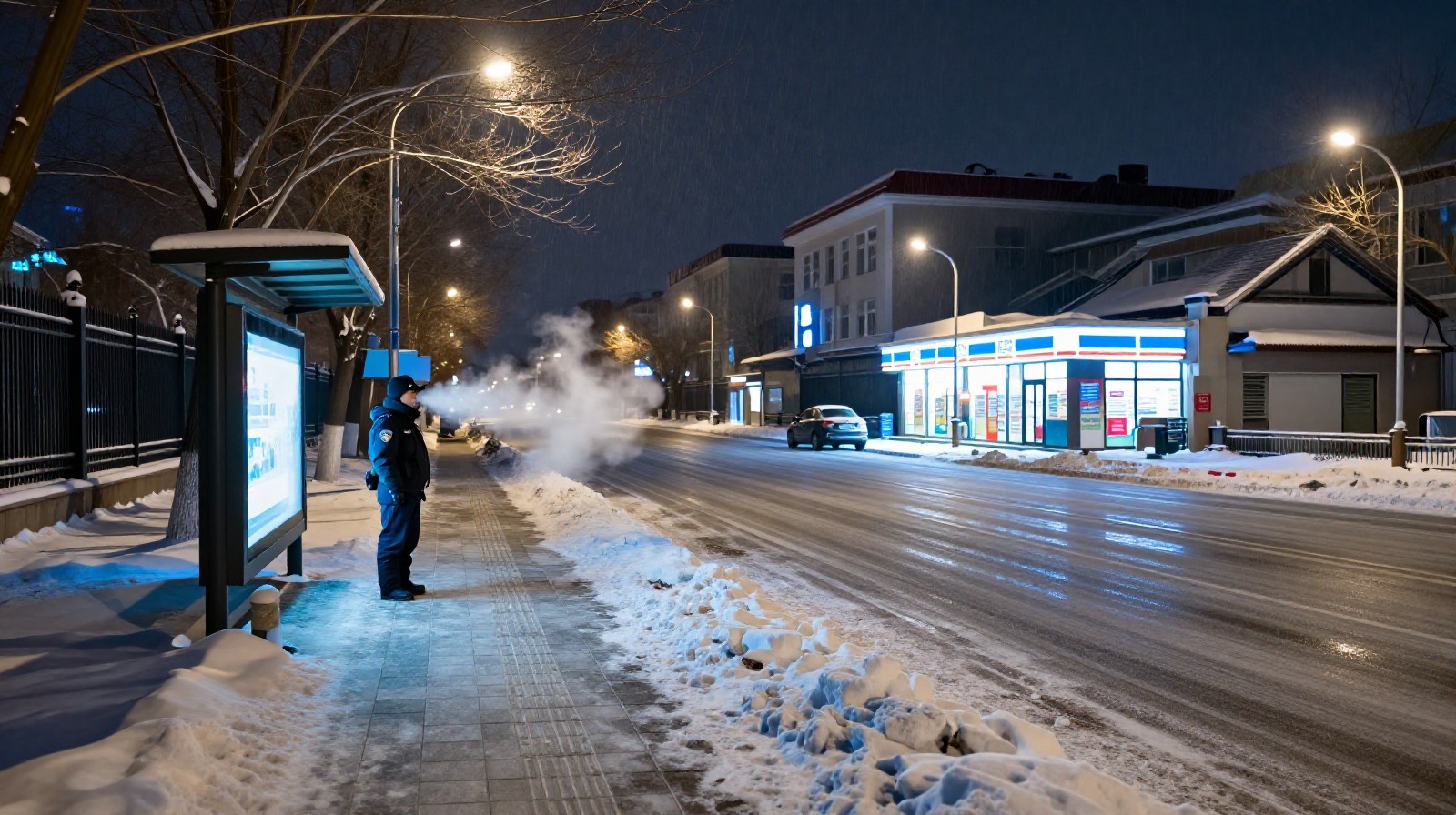
Snow covered the streets, muffling sound. Most shops were closed, but a few convenience stores glowed like beacons in the dark. A lone police officer stood near a bus stop, his breath visible in the freezing air. He smiled at me and said, “Be careful, it’s slippery.” Simple words, but they carried weight.
The safety here is different—it’s about survival against nature. The city is quiet, almost lonely, but not unsafe. People who are out are there because they have to be. In Harbin, the night feels safe because everyone knows the cold can be dangerous, and that shared awareness creates a kind of community.
What I Learned: Safety Is Not One Thing
After walking these five cities, I realized safety in China isn’t a single concept. It’s a mix of technology, culture, geography, and daily habits. In Shenzhen, it’s efficiency. In Chengdu, it’s community. In Xi’an, it’s history meeting modernity. In Shanghai, it’s structure. In Harbin, it’s resilience against nature.
There were no incidents. No one approached me with malice. The streets were lit, the people were present, and the police were visible but not intrusive. This doesn’t mean China is perfect—every city has its challenges—but for a solo traveler at midnight, these places felt remarkably safe.