
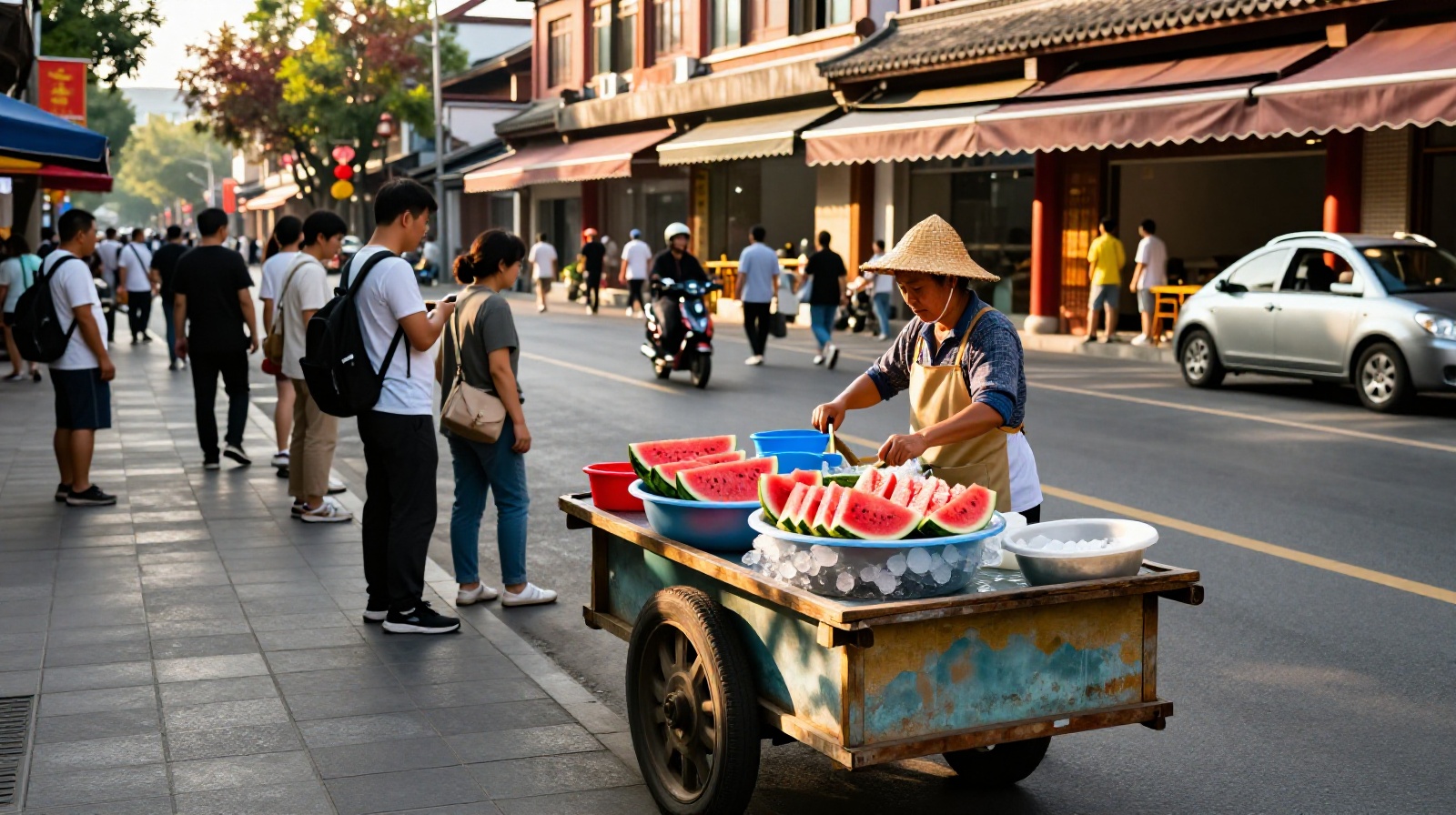

A Street Corner in July
It is just after noon, and the sun hangs heavy over a narrow alley in Shanghai. The air shimmers with heat, carrying the scent of frying oil from a nearby breakfast stall that has turned into a lunch spot. A man pushes a wooden cart with metal wheels down the sidewalk. He stops, sets down a plastic basin filled with water and ice cubes. With a swift motion, he pulls out a round, dark-green fruit wrapped in a damp cloth.
“Watermelon?” a customer asks, wiping sweat from his forehead.
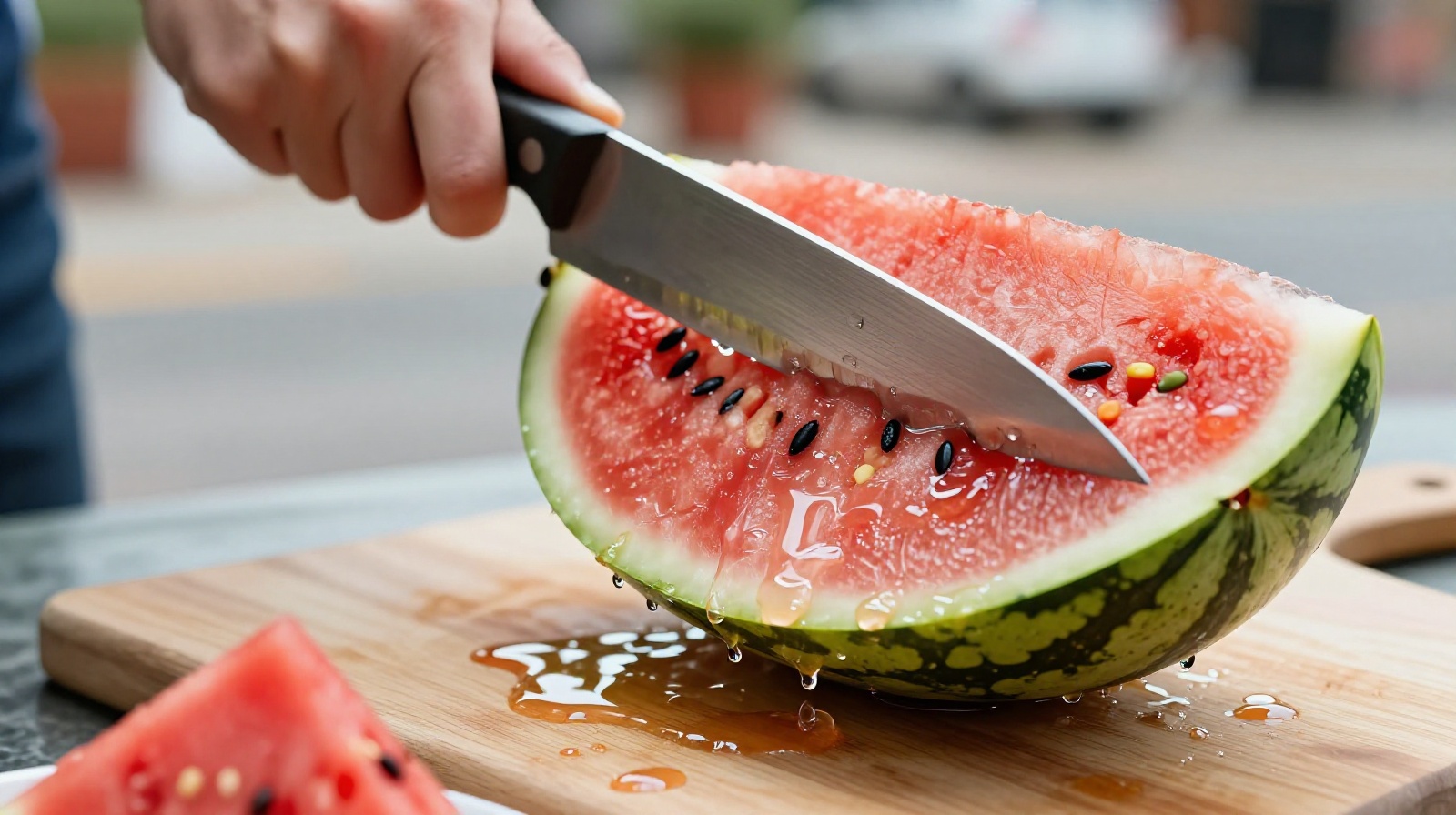
“Ice cold,” the vendor replies without breaking rhythm. He slices it open on a wooden board. The sound is sharp and crisp—like cracking glass. The red flesh glistens under the harsh sunlight, sending up a faint mist of condensation.
This scene plays out in thousands of cities across China every summer. From Beijing to Guangzhou, from Chengdu to Xi’an, the ice-cold watermelon is not just fruit; it is a ritual of survival against the heat.
From Wells to Freezers: A Shift in Tradition
To understand why the watermelon holds this throne, you have to look at how Chinese people have cooled their food for centuries. Before electricity, neighbors lowered melons into deep wells during the night. The cool earth drew out the heat, and by morning, the fruit was chilled without freezing.
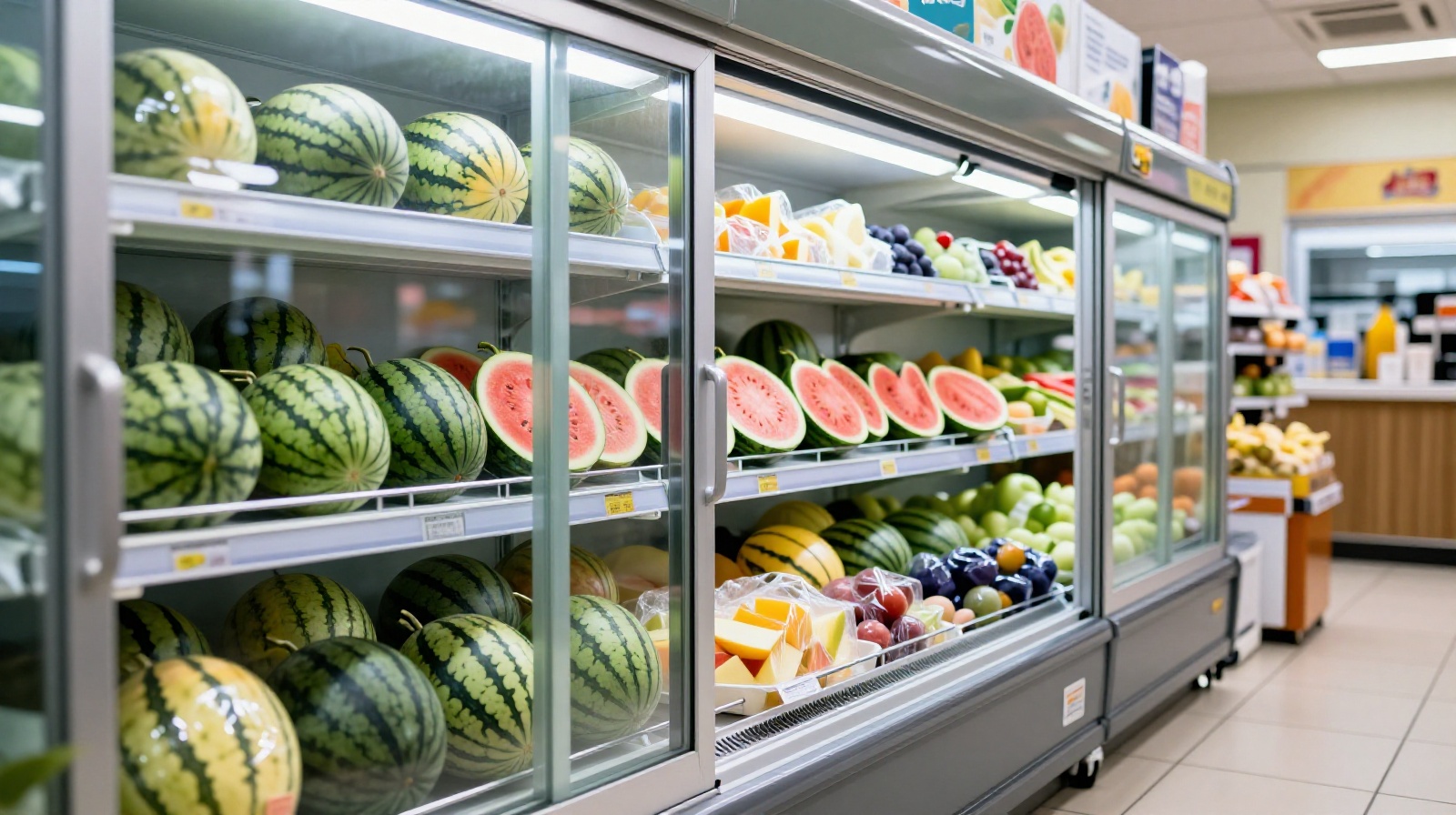
That tradition has not disappeared; it has just upgraded. Today, almost every convenience store in China keeps a glass-door freezer stocked with ice-cold watermelons. In larger cities, supermarkets offer pre-cut slices wrapped in plastic, ready to eat on the go. The technology has changed, but the desire remains the same: nothing tastes better than fruit that has been cooled to near-freezing temperatures.
For many young professionals working in office towers with central air conditioning, the outside heat feels like a different planet. When they step out for lunch or after work, grabbing an ice-cold watermelon from a street vendor is a small rebellion against the sweltering outdoors. It is a moment of relief that costs very little but delivers maximum satisfaction.
The Family Ritual: Cutting and Sharing
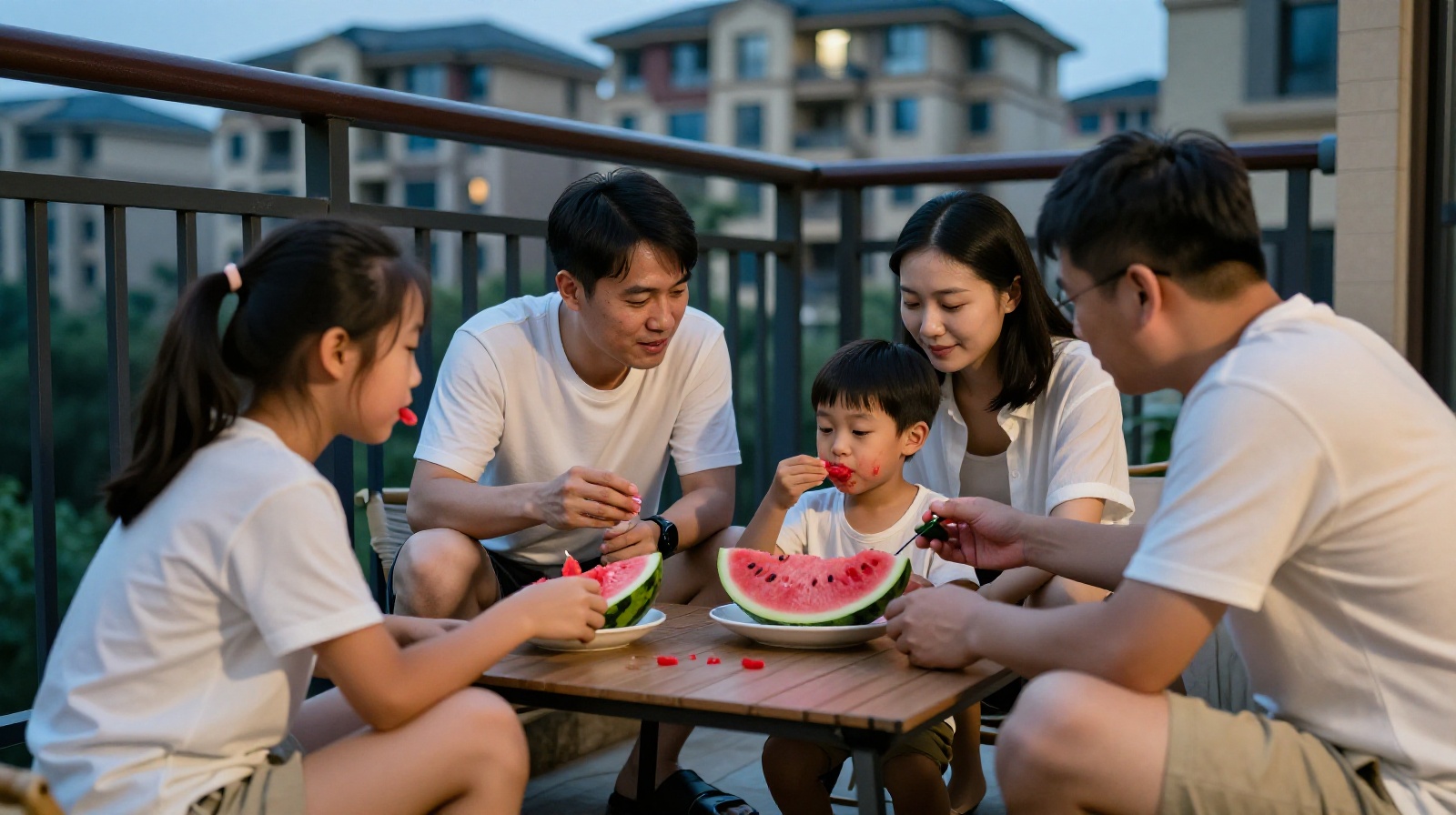
But the story of the watermelon goes beyond personal refreshment; it is deeply woven into family life. On weekends, or after dinner when the humidity drops just enough to make sitting outside bearable, families gather in living rooms or on balconies.
The mother takes out a large knife. She slices the melon into wedges, not with precision, but with care. Children sit around the table, eyes wide, waiting for their share. The red juice stains fingers and chins, ignored as everyone digs in. There is no formal etiquette here, only the simple joy of sharing something sweet and cold.
In many communities, this extends to neighbors. It is common to see someone cutting a watermelon on their balcony and offering slices to people walking by or living directly below. The phrase “qǐng chī guā” (please eat melon) has become a universal social greeting in summer. It signals trust, hospitality, and the shared experience of enduring the season.
The Economics of Sweetness
From an economic perspective, the watermelon is a staple that reflects China’s vast agricultural landscape. In regions like Xinjiang, where the sun shines for nearly 14 hours a day and the temperature swings wildly between day and night, melons develop intense sweetness. These fruits are shipped across the country, reaching tables in coastal cities within days.
Meanwhile, local farmers in Henan or Shandong grow watermelons that offer incredible value. They may not be as sweet as their Xinjiang counterparts, but they are affordable for everyone. In 2023, China consumed over 60 million tons of watermelons annually, making it the world’s largest producer and consumer by a wide margin.
This abundance shapes how people interact with the fruit. Unlike expensive berries or exotic fruits that might be saved for special occasions, watermelon is treated as a daily necessity during summer. It is accessible, ubiquitous, and deeply integrated into the rhythm of daily life.
A Global Comparison
While many cultures enjoy watermelon in summer, few treat it with the same level of reverence for its temperature. In parts of Europe or North America, melons are often eaten room temperature or slightly chilled. The concept of freezing a whole melon solid and then slicing it into steaming cold chunks is uniquely Chinese.
This preference speaks to a broader cultural attitude toward comfort and relief during extreme weather. For the average Chinese person, the ice-cold watermelon is more than a snack; it is a symbol of summer itself. It represents the ability to find coolness in the hottest days, to share abundance with others, and to ground oneself in simple, tangible pleasures.
So, if you ever visit China in July or August, do not just look for the sights. Look for the fruit stands. Ask for a slice of ice-cold watermelon. Take that first bite. You will understand why it is the true king of the season.