


A Steam Cloud in the Frozen Morning
It is 7:45 AM. The temperature outside hovers near zero degrees Celsius, and a grey sky presses down on Shanghai’s subway entrance. A crowd shuffles forward, scarves pulled tight around necks, breath visible in the air. At the corner of the station stands a brightly lit FamilyMart or 7-Eleven. Inside, the air is thick with the scent of warm broth and simmering fish.
A young woman in a puffy coat steps inside, shaking off the snow from her boots. She doesn’t stop to browse the shelves of snacks or drinks. Her eyes lock onto the glass-fronted pot bubbling gently on the counter. With practiced efficiency, she points at a skewer of konjac cake and three large fish balls, then adds a packet of spicy sauce for good measure. The cashier scans the items in under ten seconds. She hands over a steaming paper cup wrapped in a plastic sleeve.
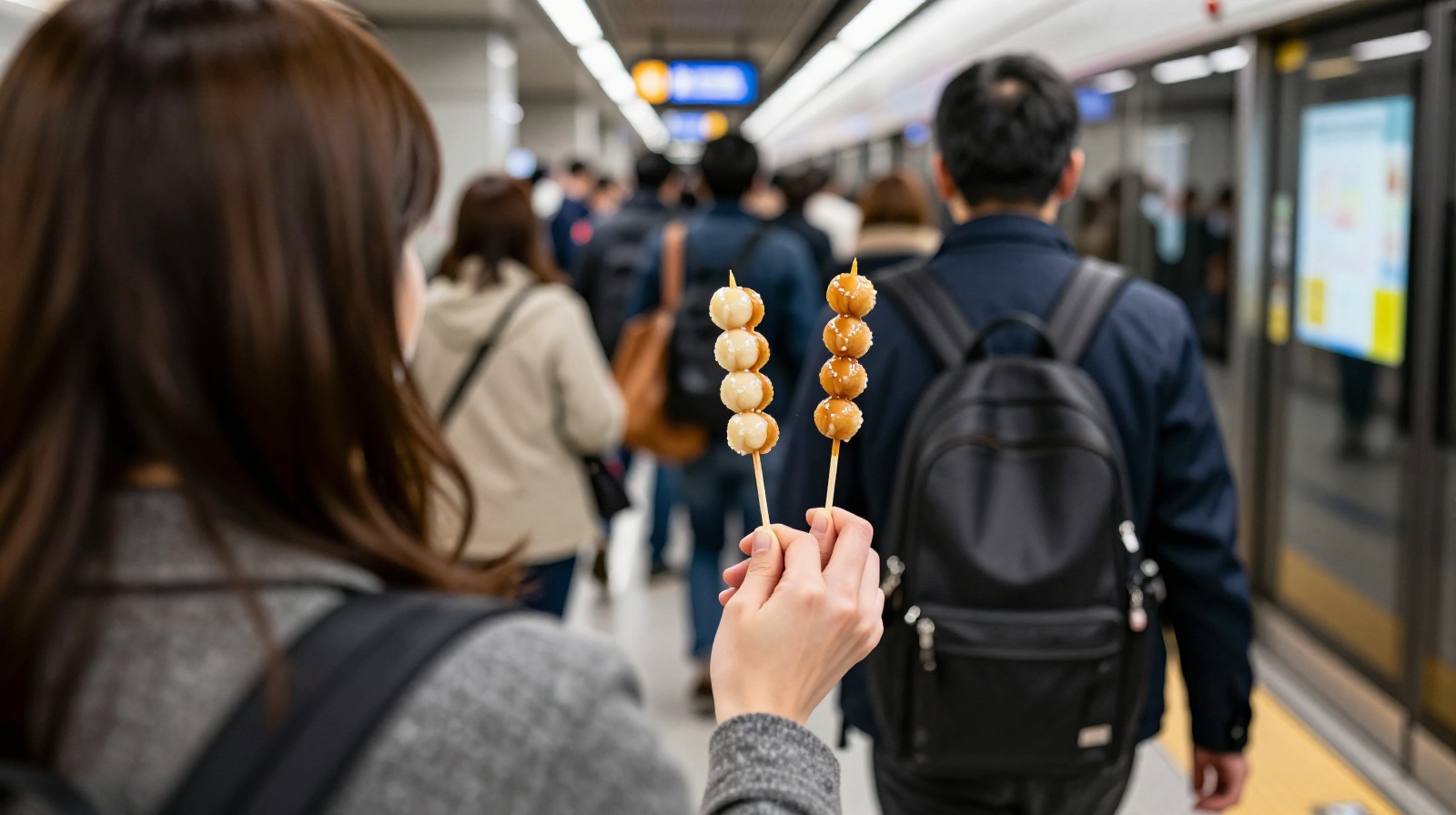
Back outside, the woman takes a sip of the broth before boarding her train. The heat travels from her palms to her chest, melting the chill that has settled into her bones for days. This is not just breakfast; it is a moment of pause in a city that never stops moving.

From Tokyo to Chengdu: A Localized Comfort
Oden originated in Japan as a slow-simmered stew of daikon radish, eggs, and fish cakes served in dashi broth. When it arrived in China decades ago, it didn’t just copy the original; it evolved.
Chinese convenience store chains like 7-Eleven, FamilyMart, Lawson, and local players adapted the recipe to suit local palates. The mild Japanese dashi became a bolder, often spicy or savory base. Ingredients were swapped or added: giant fish balls that bounce when bitten, strips of fatty pork belly, and translucent konjac jelly cubes.
In cities like Chengdu or Chongqing, you can find versions with a distinct numbing spice (mala) or rich red oil broth. The texture remains soft and chewy, but the flavor profile shifts from subtle umami to something more aggressive and warming. It is a dish that speaks both Japanese discipline and Chinese appetite for bold flavors.

The Commuter’s Daily Ritual
Why does this specific dish dominate winter mornings across China? The answer lies in the rhythm of urban life. Millions of workers commute on crowded subways, spending an hour or more traveling to and from work.
The convenience store is often the first stop after leaving home and the last before entering the office. Oden fits perfectly into this timeline. It is hot, ready-to-eat, and portable. Unlike a sandwich that might get cold in a backpack or noodles that require chopsticks and a plate, oden comes in a cup you can hold with both hands.
In Beijing, a graphic designer named Li says, “I don’t even think about it. It’s just what I do.” She buys the same items every Tuesday and Thursday. The consistency is comforting. In a world of unpredictable deadlines and high stress, knowing exactly how much a cup of oden will cost (usually 15 to 25 RMB) and tasting the same spicy broth every morning provides a small anchor.
Price, Consistency, and Economic Sense
Beyond comfort, there is a strong economic logic to the oden craze. In China’s tier-one cities like Shanghai and Shenzhen, dining out for a hot meal can easily cost 60 to 100 RMB ($8-$14). A full restaurant lunch requires time you often don’t have.
Oden offers a high-quality hot meal at a fraction of the price. The standard cup costs between 15 and 30 RMB depending on ingredients, with extra skewers priced individually (often 2-5 RMB each). It is affordable for students and young professionals alike.
Furthermore, the quality is remarkably consistent. Whether you buy it at a FamilyMart in Hangzhou or a 7-Eleven in Xi’an, the broth recipe remains largely the same. This reliability is rare in the food industry, where restaurant menus can change overnight or quality varies by chef.
Emotional Warmth in a Fast-Paced City
There is something deeply human about sharing a hot pot of oden. It represents a brief escape from the isolation of modern city life. In an era of delivery apps and silent subway rides, standing at the counter for two minutes to wait for your order creates a tiny moment of connection.
The steam rising from the cup is a visual signal of warmth in a cold world. For the commuter, it is a reminder that despite the long hours and high pressure, there are still small moments of care available. It turns a mundane transaction into a daily act of self-preservation.
As the sun rises over the skyscrapers, the cup empties, but the warmth remains. For millions, this simple dish is not just food; it is the quiet heartbeat of the city in winter.