
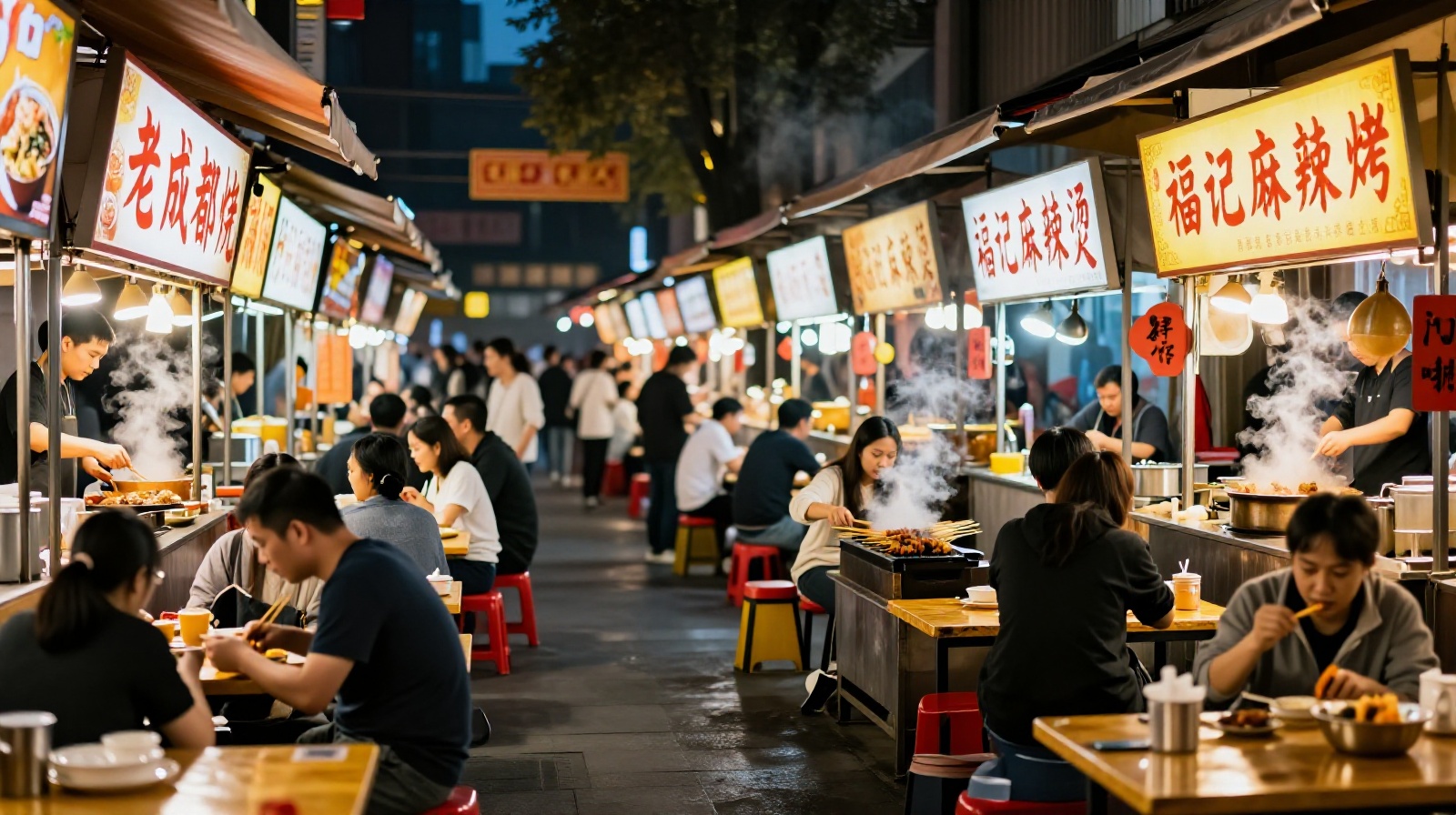

The Sizzle of Recovery
It is just past 8:30 PM in Chengdu. The air is thick with the smell of cumin, chili oil, and charcoal smoke. On a narrow alleyway that looks ordinary by day, dozens of folding tables are now set up. A middle-aged woman in an apron flips skewers of lamb over a glowing charcoal fire, shouting prices to passersby while her phone buzzes on the table—orders coming from delivery apps like Meituan.
Five years ago, during the height of strict lockdowns, these stalls were gone. The silence was absolute. Today, the noise is back. This isn’t just a return to normalcy; it’s a calculated resurgence known as the ‘stall economy.’ In 2023 alone, China opened over 1 million new individual business licenses for street vendors, a figure that dwarfs pre-pandemic numbers.
For many young people laid off from tech firms or struggling with high rents, setting up a stall is not a sign of failure but a strategic pivot. It offers low overhead and immediate cash flow. In this alley, the economy isn’t just recovering; it’s being reinvented in real-time on asphalt.
Beyond Food: A Cultural Renaissance
Walking through these night markets reveals more than just culinary delights. They are social hubs where class divides blur. A university student sharing a cup of bubble tea with an elderly retiree is common sight. The atmosphere is distinctively Chinese—a mix of chaotic energy and communal warmth.
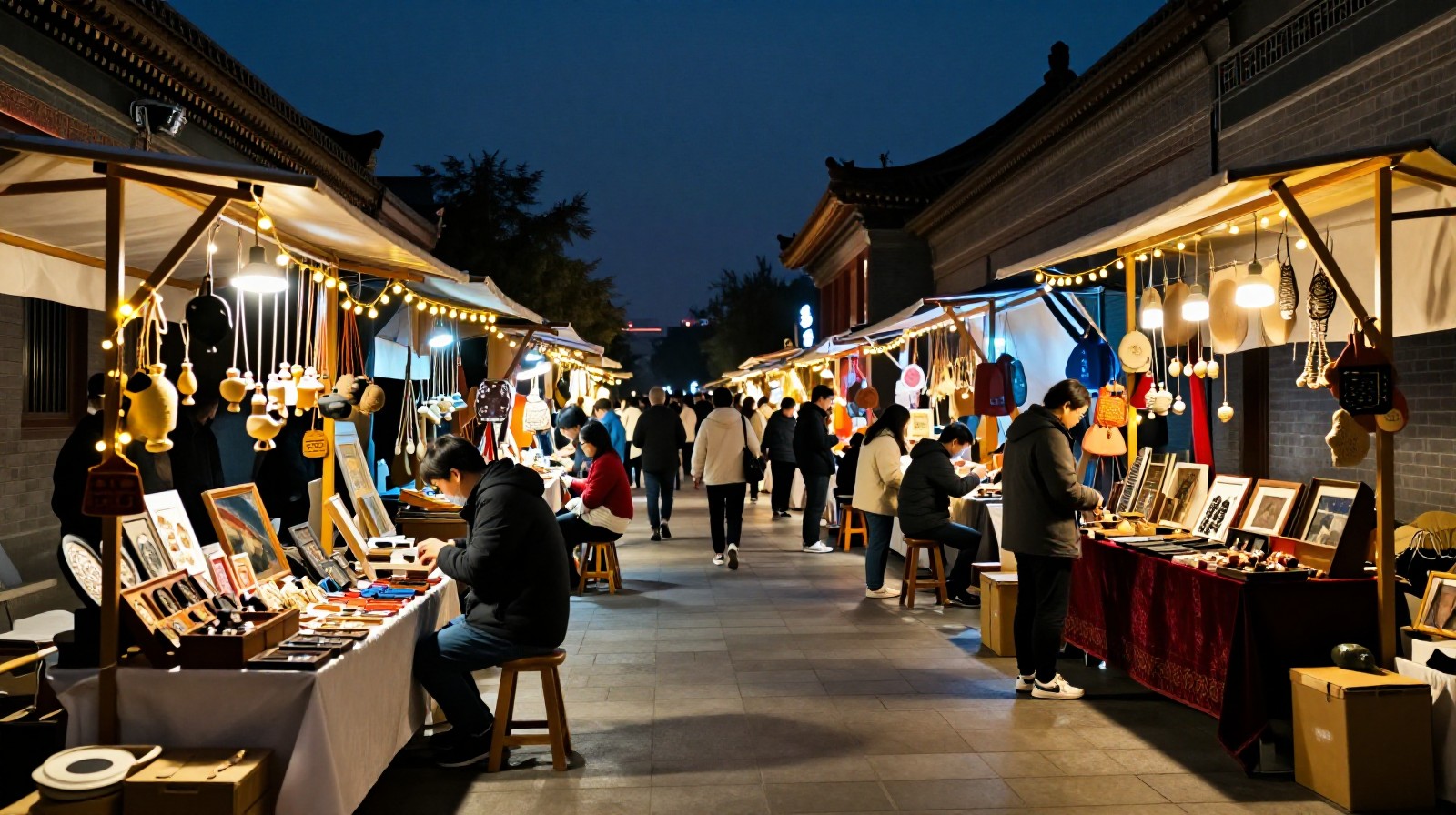
Shoppers browse colorful handmade crafts at a bustling night market in Xi’an, illuminated by strings of warm lights against the evening sky.
In cities like Hangzhou and Chengdu, local governments have actively designated specific zones for vendors. Unlike the old days where street vending was often associated with disorder and enforcement crackdowns, these new ‘night markets’ are curated spaces. They feature themed stalls selling everything from vintage clothes to DIY jewelry and even live music performances.
The transformation is visible in the design. Vendors use uniform branding, clear pricing boards, and sometimes even QR codes for digital payments that link directly to their social media accounts. It’s a blend of tradition and hyper-modern technology. You can buy a traditional soy milk pudding while paying with a biometric scan.
The Engine of Urban Vitality
Why does this matter for the wider economy? The stall economy acts as a shock absorber for employment. With college graduates facing record unemployment rates, street vending provides an immediate outlet. According to data from local chambers of commerce in Guangzhou, a single night market can support hundreds of direct jobs and indirectly fuel dozens of small supply chain businesses.
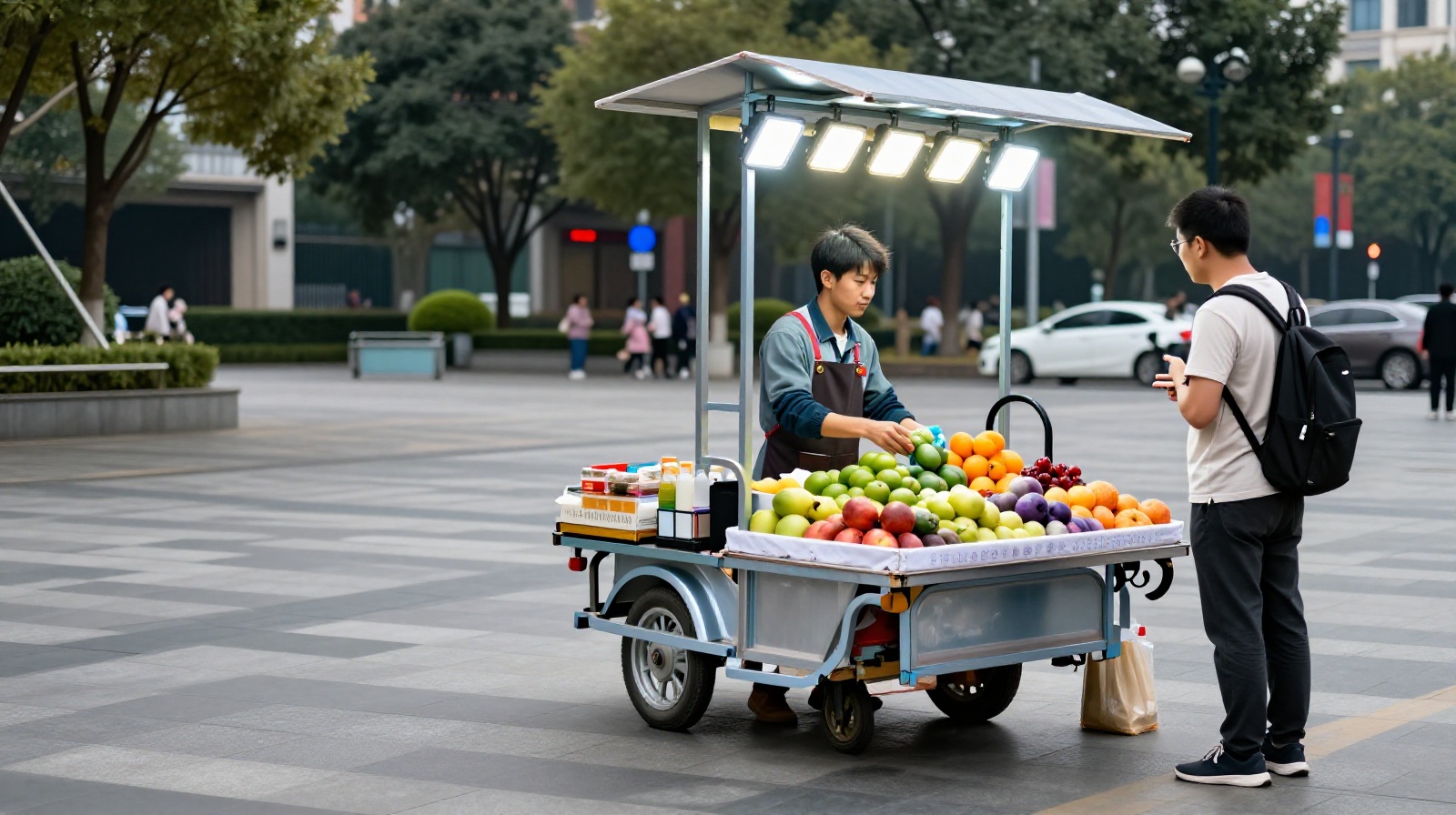
A young vendor organizes fresh fruits on a neatly arranged cart under the glow of LED streetlights, interacting with customers at a revitalized urban plaza.
For city planners, these markets inject life back into commercial districts that were once hollowed out by empty storefronts and high rent. They create ‘third places’—social surroundings separate from home and work. This foot traffic often spills over into nearby cafes and shops, creating a multiplier effect that large malls cannot easily replicate.
The Challenge of Order
However, the revival is not without its growing pains. The same energy that fuels the economy brings challenges. Noise pollution, sanitation issues, and blocked sidewalks are frequent complaints from residents living above or near these markets.
In some districts, the rapid expansion has led to a ‘wild west’ scenario where hygiene standards vary wildly. One stall might serve pristine food while another next door uses questionable ingredients. Local authorities are now walking a tightrope.
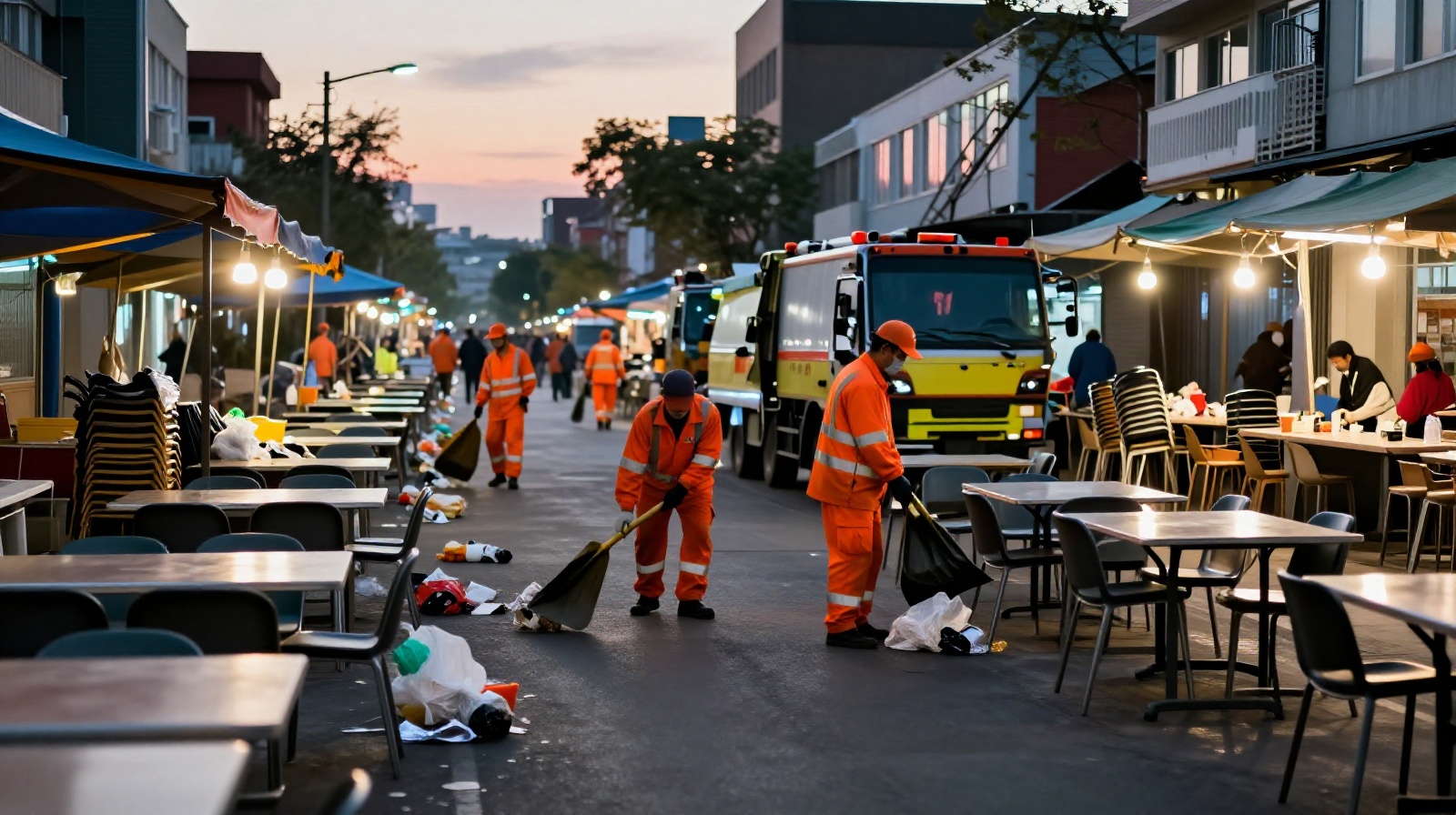
City sanitation workers clean up trash from a busy night market street early in the morning, highlighting the daily maintenance required to keep public spaces orderly.
The solution is evolving toward ‘managed chaos.’ Cities like Shanghai and Shenzhen are experimenting with time-based zoning—allowing vendors to set up only between 6 PM and 10 PM, followed by a mandatory cleaning hour. Digital monitoring systems now track hygiene compliance in real-time, issuing warnings via apps rather than physical fines.
A Glimpse into the Future
The story of China’s night markets is not just about food or money; it’s about resilience. It shows how a society adapts to crisis by leaning on its most flexible assets: human ingenuity and community connection.
As you walk through these lights, you see the pulse of a nation moving forward. It is messy, loud, sometimes smelly, but undeniably alive. The stall economy has proven that economic recovery doesn’t always require massive factories or high-tech campuses; sometimes, it just takes a folding table, a bag of charcoal, and a willingness to sell under the stars.