
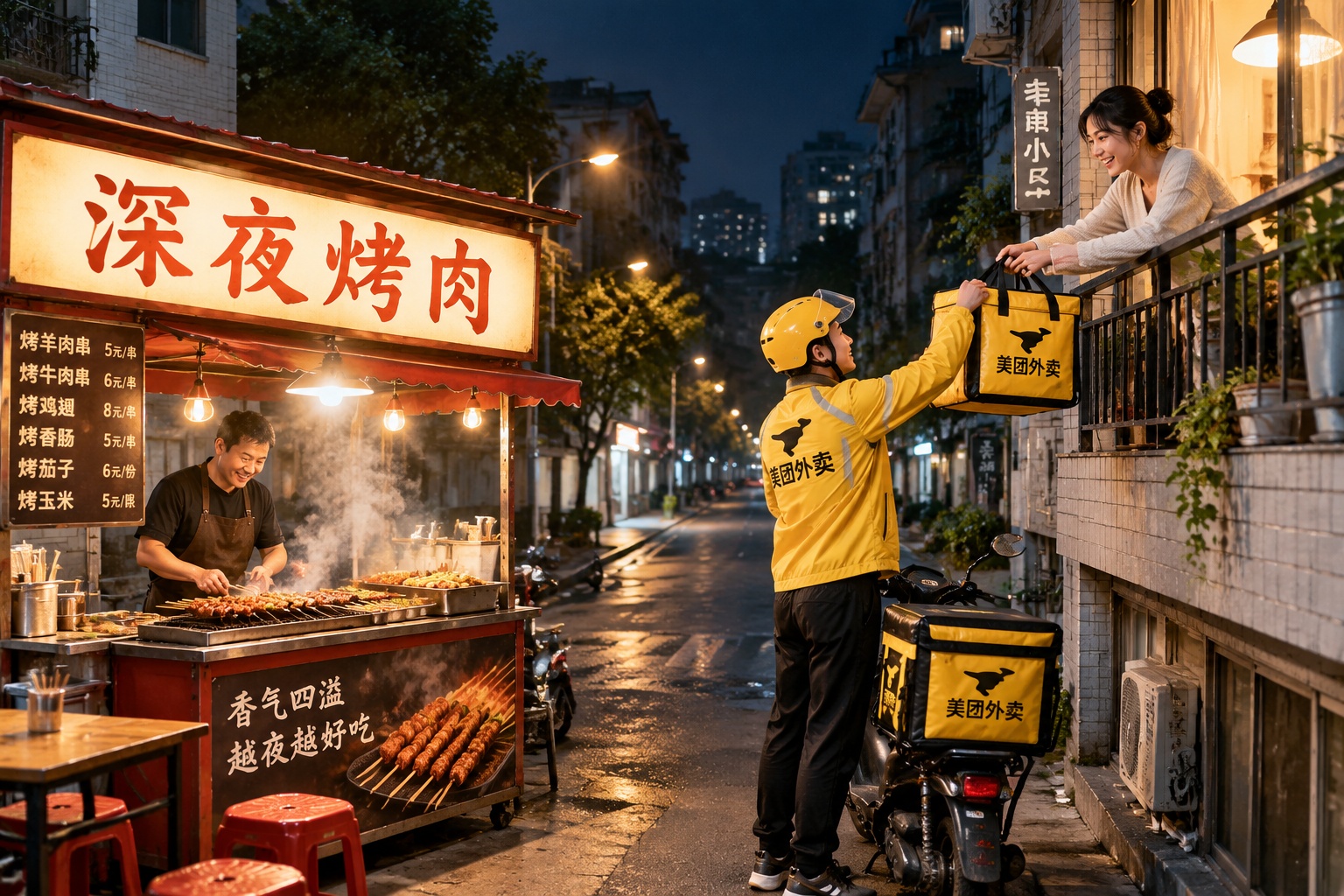

The Sizzle at 2:15 a.m.
It is 2:15 a.m. in Shanghai. The streets outside are empty, save for the occasional passing taxi and the hum of streetlights reflecting off wet pavement. Inside my small apartment, the air is still warm from the day’s heat. My phone buzzes on the nightstand. I tap the screen to order lamb skewers from Wei Wei Barbecue, a stall just three streets away that stays open until 4 a.m.
I select five lamb skewers, two beef cubes, and a side of spicy tofu skin. Total: $3.50. I hit confirm. The timer on the screen starts ticking: 18 minutes. In many Western cities, a restaurant would be closed by now; a delivery service might take an hour or more if it even operates at this hour. Here, the system is already awake.
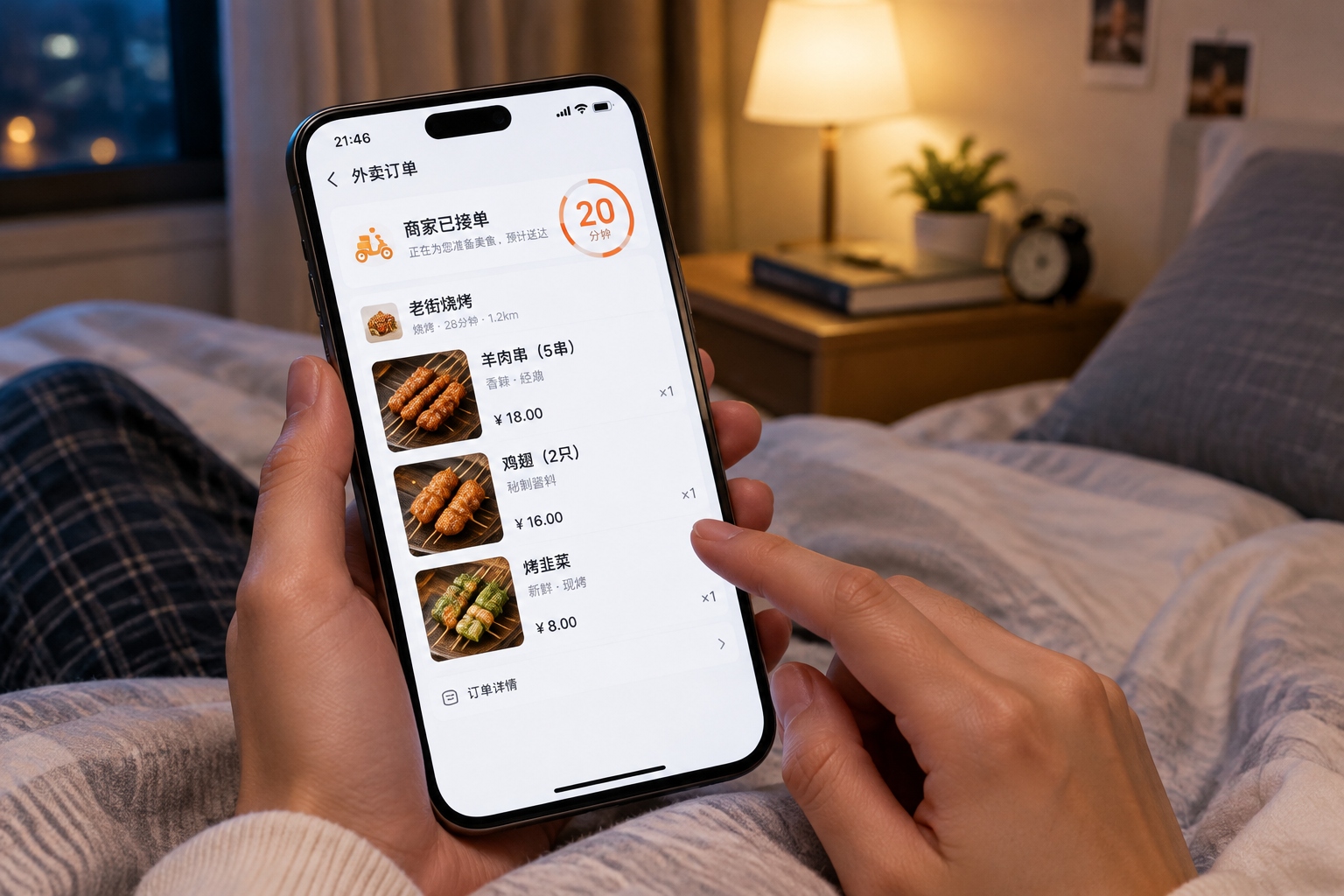
The Race Against Time
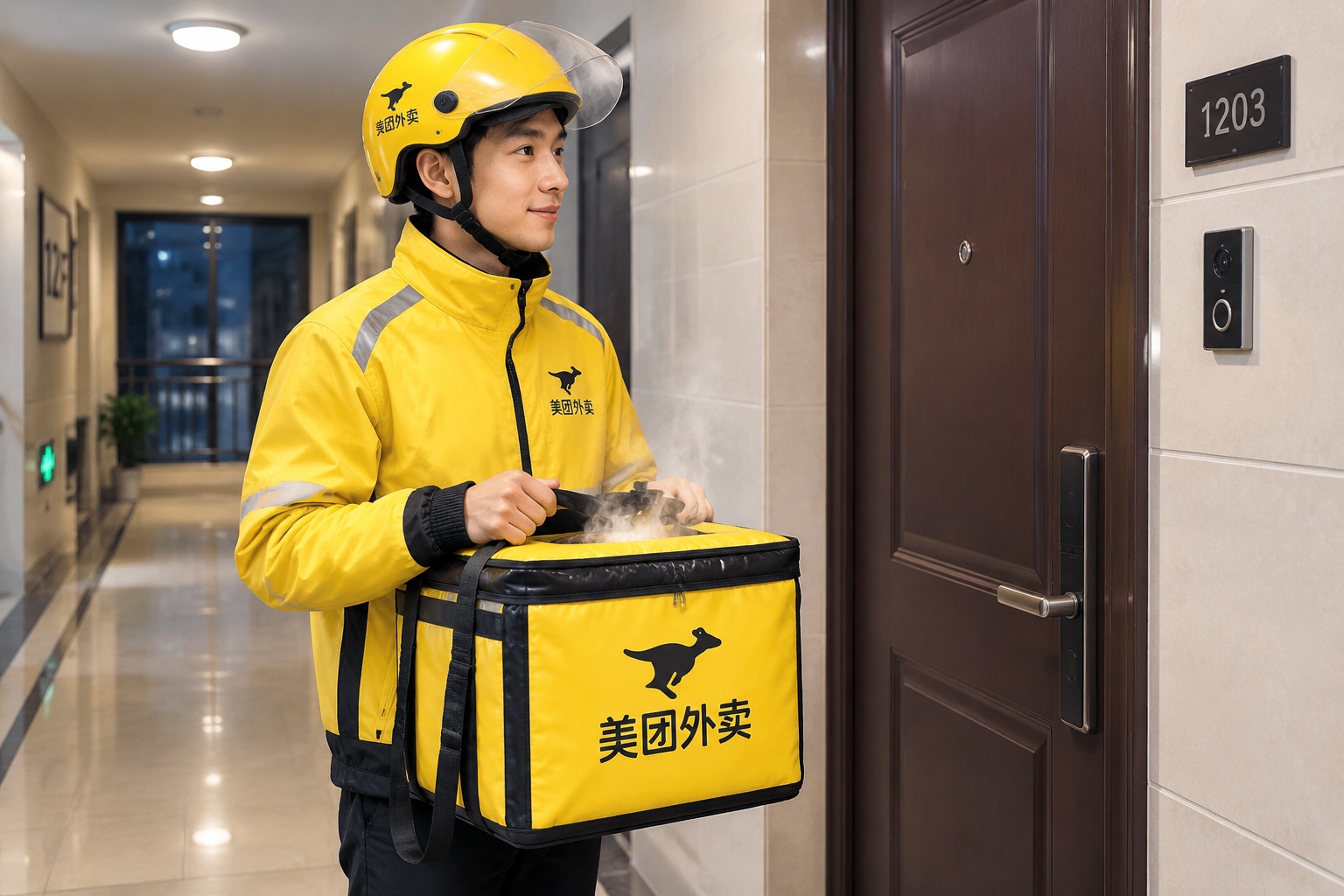
Twenty minutes later, my doorbell rings. It is not a neighbor. It is Li, a delivery rider wearing a bright yellow uniform and a helmet covered in rain from a recent downpour. He holds a thermal bag, steam still rising from the top vent.
“Your lamb skewers,” he says, breathless but smiling. “Just 20 minutes from your tap to my door.”
I pay via the app with a single fingerprint scan. Li is already gone, back into the night to serve another hungry customer. This speed is not magic; it is the result of a highly optimized ecosystem.
More Than Just Food: A Nighttime Ritual
Why eat at 2 a.m.? For many Chinese workers, this late-night snack is less about hunger and more about emotional relief. I met Li later that morning at his break spot near a convenience store. He had worked two shifts since midnight.
“People call me when they are stressed,” Li told me. “After overtime, after a bad day with customers, or just when the city feels too quiet. They say, ‘Just bring something hot.’ It makes them feel like someone cares.”
This is the reality of China’s 24-hour economy. Unlike in many European or American cities where strict noise ordinances and early closing times limit nightlife, Chinese urban centers remain active wellsprings of late-night commerce.
The Engine Behind the Skewers
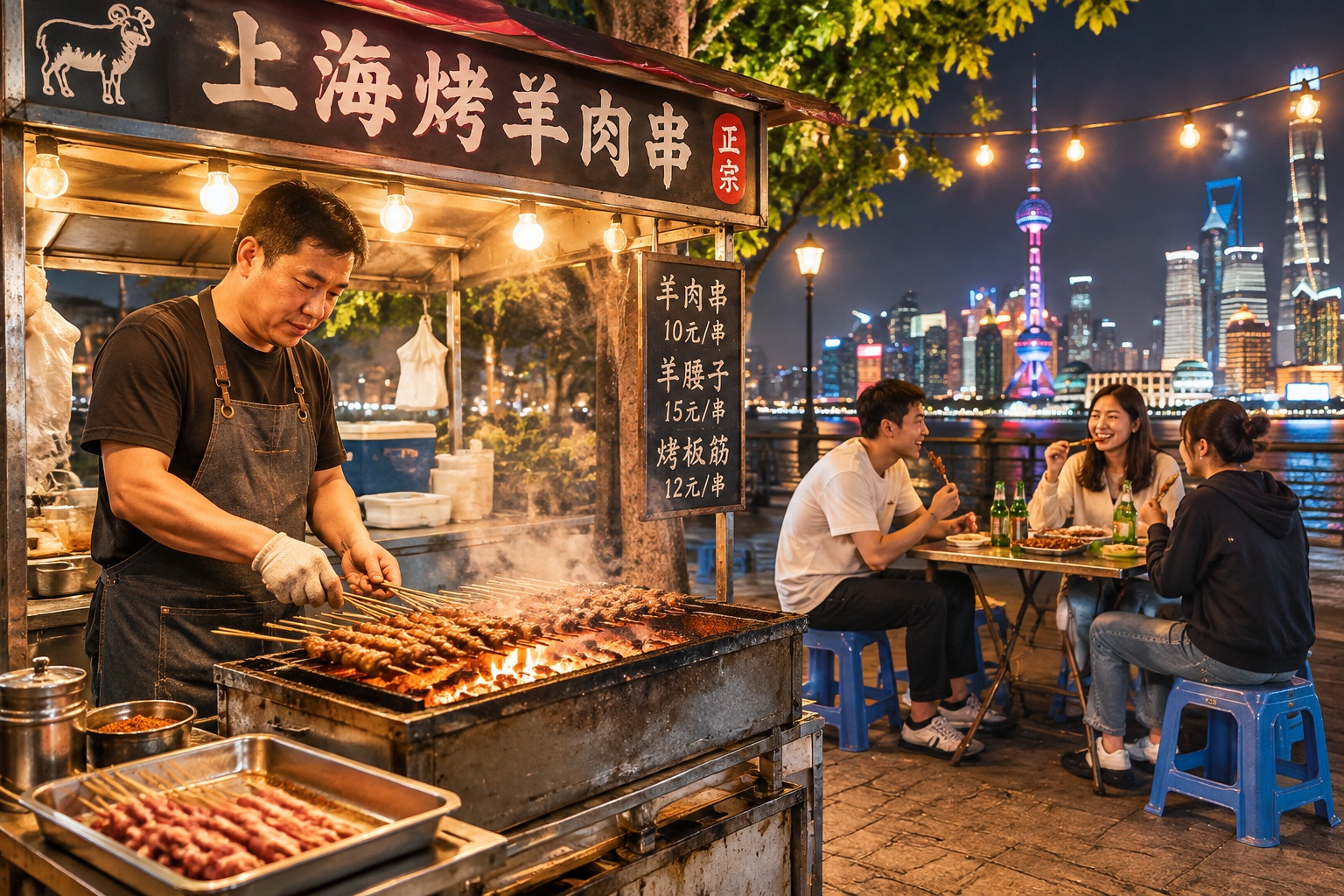
How is this possible? The answer lies in China’s dense logistics network. Algorithms match orders to riders based on real-time traffic data, predicting demand before it peaks. In Shanghai alone, over 100 million food delivery orders are placed annually, creating a feedback loop that keeps the system efficient.
The street vendors themselves operate with modern precision. At Wei Wei’s stall, the grill is pre-heated at 6 p.m., and ingredients are chopped in bulk during the day. When an order comes in at 2 a.m., it takes only three minutes to cook. This preparation allows the vendor to serve dozens of late-night customers without breaking a sweat.
A Window into Modern China
This 20-minute delivery is not just about convenience; it reflects a society where technology and human effort combine to solve daily problems instantly. For international readers used to waiting hours for food or dealing with closed shops, this experience offers a glimpse into the speed and adaptability of modern Chinese urban life.
As I finish the last skewer, the city outside is still dark, but my phone buzzes again. Another order has just been placed. The night belongs to those who hunger for connection, comfort, and the sizzle of hot oil at 2 a.m.
Start the discussion at forum.chinacomes.com