

A Latte with a Kick (and a Berry)
I sat at the counter of a trendy café in Shanghai, watching the barista steam milk. On my tray, instead of the usual oat or almond latte, I held a cup filled with warm, golden liquid. It smelled faintly of cinnamon and earthy roots, not just roasted beans.
This was my first order at a new chain offering “functional beverages”—a drink blending Western coffee culture with the ancient Chinese concept of Yao Shi Tong Yuan, or “food and medicine share the same origin.” The ingredients? Goji berries, red dates (jujubes), and ginger. It sounded like something my grandmother would brew for a cold, not something to sip while scrolling through TikTok during a lunch break.

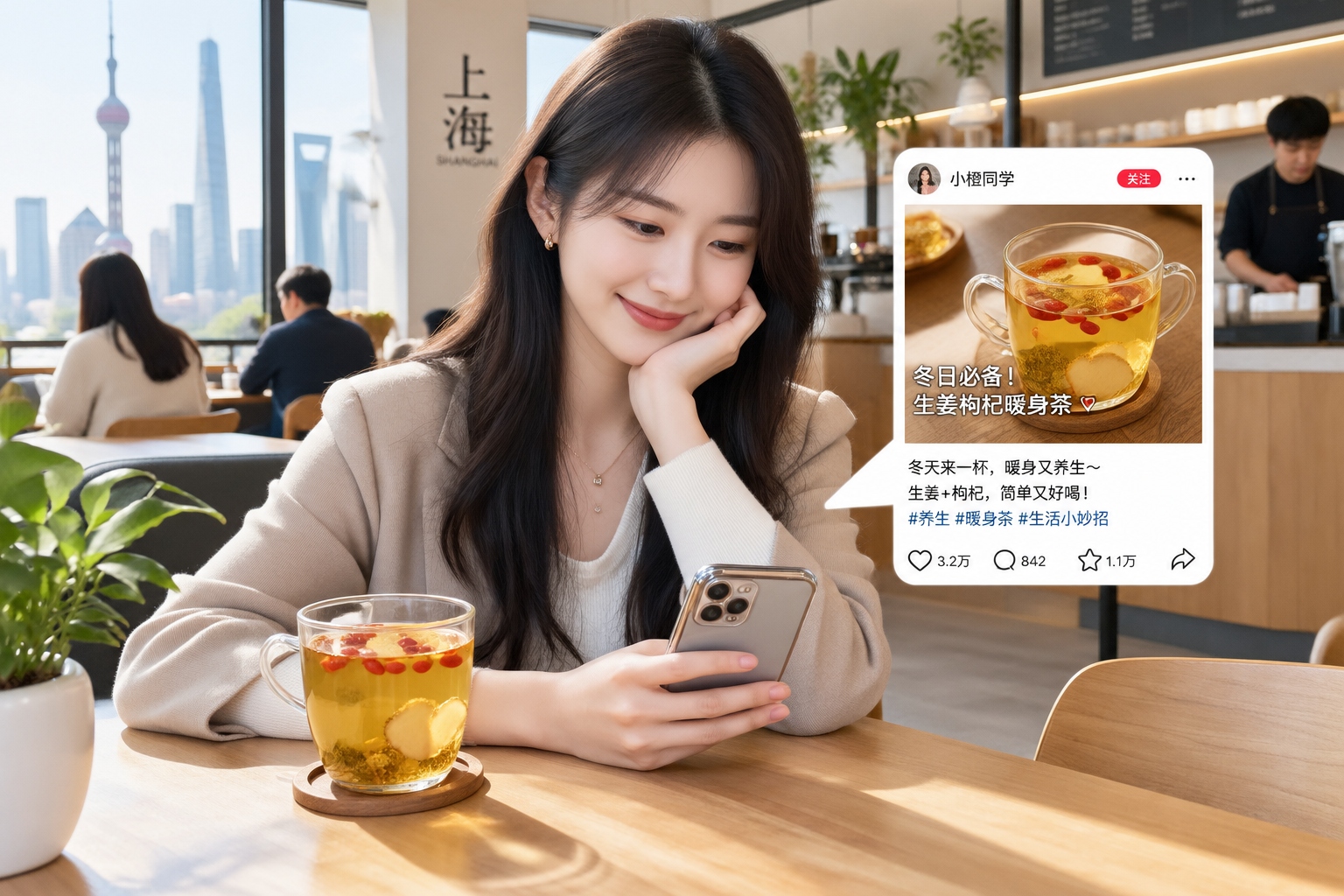
A young woman holds a glass cup of golden latte with floating goji berries in a modern Shanghai café window seat.
More Than Just a Trend
The concept isn’t new to Chinese history. For centuries, traditional medicine has viewed diet as the first line of defense against illness. Ginger warms the body; red dates boost blood and energy; goji berries are said to nourish the liver and eyes. Today, these ingredients aren’t just in herbal soups at home anymore.
Walk into any major Chinese city—Beijing, Chengdu, Hangzhou—and you’ll see storefronts selling “herbal coffee,” “tonic milk tea,” or “red date lattes.” These drinks are a direct response to the high-pressure lifestyle of modern urban China. Young professionals work 9-to-9 jobs (9 a.m. to 9 p.m.), sleep late, and rely heavily on caffeine. They feel exhausted but don’t want to give up their coffee.
So, they adapt. They mix the stimulants of modern life with the restorative properties of ancient wisdom. It’s a pragmatic compromise: “I can’t quit my caffeine addiction, but I’ll make it slightly less harmful.”
The Psychology of “Punk Health”
Social media in China has coined a term for this phenomenon: peng you yang sheng, or “punk health.” It describes the habit of doing things that damage your body (staying up late, drinking coffee, eating greasy food) while simultaneously trying to counteract them with specific remedies.
It’s like saying, “I stayed up until 3 a.m. gaming, so I’ll drink this ginger latte to warm my stomach.” It sounds illogical from a nutritional science perspective. A cup of coffee won’t magically neutralize the lack of sleep caused by staying up all night. But for many young people, it provides psychological comfort.
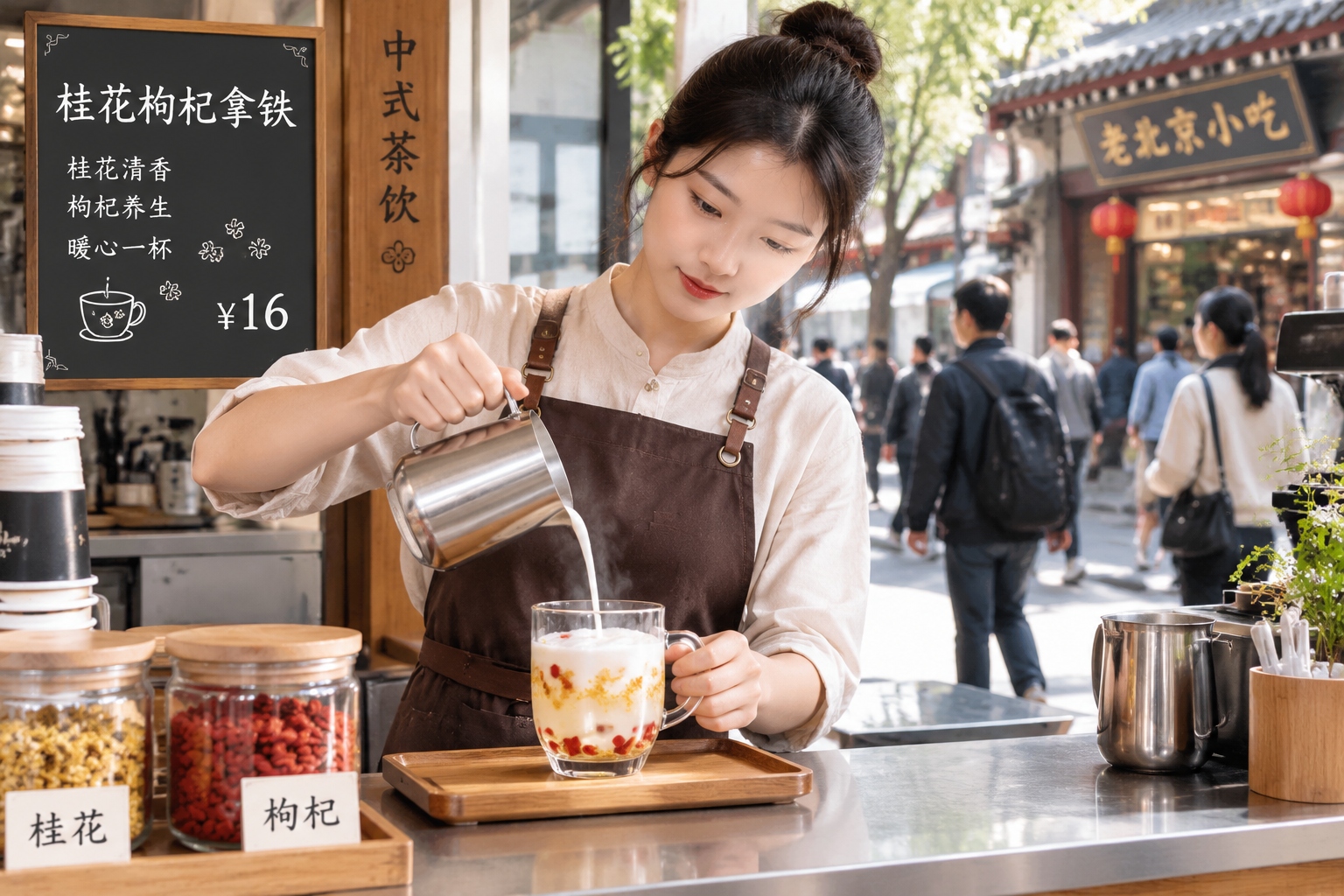
Close-up of a barista pouring milk into a glass mug containing red dates and goji berries on a busy urban street.
The Gap Between Hype and Reality
Let’s be clear: this is not magic. Drinking ginger coffee won’t cure your insomnia or replace eight hours of sleep. From a scientific standpoint, the amount of active ingredients in a single cup is often too small to produce significant therapeutic effects.
The sugar content in these drinks can also be high, especially when combined with milk and sweeteners to mask the bitter taste of the herbs. Some health experts warn that consumers might feel they are “doing their part” by drinking this latte, leading them to ignore other unhealthy habits like poor diet or lack of exercise.
Yet, sales data tells a different story. Major tea chains in China report that over 30% of new menu items are now functional blends. The demand is driven less by rigorous medical belief and more by the cultural desire to feel connected to tradition while navigating a hyper-modern world.
A New Cultural Identity
What’s fascinating isn’t just the drink itself, but what it represents. It shows how Chinese youth are redefining their relationship with tradition. They aren’t blindly following old rules; they are remixing them for a generation that values efficiency and self-care.
The goji berry in your latte is no longer just an ingredient in a soup pot. It’s a statement: “I am modern, I am stressed, but I still respect my roots.” It bridges the gap between the ancient wisdom of the past and the fast-paced reality of today. Whether it actually heals you might be debatable, but the feeling of taking care of yourself, even in small ways, is undeniably real.
Start the discussion at forum.chinacomes.com