

More Than Just Pain: A New Definition of “Spicy”
When I first arrived in Chengdu, a local friend ordered my favorite dish—Mapo Tofu—and raised an eyebrow at my order of “medium spicy.” “Medium?” she asked. “That’s basically water for us. Try ‘extra’ if you want to feel alive.
I laughed it off, then took a bite that felt like swallowing a small firework. This was my first lesson: in Southwest China, spicy is not a single dimension of heat; it’s a complex dialect with different accents, tones, and grammar. For Westerners used to jalapeños or ghost peppers, Chinese chili culture can feel like learning a new language while running a marathon.
Level 1: The Numbing Kick (Sichuan’s “Ma-La”)
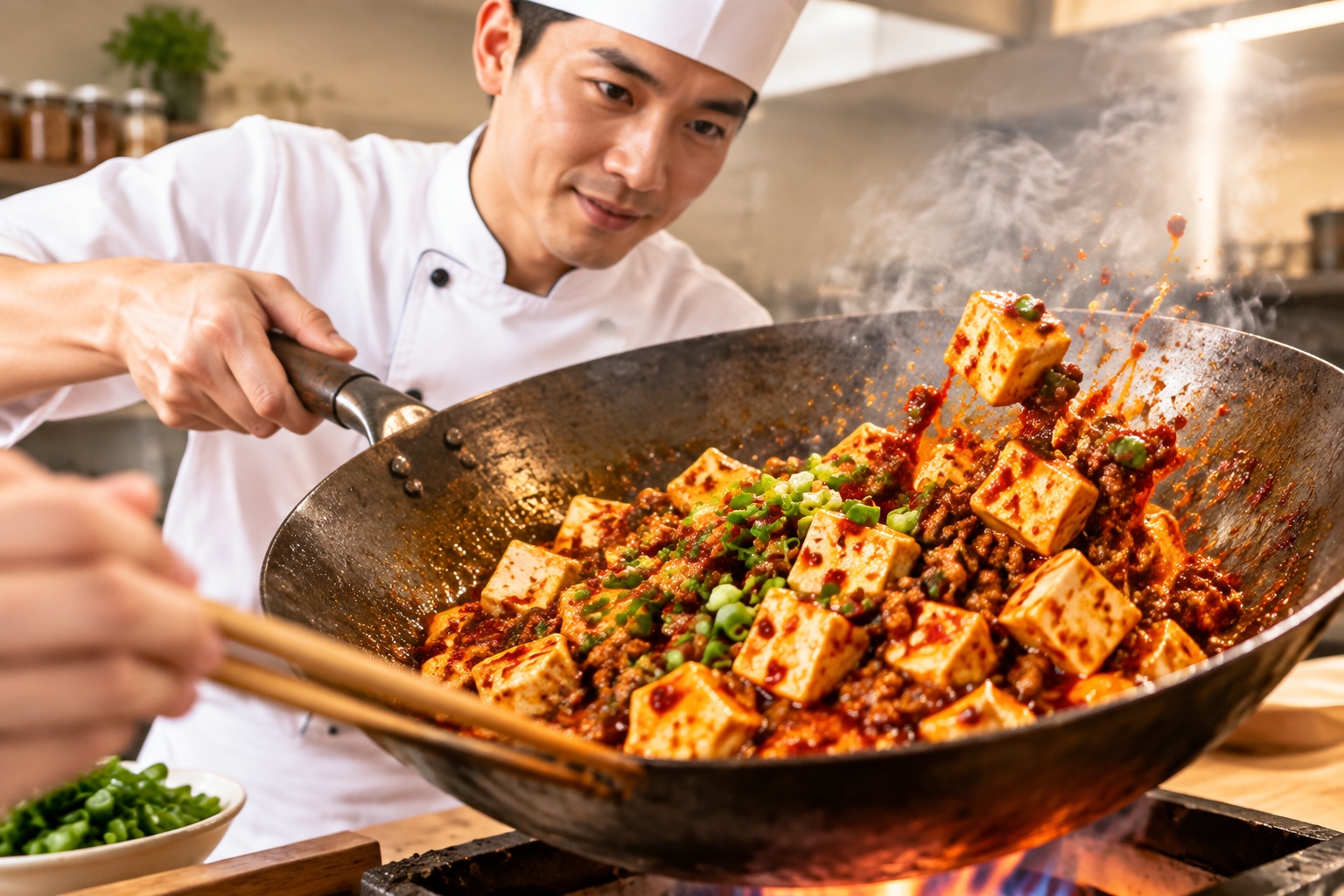
Sichuan cuisine is famous worldwide for its ma-la—a combination of numbing and spicy. But the magic lies in the Sichuan peppercorn (huajiao). Unlike chili peppers that burn, these tiny red berries stimulate your nerve endings to create a tingling sensation, like a gentle electric buzz.
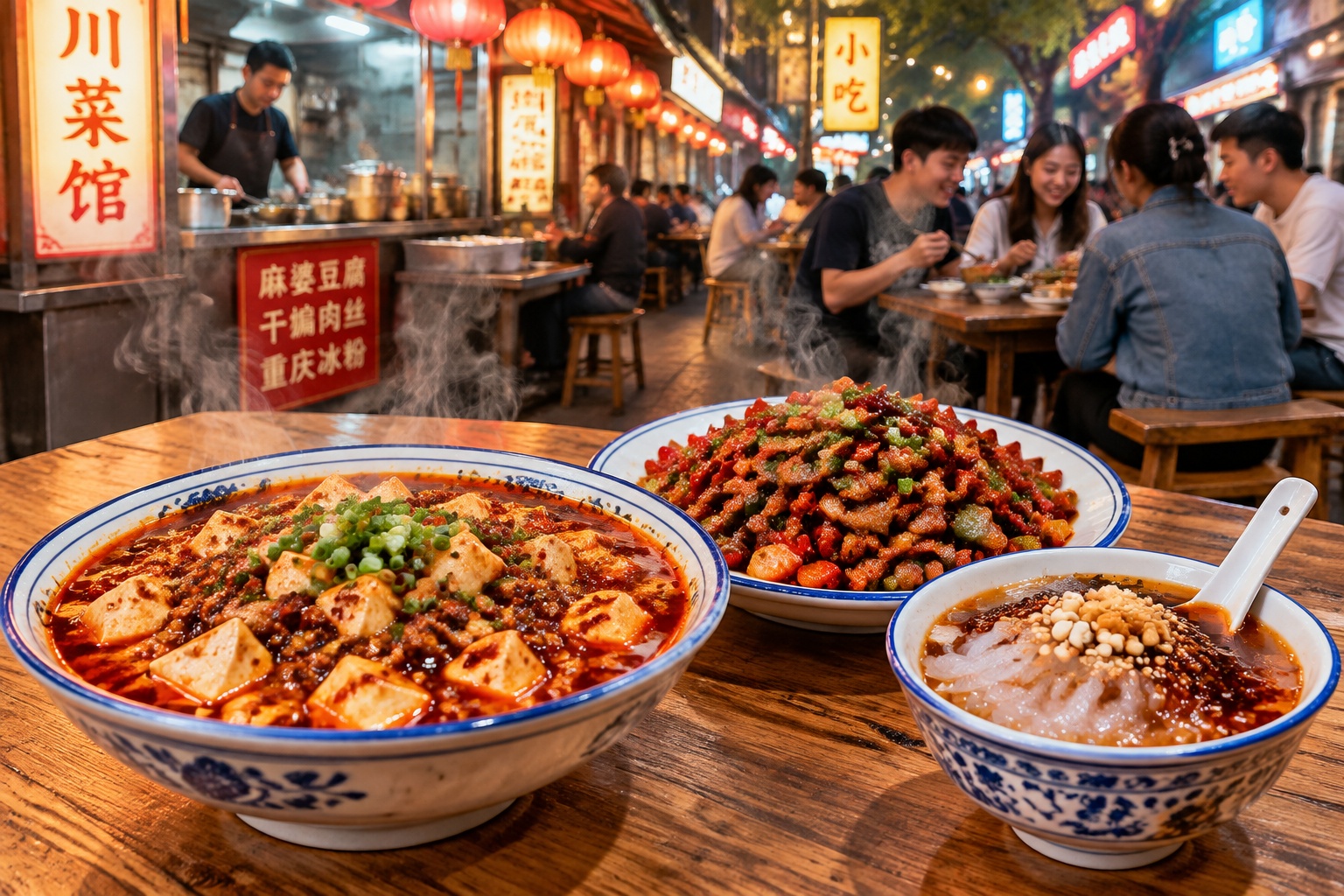
I sat down at a bustling street stall in Chengdu for Sichuan Mapo Tofu. The dish was submerged in a deep red oil, floating with minced pork and beans. The first bite hit me: the chili provided a sharp, lingering burn, while the peppercorns made my lips feel like they were vibrating. It’s a dual assault that keeps you eating despite the sweat.
“The key is balance,” explained Lao Zhang, an older server wiping down tables nearby. “If it’s just spicy, it’s boring. If it’s just numbing, it’s confusing. Together, they make your mouth dance.” This philosophy defines Sichuan cooking: harmony through complexity.
Level 2: The Dry Fire (Hunan’s “Xian-La”)
Just a few hours away by high-speed train lies Changsha, the capital of Hunan. Here, the rules change completely. There is no peppercorn buzz to soften the blow.
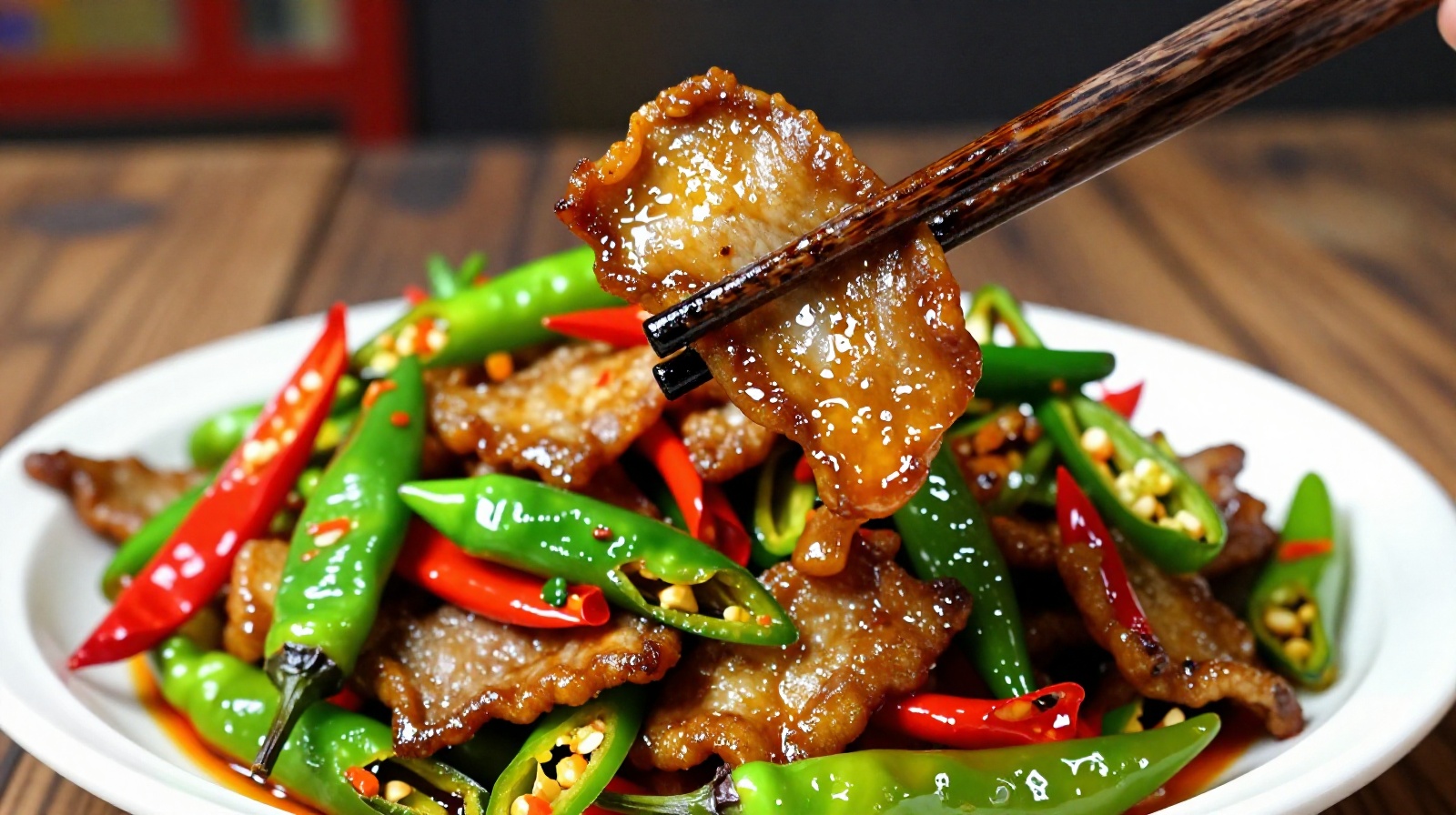
Hunan spicy food is known as xian-la (fresh dry spice) or gan-la (dry fire). The chilies are often fresh green peppers or dried red ones, fried directly into the dish until they release their pure, unadulterated heat. It’s a brutal, straightforward aggression.
I ordered the legendary “Stir-Fried Pork with Fresh Chilies.” The aroma was intoxicatingly smoky. As I ate, there was no numbing relief—just a continuous, dry burning sensation that climbed up my throat and settled in my stomach. My friend laughed, watching me fan my mouth frantically.
“Hunan people don’t need the peppercorn,” she said. “We eat to feel the fire. It’s about energy.” This is the difference: Sichuan invites you to play with flavors; Hunan demands you respect the heat.
Level 3: The Oily Chaos (Chongqing’s Hot Pot)
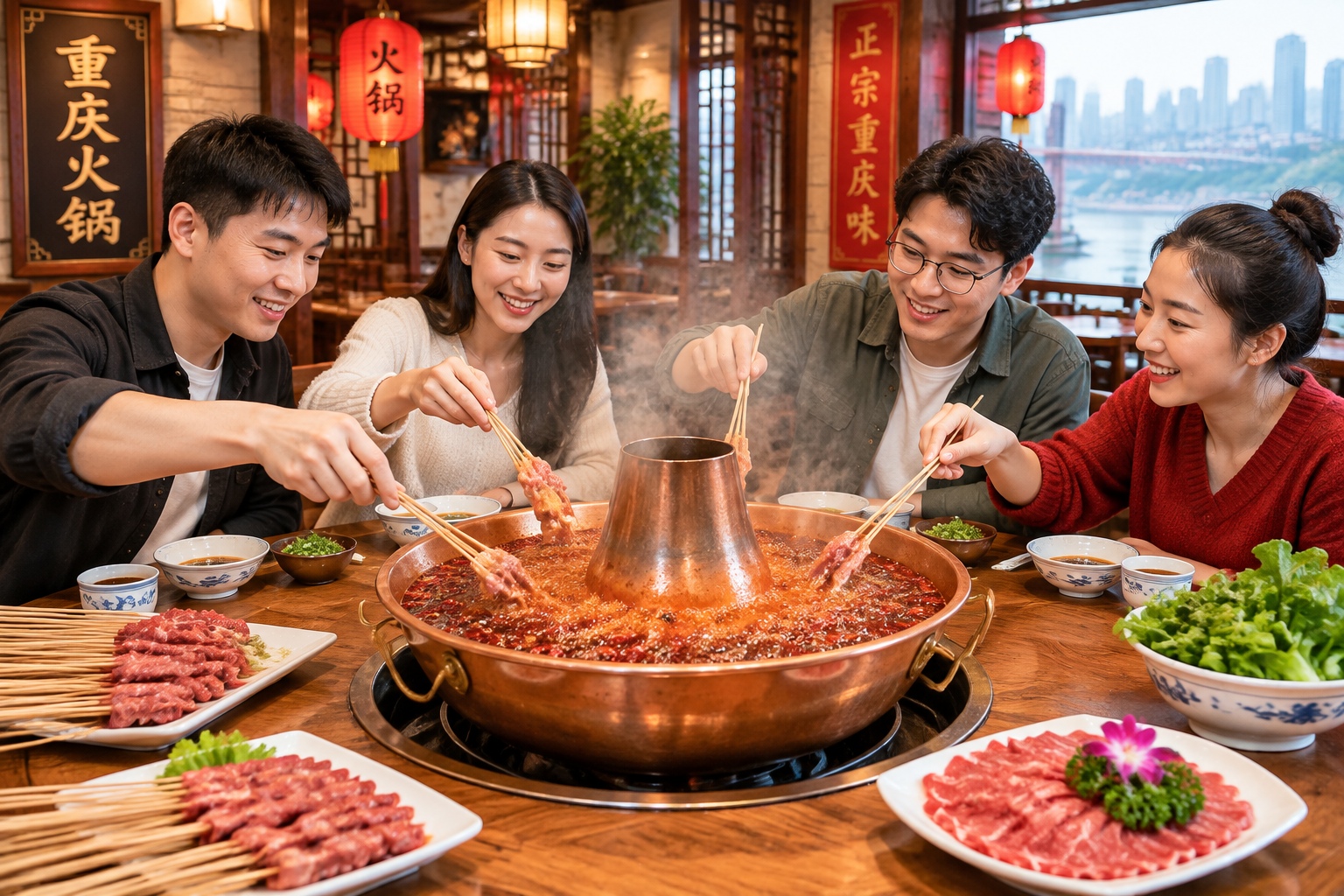
Traveling north to Chongqing, the mountain city of fog and steam, introduces a third level: you-la (oily spicy). Here, the heat is carried in a massive cauldron of beef tallow and chili oil.
The scene at a Chongqing hot pot restaurant is chaotic. Dozens of skewers dangle from racks; steam rises from bubbling red lakes. I watched locals dip raw duck intestines into the boiling broth, their faces flushed but unbothered.
“The oil protects your stomach,” my host explained as he dipped a slice of fatty beef. “It coats the lining so the chili doesn’t hurt you directly.” The taste is rich, heavy, and deeply savory, with layers of garlic, ginger, and fermented bean paste masking the sheer intensity of the chilies.
The Real Heroes: How Locals Survive the Heat
So how do people survive four levels of fire without going into shock? The answer lies in their “de-spicing” toolkit, which is as essential as a phone charger.
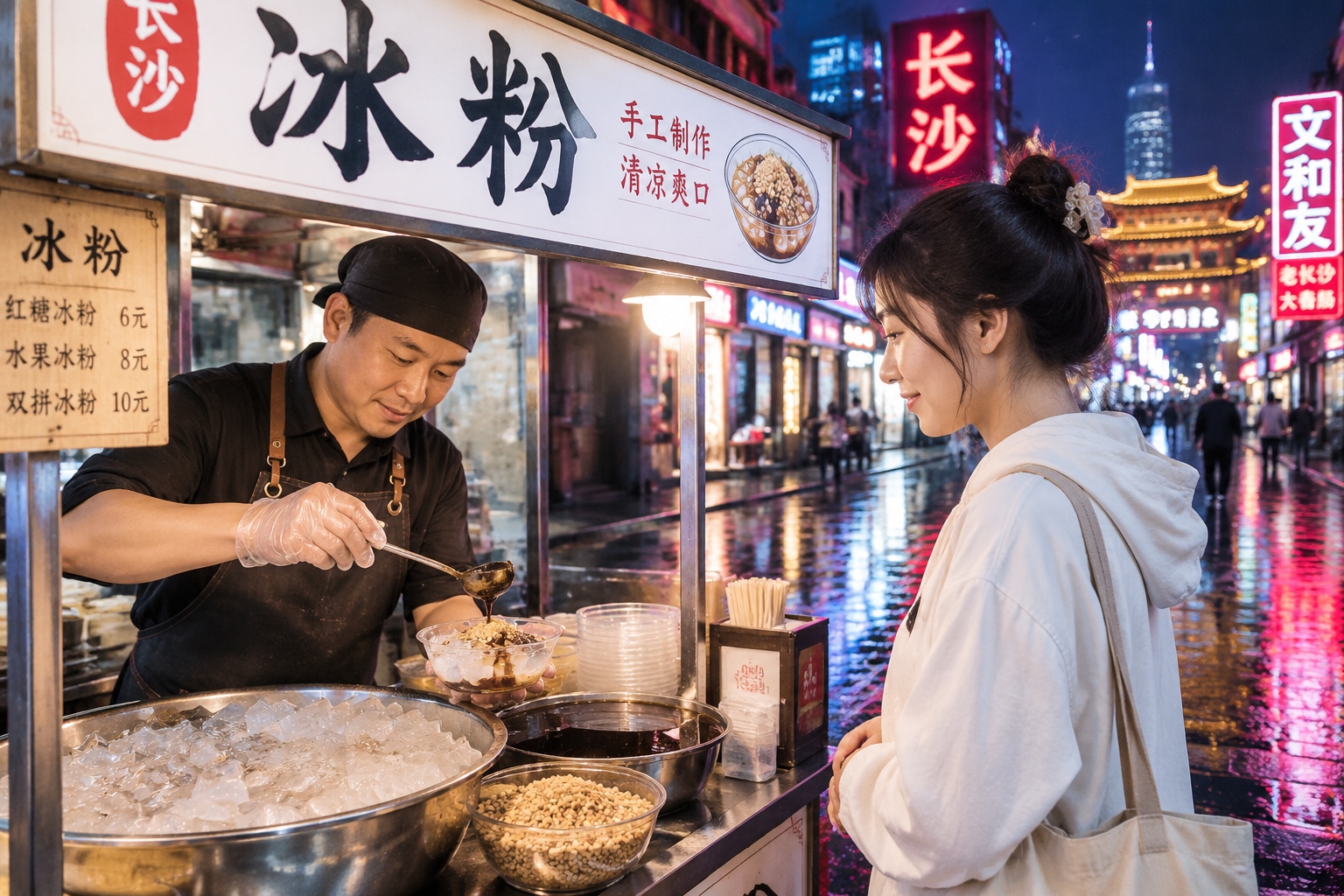
In Sichuan, you’ll see Weiyi Soy Milk everywhere. It’s an unassuming canned drink that cools the tongue instantly. In Chongqing, you’ll find bowls of Bingfen (ice jelly)—a sweet, gelatinous dessert topped with brown sugar syrup and crushed peanuts. It acts as a fire extinguisher for your digestive system.
I tried the Bingfen after my third bowl of spicy noodles in Chongqing. The contrast was shocking: cool, sweet, and slightly chewy against the searing heat. It didn’t just soothe; it reset my palate.
“We don’t drink water,” a local told me over a plate of fried rice. “Water just spreads the oil. We need something to cut through the fat.” This cultural habit shows how deeply food is woven into daily life—not as a chore, but as a ritual of survival and connection.
The Social Glue: Why We Eat Together
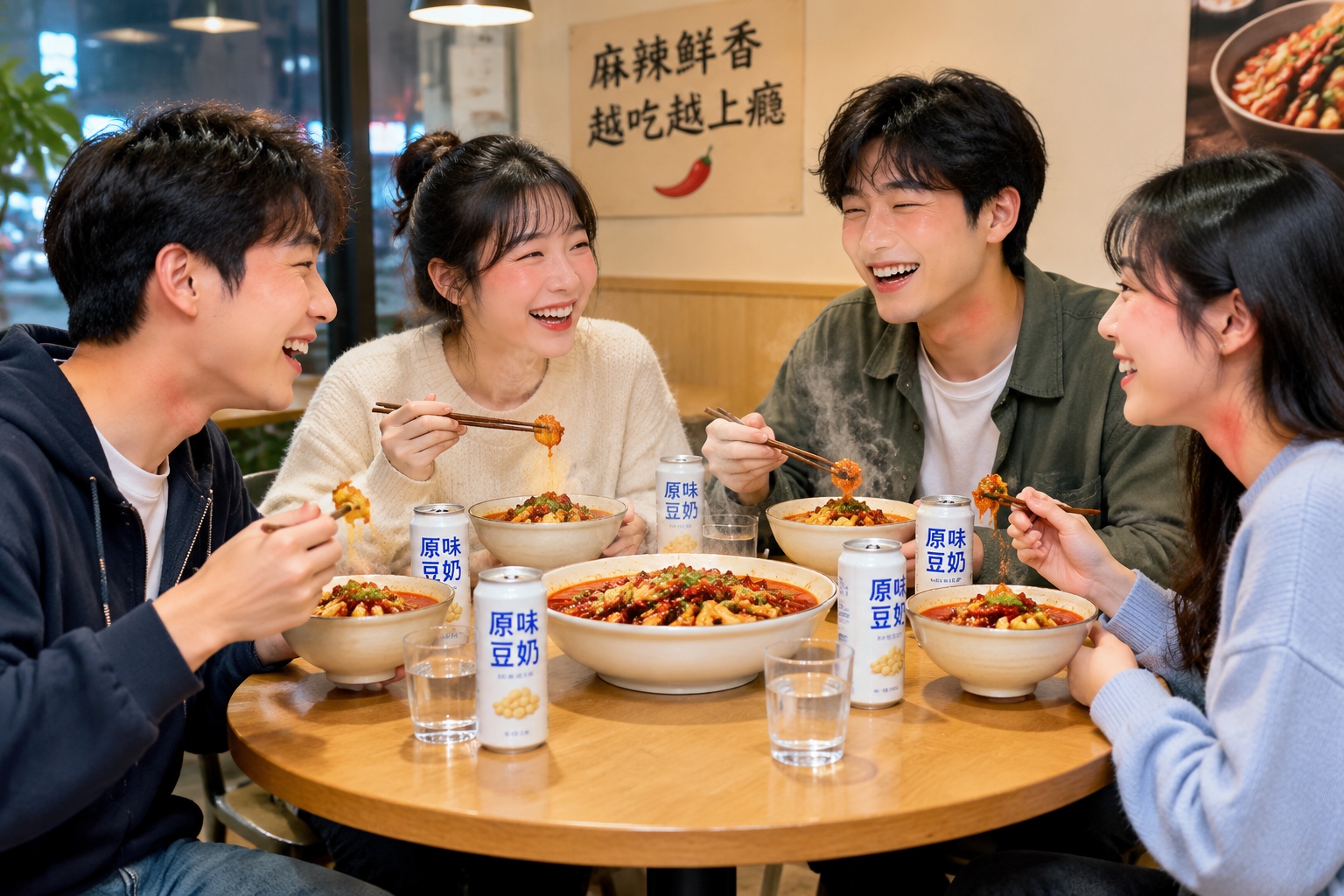
Ultimately, spicy food in Southwest China isn’t about endurance; it’s about community. The act of eating together, sharing a pot, sweating through the heat, creates an immediate bond. It breaks down barriers between strangers.
I watched a group of teenagers at a late-night street stall in Changsha, all arguing playfully over who could handle more spicy tofu while laughing and passing dishes around. They weren’t suffering; they were celebrating their shared identity.
For visitors, the journey through these spicy realms is a metaphor for understanding China itself: it’s intense, complex, and often overwhelming at first glance. But once you learn the rhythm, find your allies, and appreciate the layers of flavor, you realize there’s a beauty in the heat that you never expected.
Start the discussion at forum.chinacomes.com