

The City Before the Sunrise
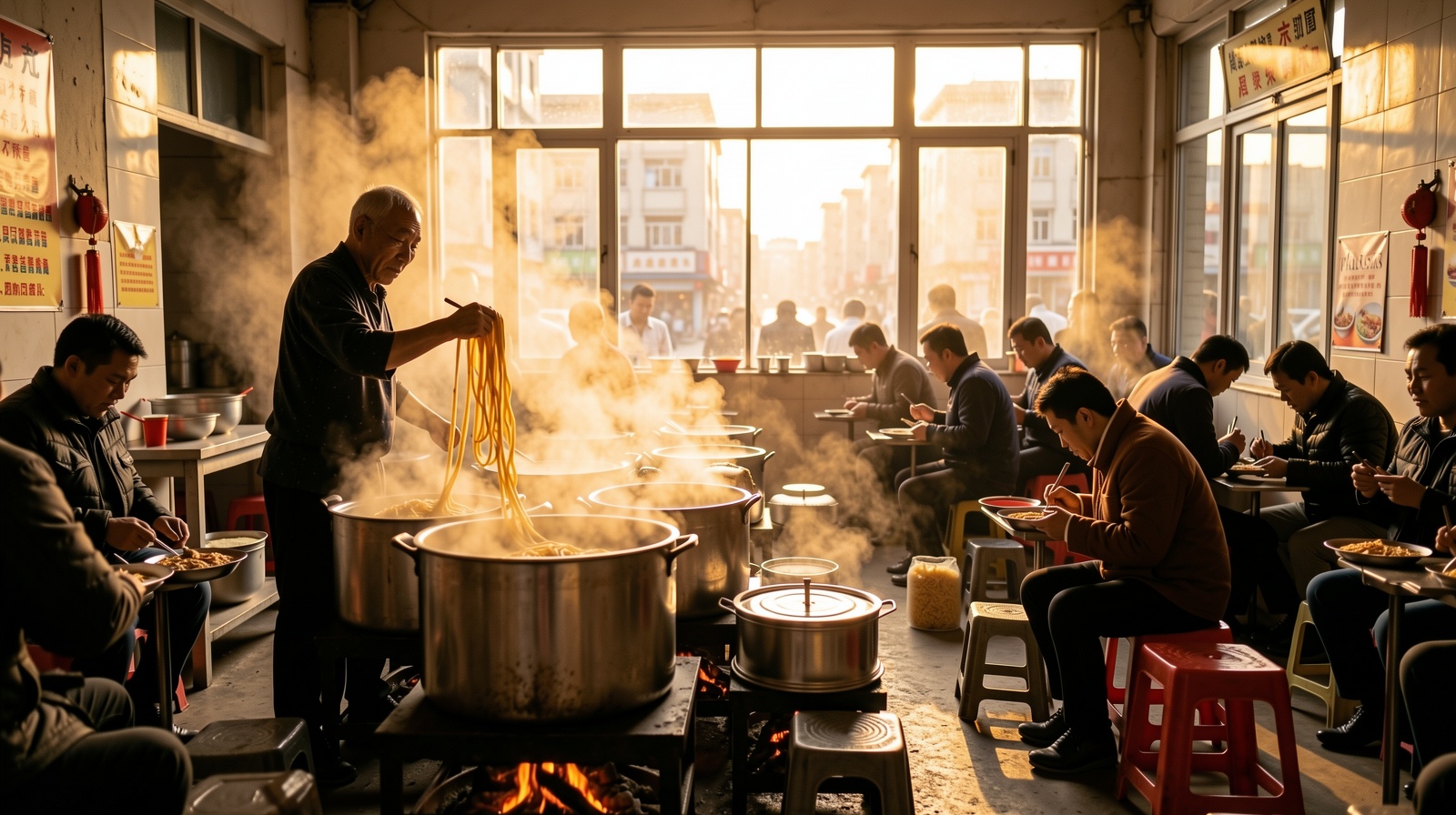
It is 5:15 AM in Lanzhou. The air is crisp, carrying a faint hint of coal smoke from older neighborhoods and the cool dampness of the Yellow River nearby. The city streets are empty, save for the rhythmic clatter of a delivery bike on wet pavement and the distant hum of a garbage truck. Inside ‘Ma’s Noodle Shop’ in the Gulang District, the scene is different. It is hot, humid, and smelling intensely of star anise, chili oil, and simmering beef bones.
Master Ma, 58, stands before his station. He doesn’t check a smartphone or review emails. His hands are already moving, kneading a block of dough that has been resting all night. The shop opens at 6:00 AM, but the preparation started hours ago. This is the daily ritual that powers one of China’s largest inland cities.
The Art of Hand-Pulling
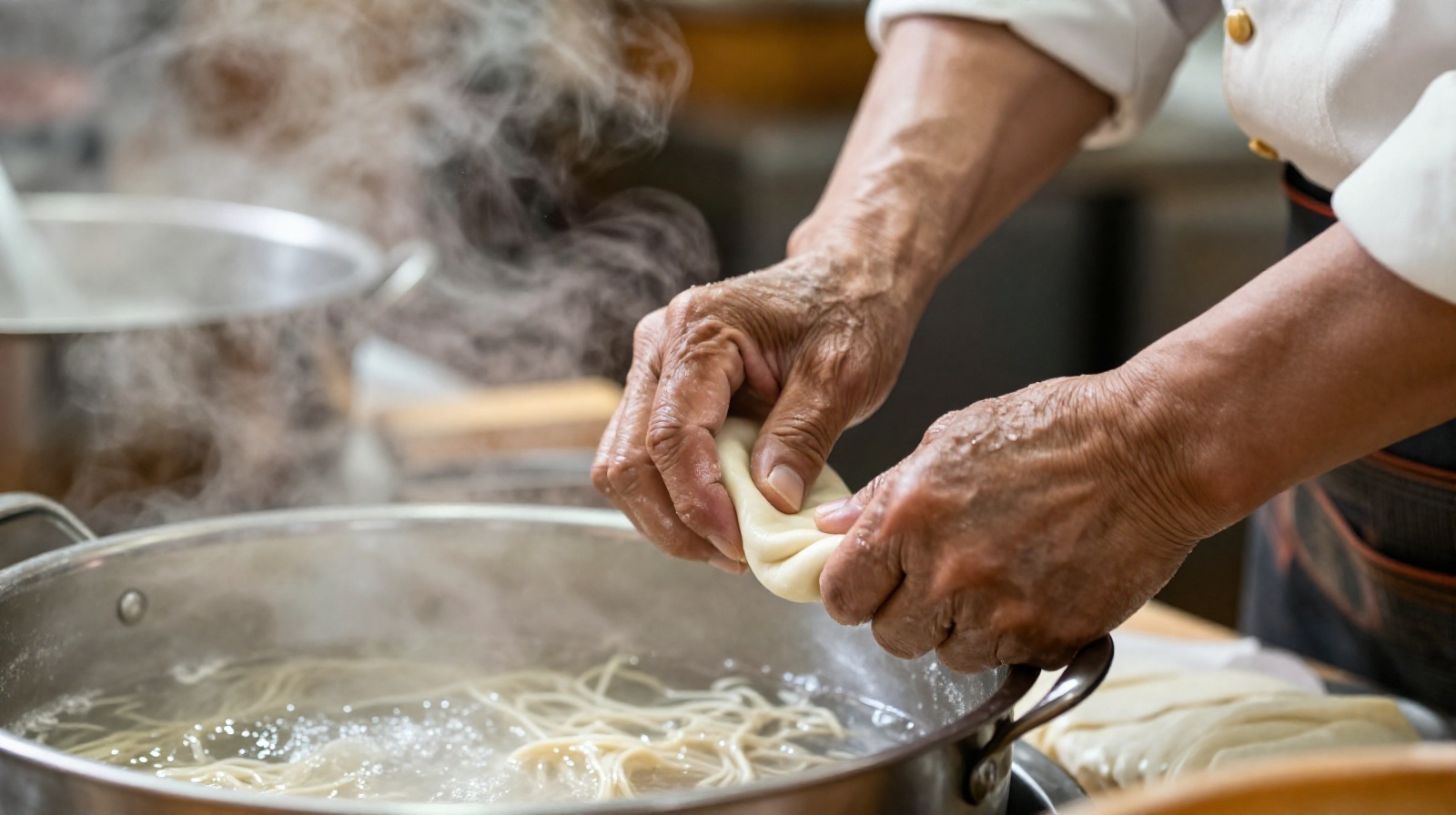
Watching Master Ma work is like watching a master craftsman in a workshop. He takes a piece of dough, slaps it against the counter to flatten it, then rolls it into a long rope. With a flick of his wrists, he splits the rope, twists it, and pulls. In seconds, what was a thick log becomes dozens of thin, elastic strands.
This is ‘Lamian’—hand-pulled noodles. The technique requires years of practice to master the elasticity of the flour and water mixture. Some locals prefer ’round’ noodles for their chewiness; others want ‘flat’ ones that soak up more broth. The chef asks, ‘Round or flat?’ as he tosses the noodles into a boiling pot.
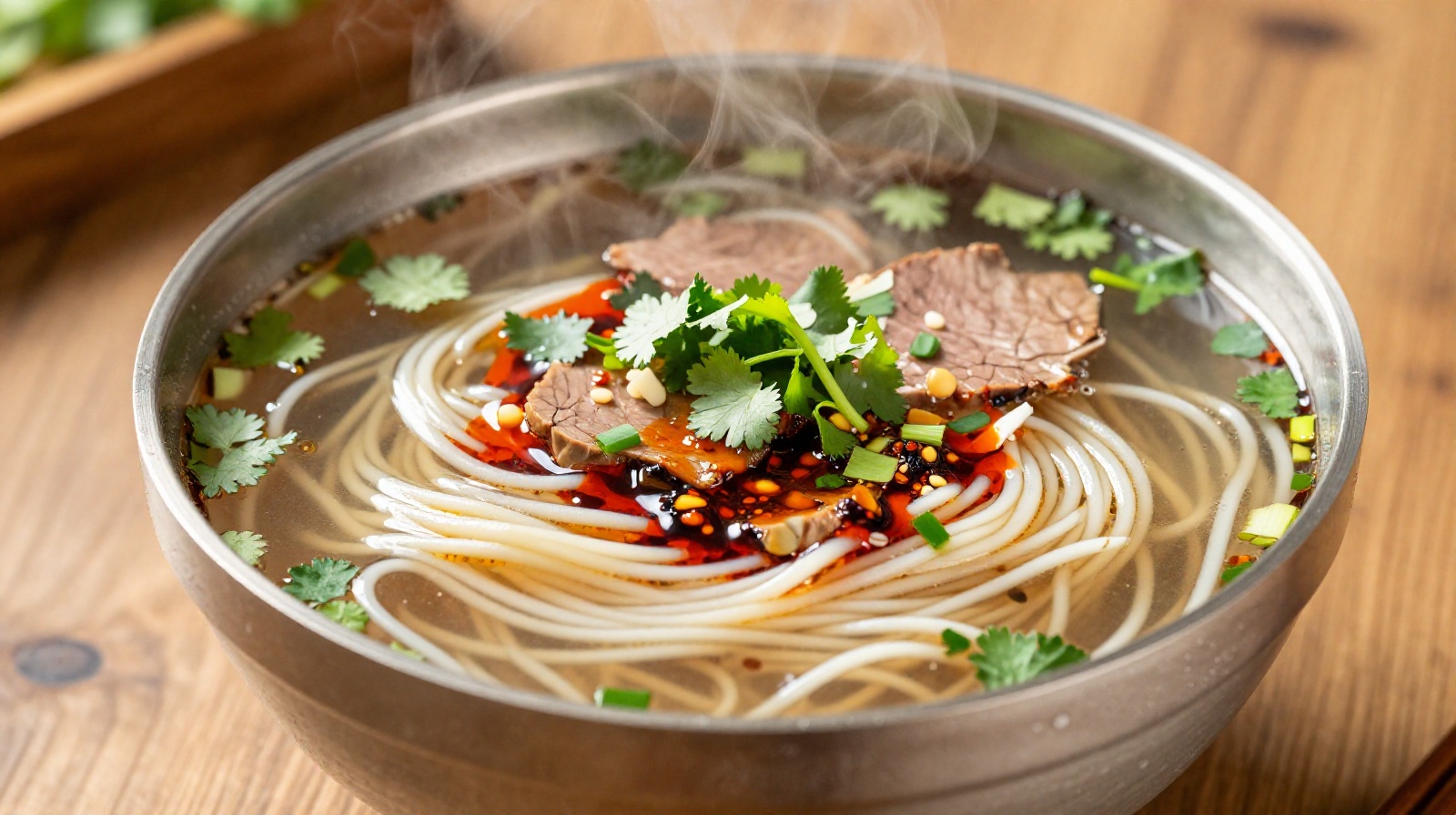
The process is precise. While the noodles cook in 90 seconds, the chef ladles clear, golden beef broth over them. This broth has been simmering for 12 hours, made from local cattle bones, radish slices, and a secret blend of spices that has been passed down through generations. Finally, he adds a spoonful of red chili oil—bright, spicy, and aromatic—and sprinkles fresh green coriander on top.
Fueling the City
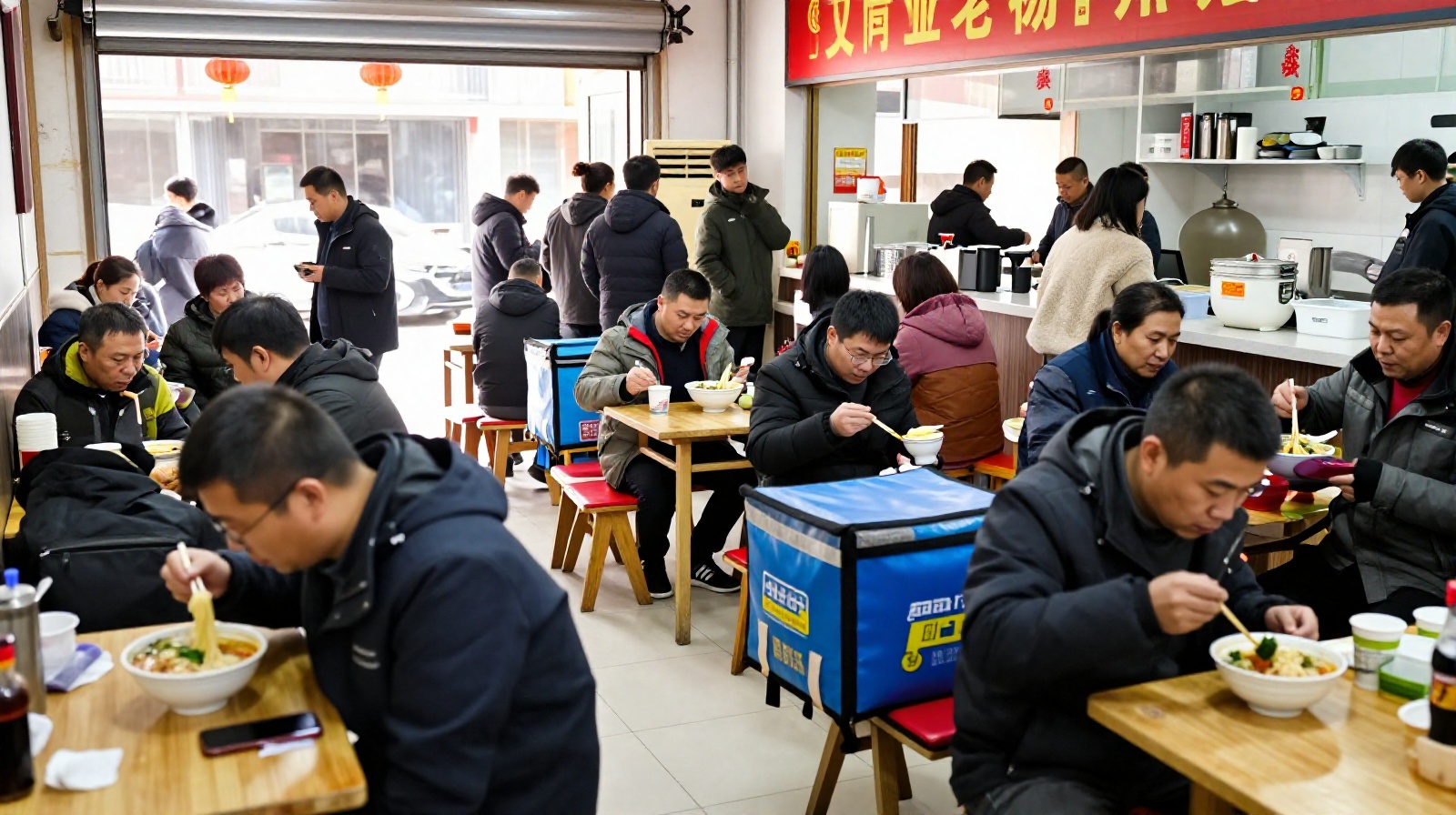
At 6:30 AM, the door swings open. The first customer is not a tourist, but a factory worker from a textile plant down the street, his uniform still dusty. He sits at a plastic table, grabs a pair of disposable chopsticks, and takes a deep breath before the first bite.
For millions of Chinese, breakfast isn’t a leisurely meal; it’s fuel. In Lanzhou, this bowl of noodles provides the energy needed for a 10-hour shift in a factory or a long commute on the city’s expanding bus network. The economy here runs on protein and carbohydrates, literally.
Soon after, the shop fills with delivery riders wearing bright yellow jackets. They don’t have time to eat at home; they grab their bowls and run back to their bikes, ready to deliver food across the sprawling city. Students from nearby universities follow, chatting about exams or part-time jobs. The noodle shop becomes a neutral ground where everyone shares the same moment of quiet before the day’s chaos begins.
A Silk Road Legacy
Lanzhou is not just any city; it sits at a critical junction of history. For centuries, this was the gateway for traders on the ancient Silk Road, where goods from Central Asia and Europe met Chinese products. The ingredients in this bowl tell that story: beef (common in Muslim culinary traditions), noodles (a staple across China), and spices brought by travelers over millennia.
Today, the city is transforming rapidly. High-rise buildings now line the Yellow River banks, contrasting with the old stone arches of historic neighborhoods. Yet, the noodle shops remain stubbornly unchanged. They are the anchors in a sea of change, preserving the rhythm of life that has existed for decades.

The New Generation
Not everyone here eats exactly as their grandparents did. A young woman in her 20s sits at the corner table, scrolling through WeChat on her phone while eating. She asks for ‘less chili’ and adds a side of spicy pickled vegetables from a modern supermarket brand.
This is the new Lanzhou: traditional taste meeting digital connectivity. Young people balance the comfort of familiar flavors with the fast pace of modern life. They use apps to order extra noodles, pay via QR codes in seconds, and share photos of their breakfast on social media. The bowl remains the same, but the way it is consumed has evolved.
Conclusion
By 8:00 AM, the sun has fully risen over the Yellow River, casting a golden light on the water. The noodle shop quiets down as customers leave to start their workdays. But for those who stay in Lanzhou, this morning ritual is more than just food.
The bowl of beef noodles reveals the true pulse of the city: resilient, community-focused, and deeply rooted in its history while moving forward with confidence. In a world obsessed with skyscrapers and high-tech hubs, the quiet dignity of a simple breakfast tells us what China is really like for its ordinary people.