

The Smell of Home
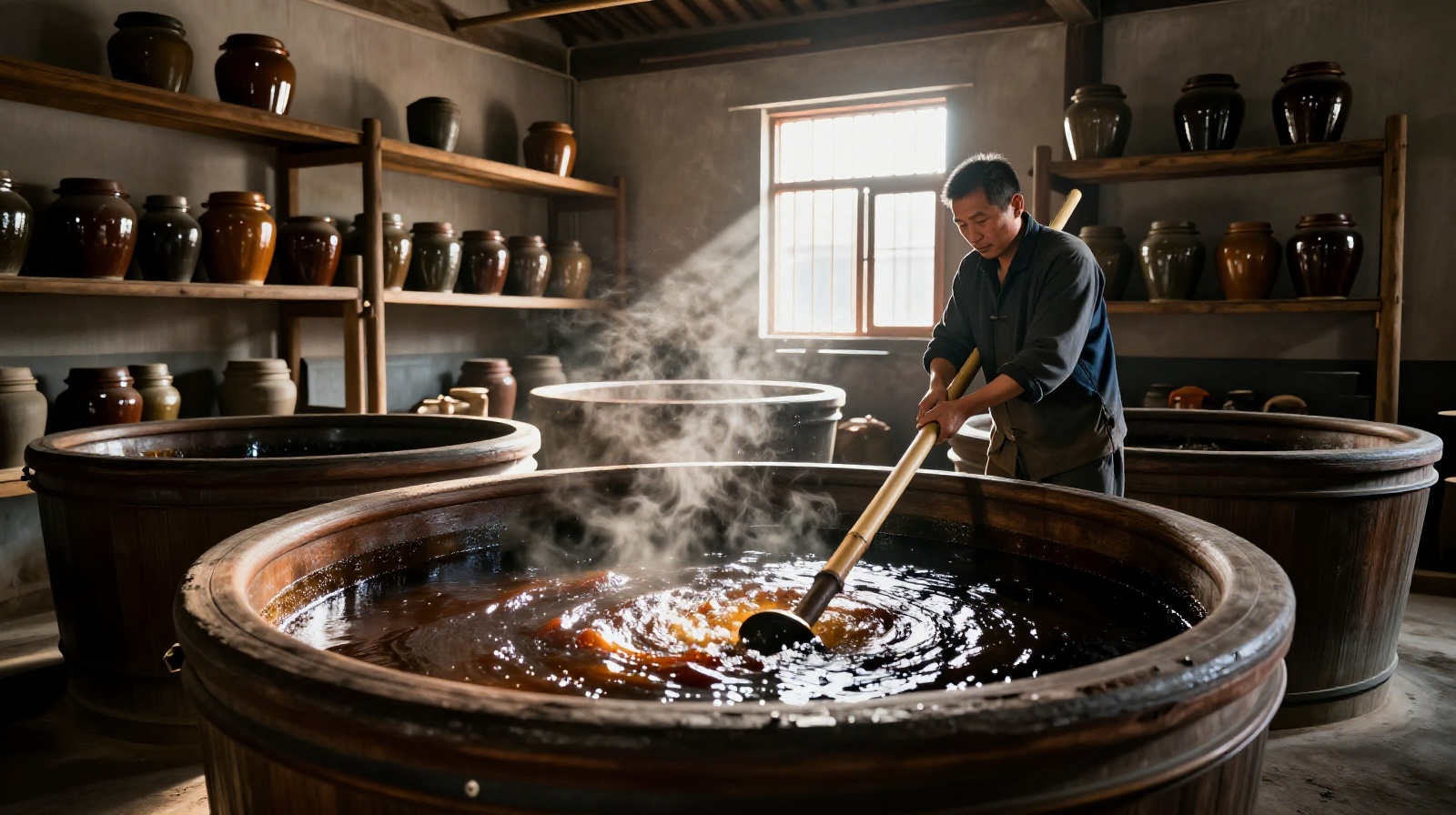
It is 6:00 AM in Taiyuan, the capital of Shanxi province. The air outside a small noodle shop on a narrow alleyway carries a sharp, tangy scent that cuts through the morning fog. Inside, fifty-year-old Li Wei stirs a massive wooden vat with a long bamboo pole. His hands move with a rhythm that has been practiced for forty years: down, turn, lift. He is not making jam or soup; he is tending to the family’s vinegar starter, a dark, liquid culture passed down from his grandfather.
For many foreigners, China might seem like a land of spicy Sichuan peppercorns or sweet Cantonese dim sum. But in Shanxi, the dominant flavor profile is sourness, specifically aged grain vinegar. This isn’t just about taste; it’s a cultural fingerprint. Li Wei explains that before they eat their famous braised noodles (You Po Mian), a bowl of soup must first be seasoned with a splash of this dark liquid. “Without the vinegar,” he says, wiping sweat from his forehead, “the noodles are just flour and water. With it, they have memory.”
The Living Starter
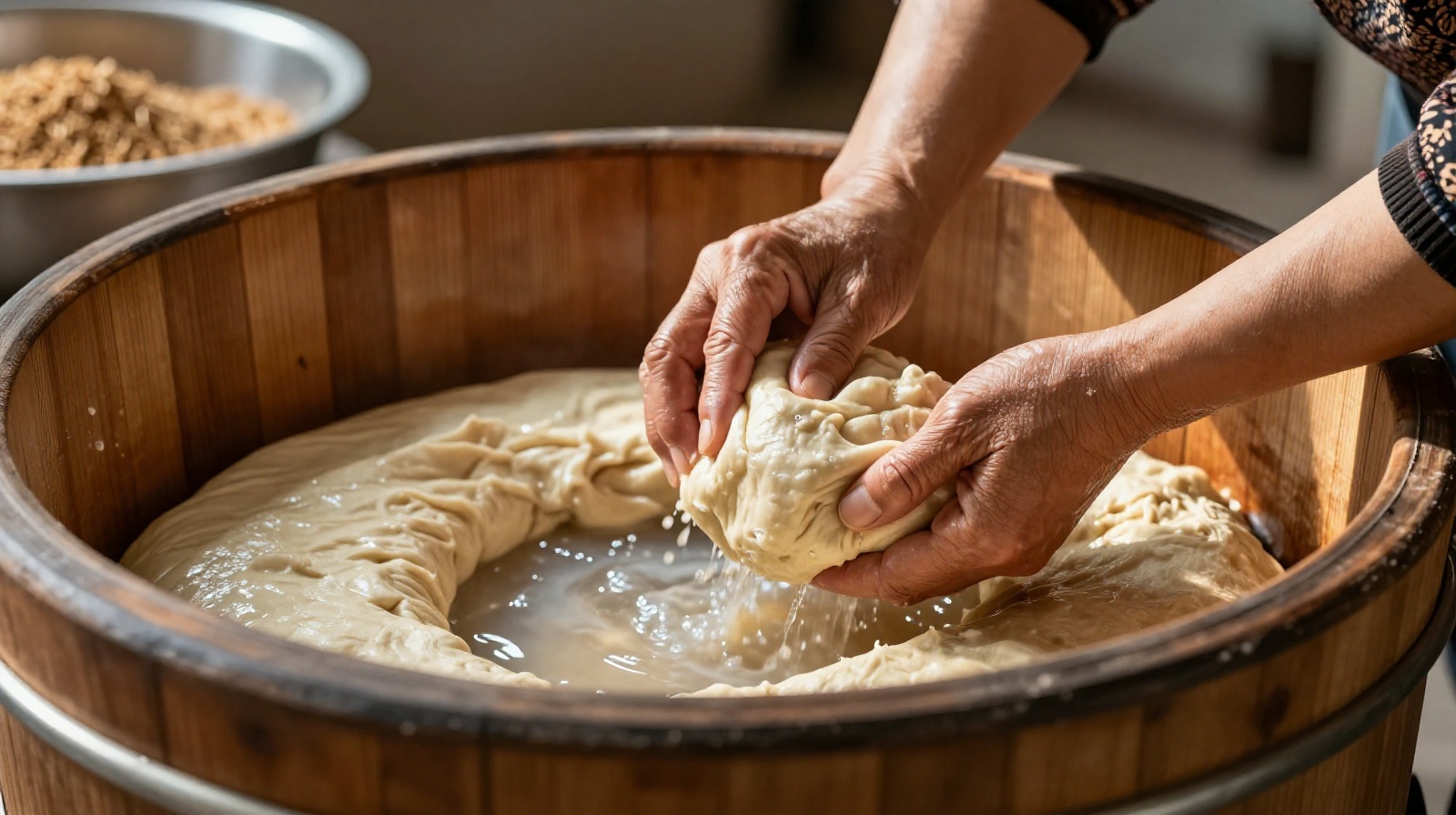
Li Wei’s workshop is not a museum piece; it is a living laboratory where time is the primary ingredient. He keeps what locals call ‘Old Dough’ (Lao Mian), a chunk of fermented starter that has been kept alive for over three decades. Unlike commercial yeast, which expires or requires constant reactivation, this dough is treated as family. Li Wei’s daughter, now 25 and working in an office in Beijing, visits every weekend to feed the starter with wheat bran and warm water.
“If you stop feeding it for a week, it dies,” Li says. “Then we have to start over from scratch.” This intergenerational responsibility creates a unique social bond. The dough is not just an ingredient; it is a living ancestor. In the summer heat of Shanxi, the workshop temperature rises, and the starter bubbles softly, releasing a yeasty, slightly alcoholic aroma that signals the beginning of fermentation.
From Pot to Plate
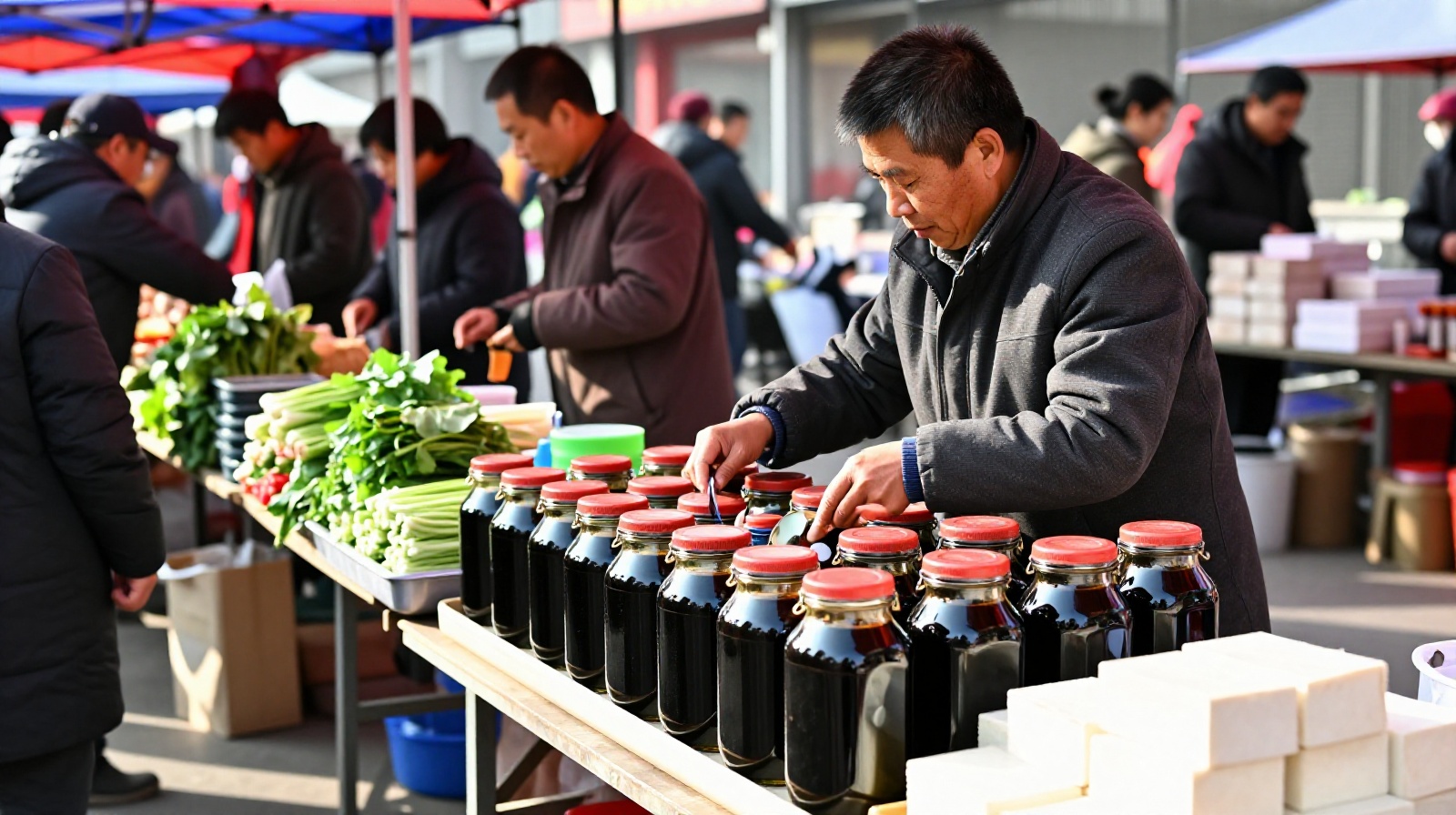
The transition from tradition to modern life is seamless in Shanxi. In the bustling morning markets near Jinci Temple, vendors sell jars of vinegar alongside fresh vegetables and tofu. The bottles are often simple glass with handwritten labels indicating the year the grapes or millet were processed.
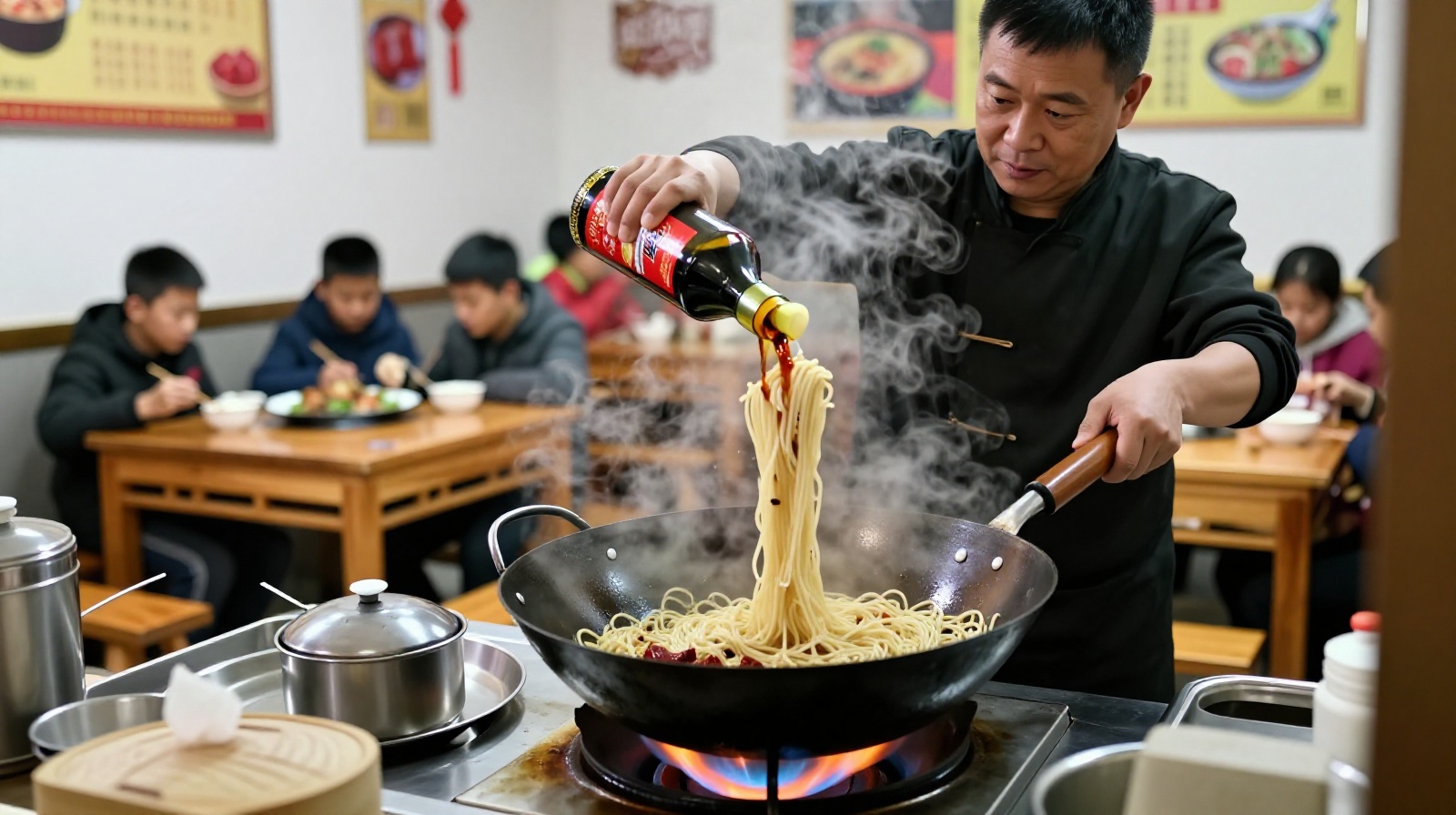
In a local eatery just down the street, a young couple orders a bowl of fried rice. The cook ladles two different types of vinegar into the wok: one for acidity, another for aroma. This is not a recipe from a book; it is muscle memory passed down in the kitchen. The result is a dish that tastes ancient yet feels entirely contemporary.
Science Meets Tradition
While Li Wei relies on intuition and taste, Shanxi’s vinegar industry has also embraced modern science. Large production facilities in the province now use controlled fermentation chambers to ensure food safety while maintaining traditional flavors. Microbiologists here study the specific strains of bacteria that create the complex umami notes in aged vinegar.
“We don’t replace the old methods,” says Dr. Zhang, a quality control manager at one of the region’s largest vinegar plants. “We just add microscopes and thermometers to make sure every batch is safe for export.” This balance allows Shanxi vinegar to reach global shelves while keeping its soul intact.
A Taste of Resilience
Shanxi’s obsession with sourness tells a deeper story about the region’s history. Once a harsh, arid climate made fresh produce scarce in winter. Fermentation was not just a luxury; it was a survival strategy. The ability to preserve food through time became a core part of the local identity.
Today, as China rapidly modernizes, these ancient practices remain surprisingly resilient. In Shanxi, the past is not something left behind; it is kept alive in every jar and every bowl. For Li Wei and his family, making vinegar is an act of patience in a world that demands speed. It reminds us that some things cannot be rushed—they must be allowed to ferment, age, and mature until they are ready.