
The Smell of Pine and Pour-over Coffee
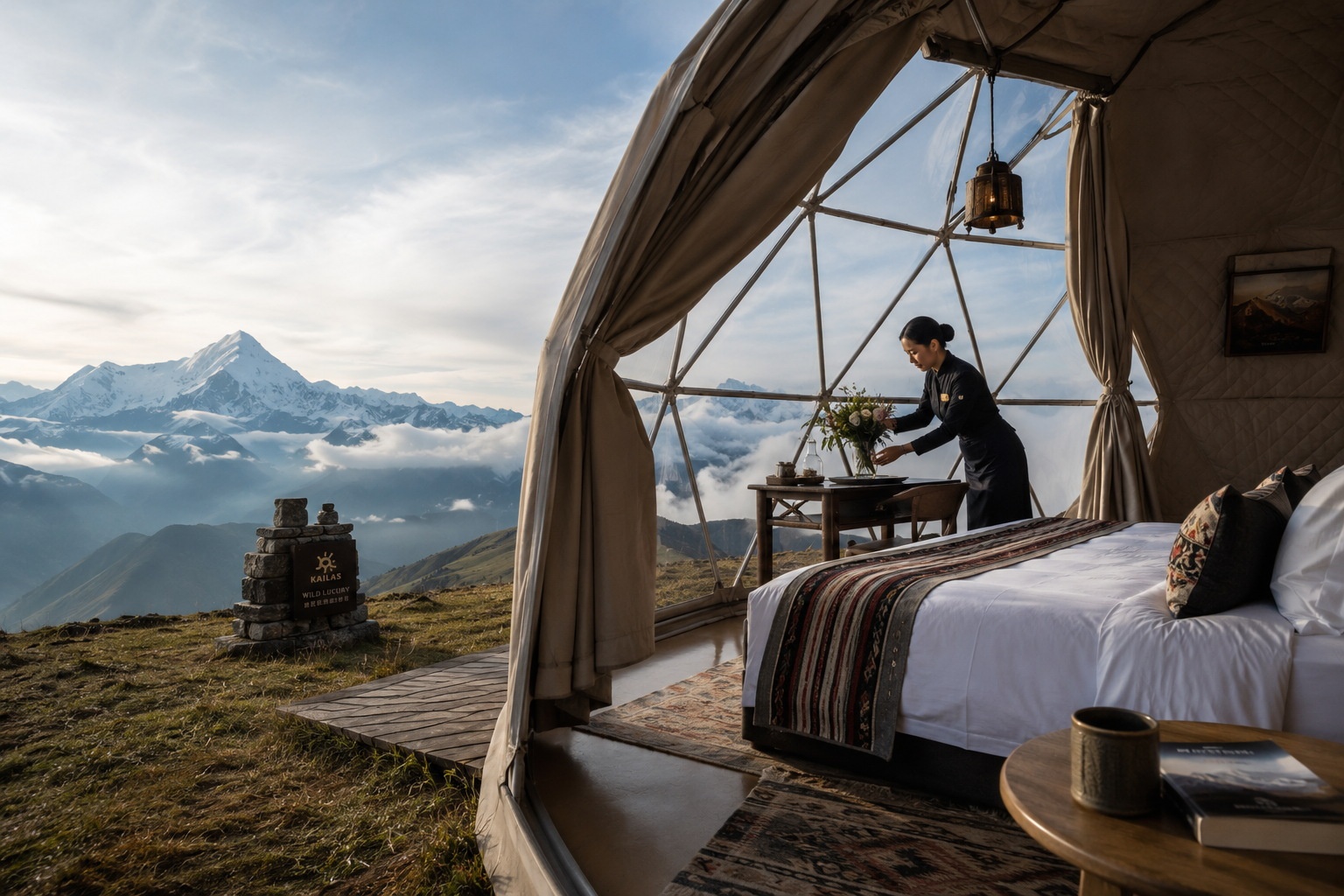
At 7:30 a.m., the air in the Qinghai-Tibet plateau is still biting, hovering around minus five degrees Celsius. But inside Dome 4, the temperature is a steady 22 degrees. Lin Wei, a 34-year-old software architect from Shenzhen, pulls back the heavy thermal curtains. Outside, jagged snow-capped peaks pierce the pale blue sky. Inside, a Nespresso machine hisses softly, and the rich aroma of freshly ground Ethiopian beans cuts through the crisp mountain air.
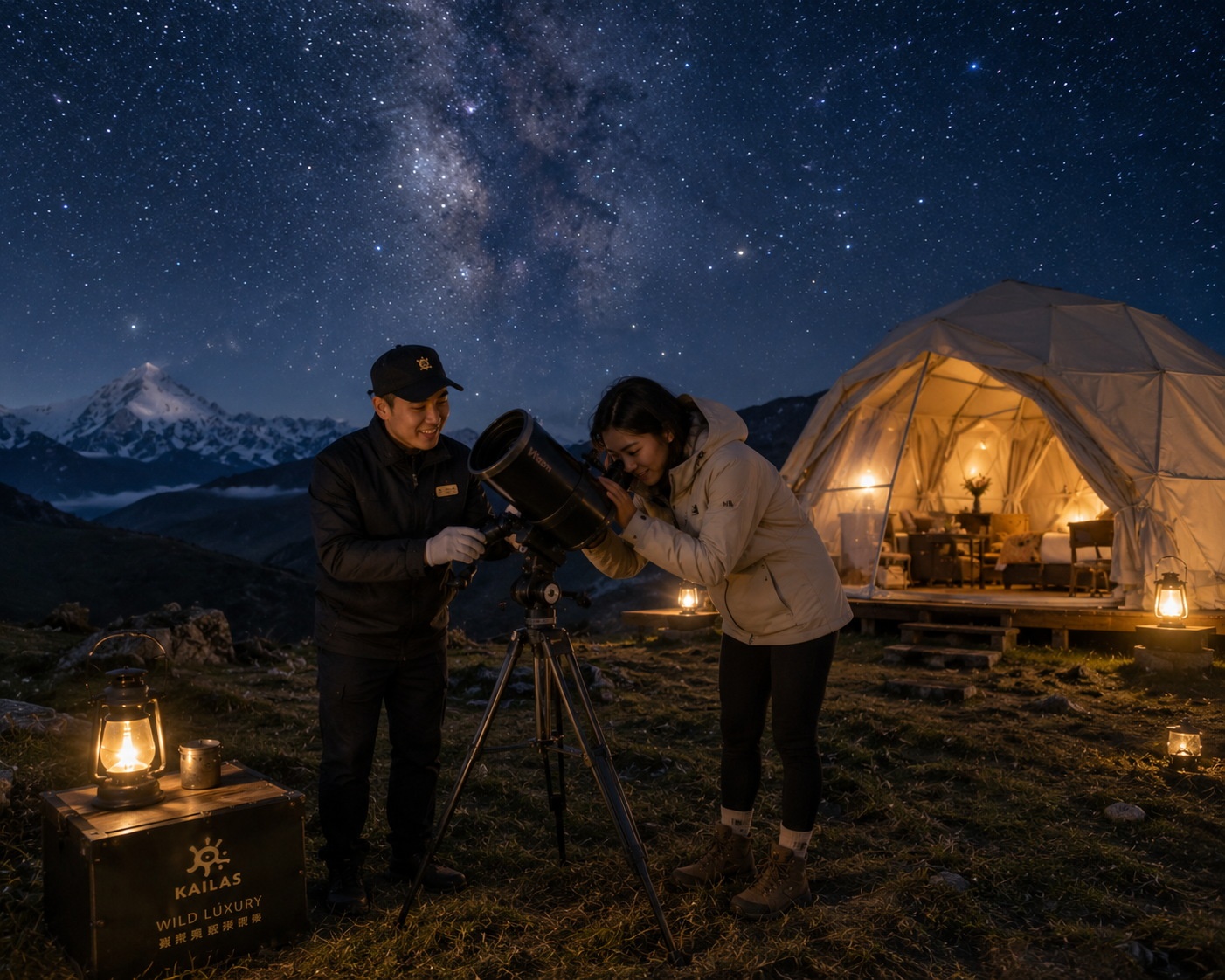
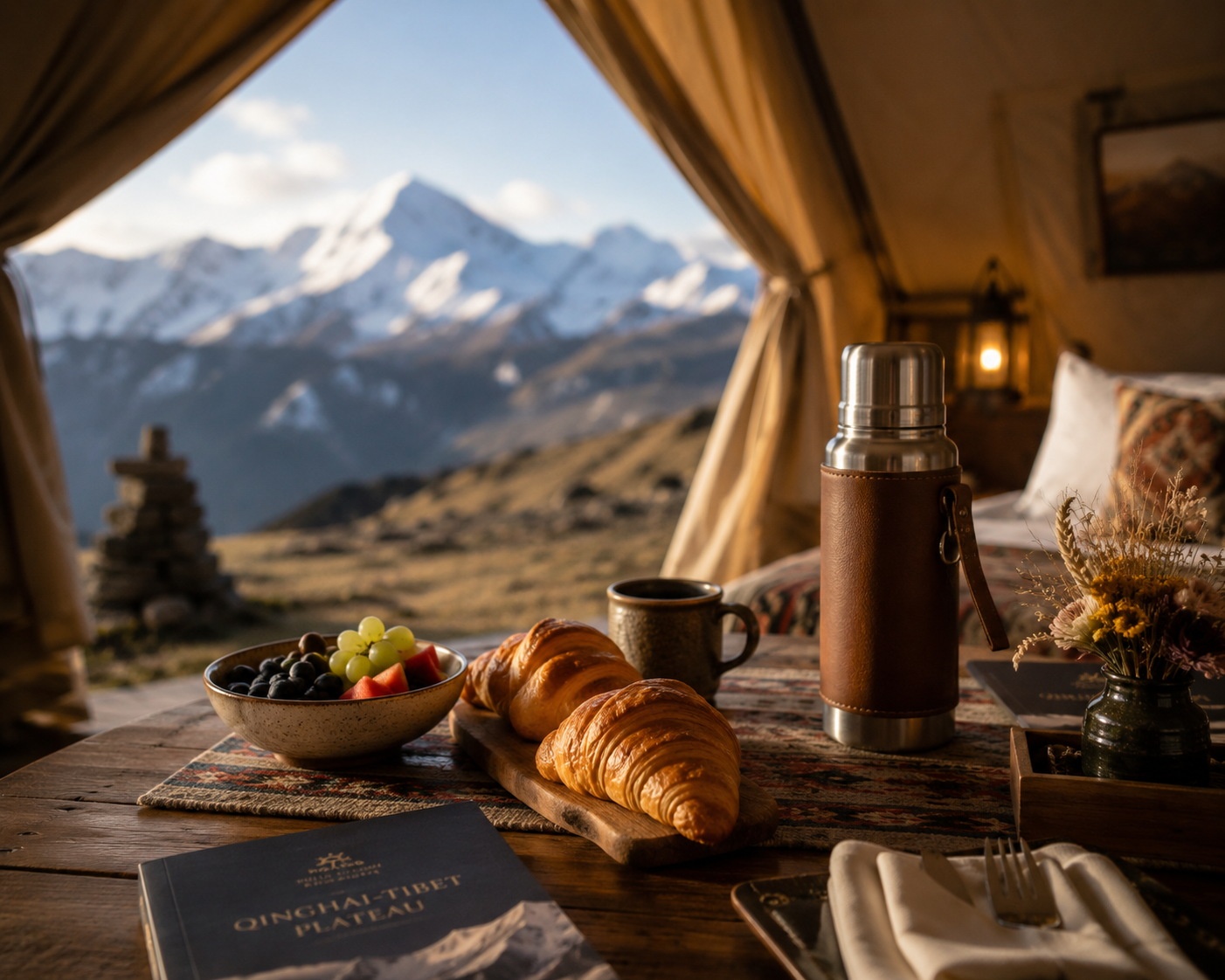
He doesn’t have to chop wood or start a fire. A young staff member in a pristine uniform has already laid out breakfast on the rustic wooden table: croissants, fresh fruit, and a thermos of homemade jam. “The butler handled everything last night,” Lin says, adjusting his silk pajama collar. “I just texted him around 10 p.m. that I wanted to see the stars. He set up the telescope and heated the room before I even got back from my hike.”
Defining ‘Glamping’ in the Chinese Context
This scene is becoming increasingly common across China’s vast wilderness. “Glamping”—a portmanteau of “glamorous” and “camping”—has evolved from a niche hobby into a booming industry segment, particularly among the country’s growing middle and upper-middle classes.
For decades, Chinese tourism was dominated by the “special forces style” rush: checking off dozens of landmarks in a single trip, often involving long bus rides and crowded hostels. But a shift is occurring. Young professionals, exhausted by the “996” work culture (9 a.m. to 9 p.m., six days a week), are seeking a different kind of escape. They want the aesthetic of the wild—the rugged landscapes, the silence, the disconnect from urban noise—but they refuse to compromise on the amenities they are used to in cities.
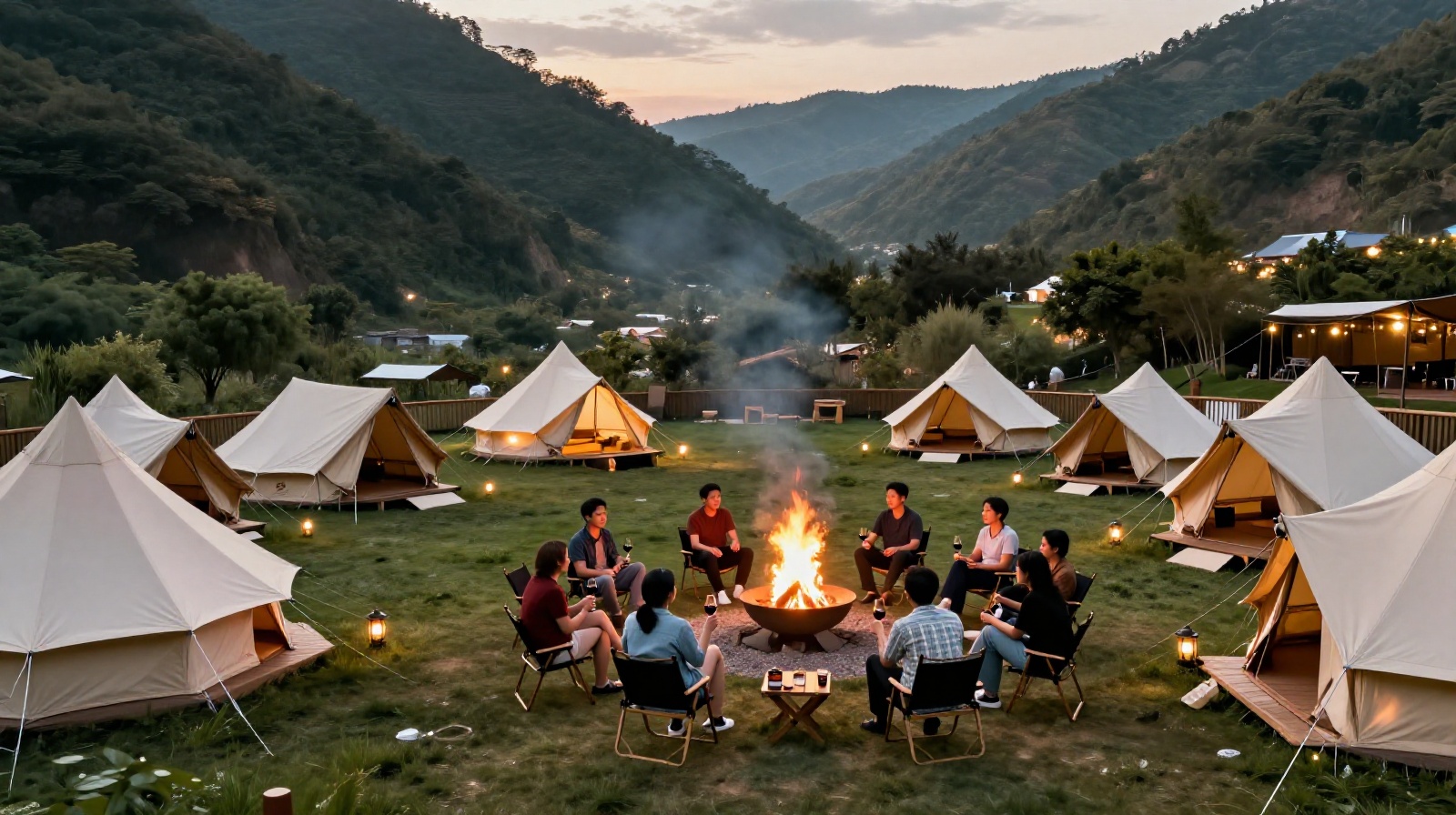
This is where the “butler” comes in. Unlike traditional camping, where one brings their own tent and food, glamping sites in China often provide fully furnished luxury tents equipped with king-sized beds, high-end bathroom facilities, and sometimes even personal chefs. The service is hyper-personalized. Guests don’t just rent a space; they rent an experience curated by staff who anticipate needs before they are voiced.
The appeal lies in the contrast. It is the thrill of sleeping under the Milky Way without sacrificing the comfort of a five-star hotel room. For Chinese consumers, this represents a sophisticated form of leisure: one that values efficiency and safety as much as adventure.
The Psychology of ‘Refined Wilderness’
Why is this trend exploding now? It reflects a deeper social shift in how Chinese people view nature and risk. In the past, going “wild” meant enduring hardship as a badge of honor. Today, it is about curation.
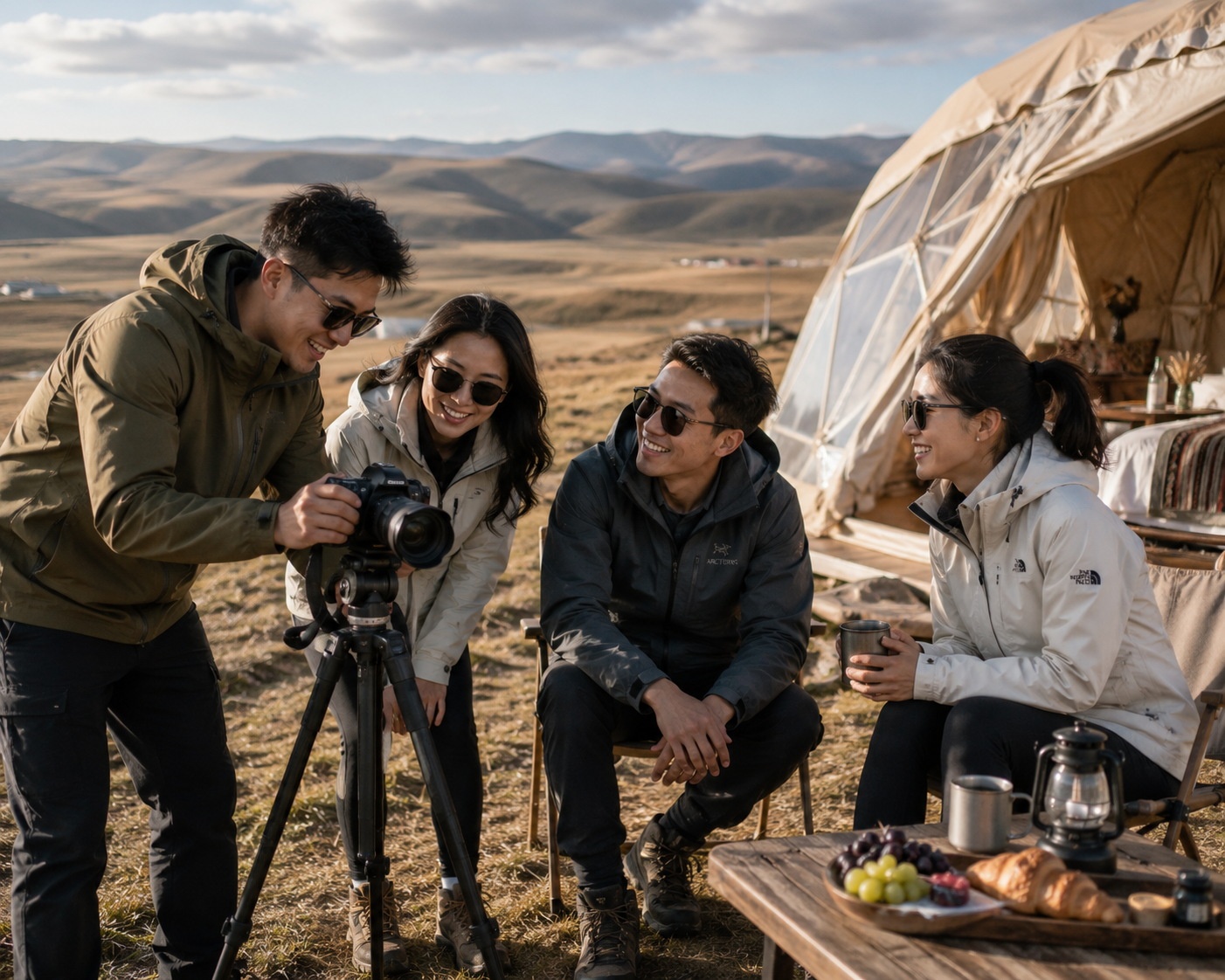
Taking my own trip to a glamping site near Lijiang, I observed a group of influencers setting up for a livestream. Their tents were not just shelters; they were stages. The lighting was perfect, the backdrop was dramatic, and the service was seamless. “We want to show that you can be close to nature without being dirty or unsafe,” one participant told me while adjusting her hair mirror.
This desire for “refined wilderness” (jingzhi yequ) is distinct from the backpacker ethos of the 2000s. It is also different from pure luxury resorts. Glamping occupies a sweet spot: it offers the social capital of exploring remote places, combined with the security and comfort of known standards. In a rapidly changing society where unpredictability is high, controlling one’s environment—even in the middle of nowhere—provides a rare sense of peace.
A New Tourism Model
For China’s tourism industry, glamping is more than a fad; it is a strategic pivot. Traditional mass tourism often puts pressure on fragile ecosystems and local infrastructures. Glamping, when done responsibly, disperses visitors to less crowded areas, bringing economic benefits to rural communities without the need for massive hotel construction.
However, it is not without its critics. Some argue that putting a butler in the wilderness strips away the essence of camping—that true connection with nature requires vulnerability and discomfort. There is also the concern of environmental impact, as these luxury sites must manage waste and energy usage in remote locations.
Yet, for the average consumer, the trade-off is clear. The ability to experience the raw beauty of China—from the deserts of Gobi to the forests of Yunnan—without the physical toll of traditional trekking is a luxury they are willing to pay for. It is a way to reclaim personal time in a high-pressure society.
The Future of Outdoor Leisure
As China’s economy stabilizes and consumer confidence returns, the glamping sector is expected to mature. We are already seeing sites offer more specialized services: yoga instructors at dawn, stargazing guides with telescopes, and local cultural immersion activities.
This evolution signals a broader change in Chinese lifestyle. It is no longer enough to simply “see” a place; one must “feel” it, but on one’s own terms. The butler in the wilderness is not just a servant; he is a symbol of a new Chinese identity that refuses to choose between modernity and nature, instead demanding both.