
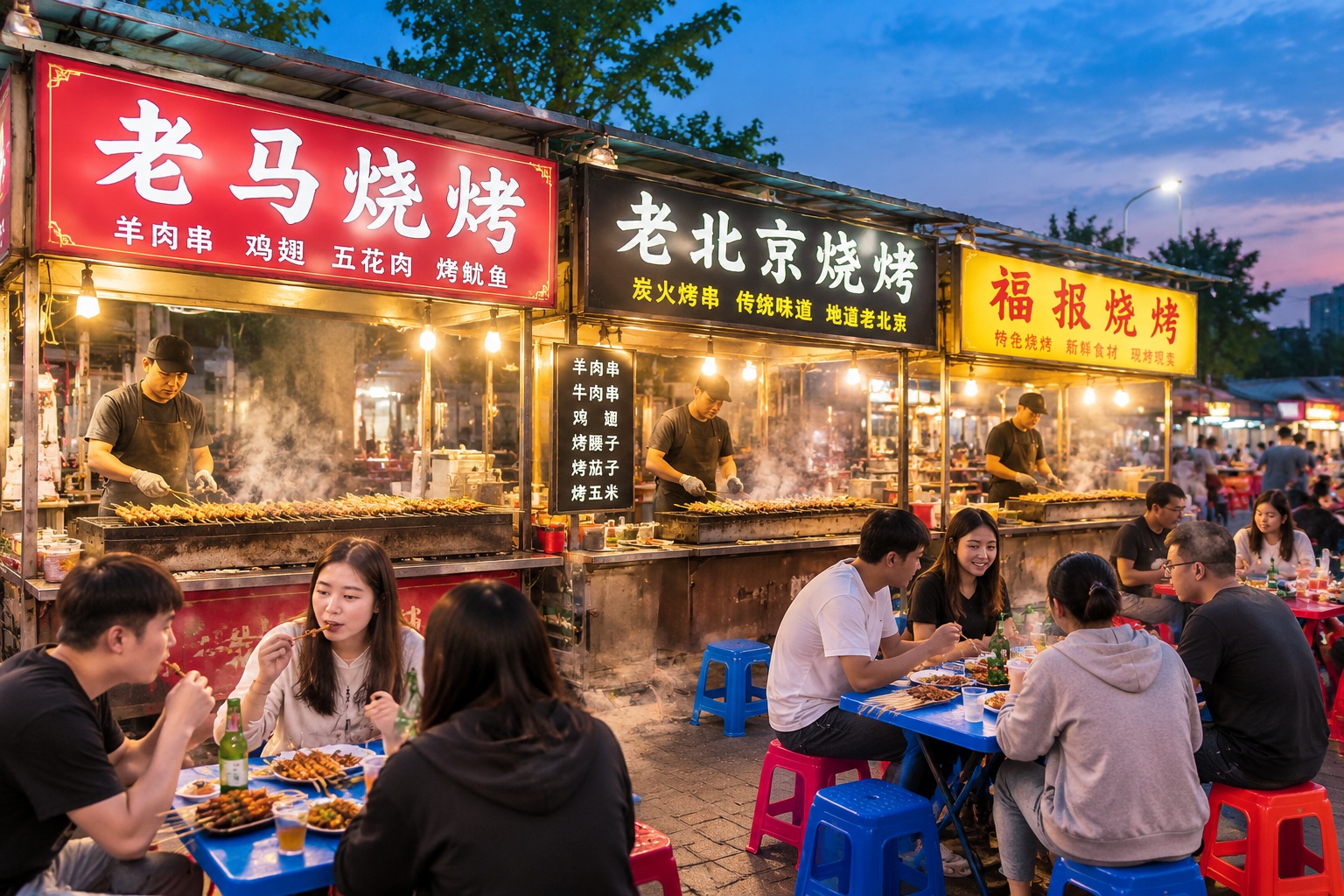

The Scent of Charcoal and Smoke
It is just past 9 PM in Beijing’s Dongzhimen district. The air, still warm from the summer day, suddenly carries a new layer: the sharp, spicy scent of cumin and burning charcoal. It cuts through the humidity, pulling pedestrians off the sidewalk toward the source.
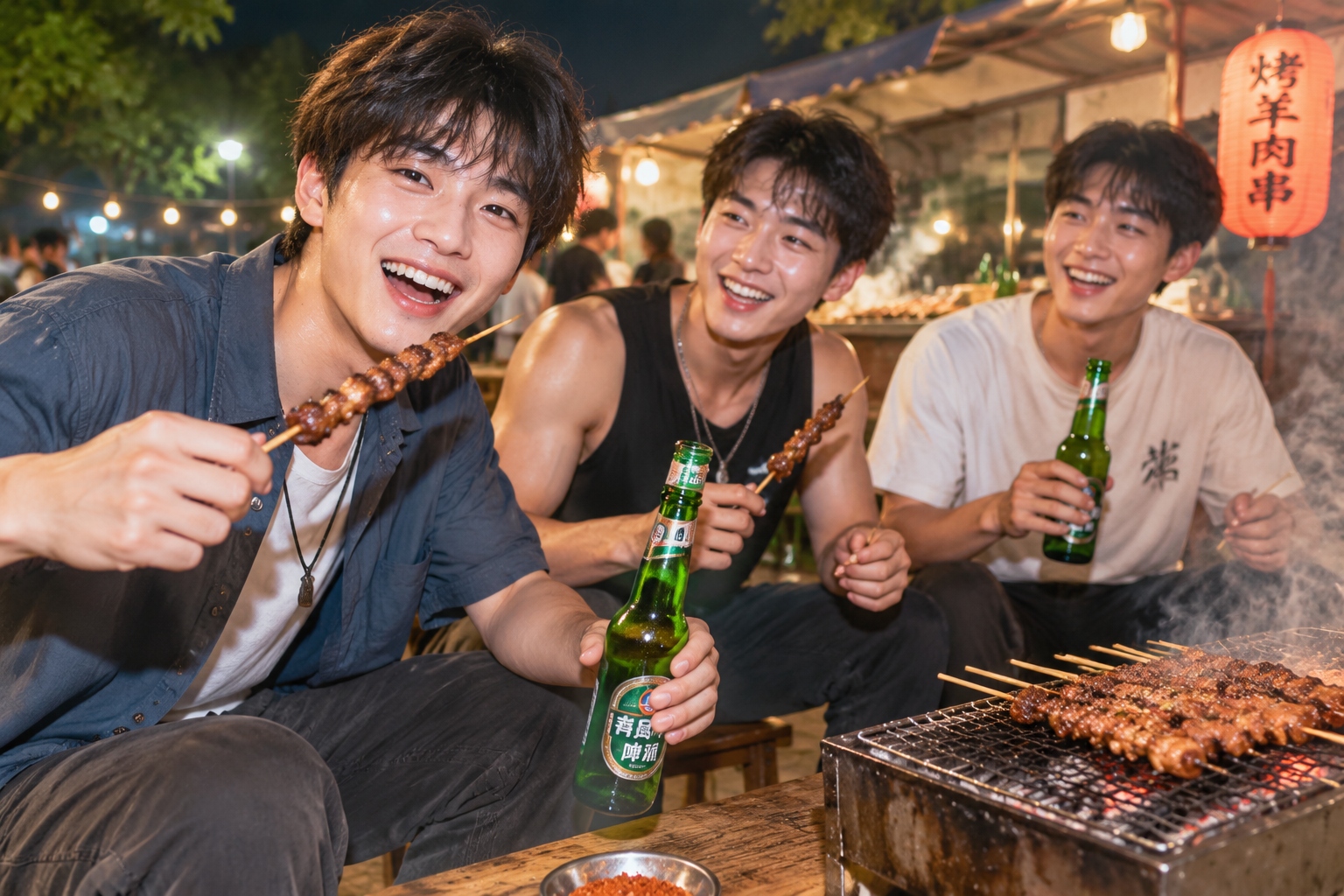
Under the glow of plastic string lights that buzz softly overhead, low folding tables are already occupied. A group of young men in t-shirts sit cross-legged on benches, their forearms glistening with sweat as they peel garlic cloves and wash down bites of meat with cold beer from green glass bottles. The clatter of metal skewers hitting ceramic plates is a constant rhythm, mixed with the sizzle of fat dripping onto hot coals—hiss, pop, crackle.
This is Shao Kao (charcoal-grilled meat on skewers). For millions in China, it is not just dinner; it is the heartbeat of the night. While formal restaurants offer quiet refinement, these open-air stalls offer something far more visceral: a release from the day’s pressure.
From Xinjiang to Sichuan: A Map on a Stick
The beauty of Chinese BBQ lies in its lack of uniformity. There is no single “Chinese BBQ” flavor. Walk ten meters down this street, and the offerings change completely.
To the left, a stall specializes in lamb skewers from Xinjiang. These are large, marinated with yogurt and cumin, grilled until the fat renders and drips away, leaving behind meat that is tender yet chewy. The grill master flips them with long iron tongs, his movements practiced and precise.
Just a few steps to the right, the scene shifts to Sichuan-style “little skewers.” These are tiny pieces of pork or tripe, threaded onto short bamboo sticks. They are heavy on chili oil and numbing Sichuan peppercorns. The eaters here don’t just chew; they fan their mouths with paper fans, eyes watering slightly from the heat, laughing through the pain.
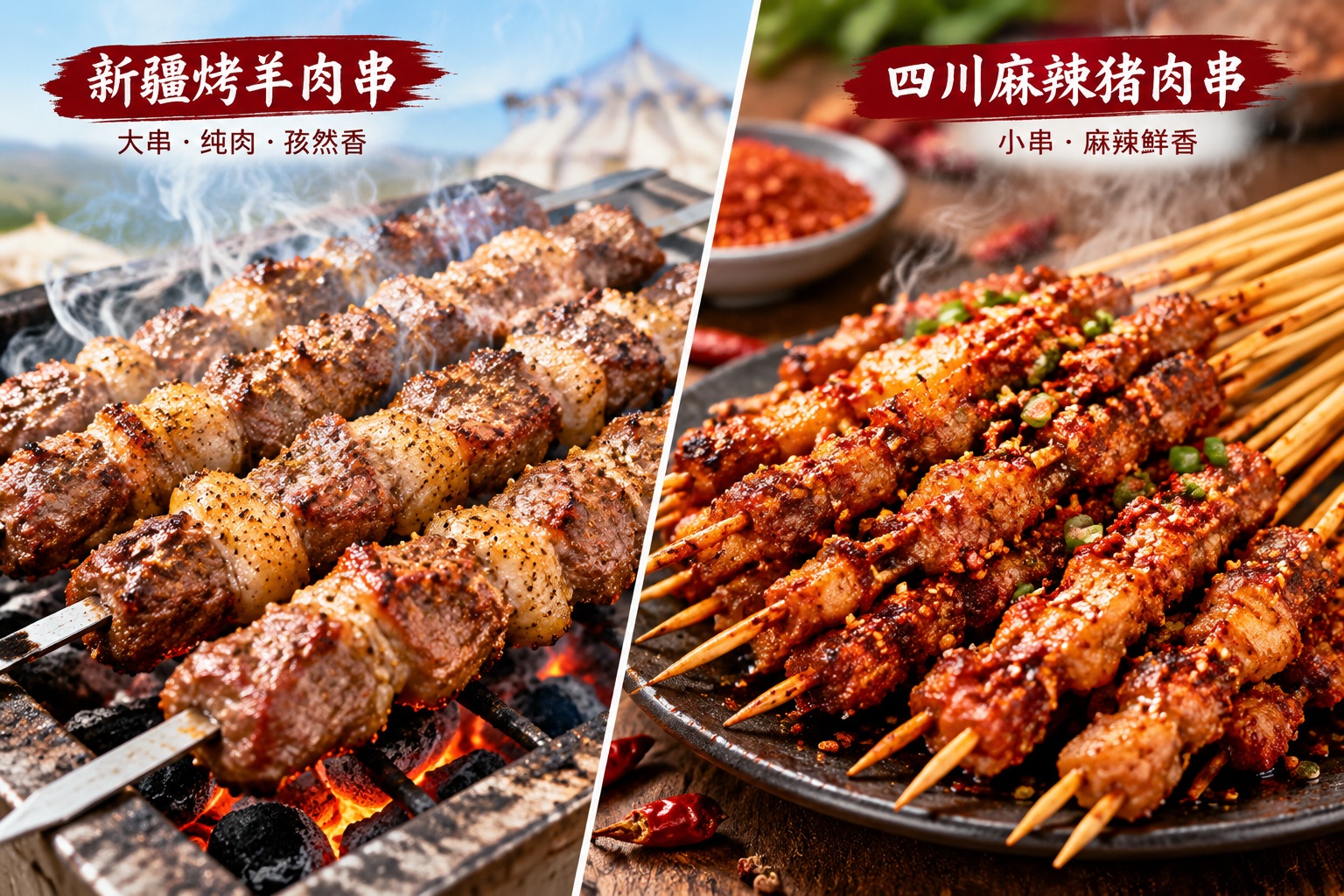
From cumin-spiced lamb to numbing chili oil, each region adds its unique flavor profile to the charcoal grill.
Whether it’s squid stuffed with cheese in Shanghai or lamb intestines in Lanzhou, the variety is endless. Each skewer tells a story of local geography and history, turning a simple meal into a culinary map of the region.
The Great Equalizer: Why Young People Choose Skewers
For post-90s and 00s generation Chinese youth, Shao Kao has become the default venue for decompression. After long hours in air-conditioned offices or under bright factory lights, the idea of sitting at a polished table with white tablecloths feels distant. The plastic stools don’t care about your job title.
Here, hierarchy dissolves. A software engineer sits next to a delivery driver. They share the same plate of beef, the same bottle of beer. The noise level is high—too high for serious business discussions—but perfect for venting frustrations, gossiping about relationships, or simply laughing until their sides hurt.
The ritual itself is part of the appeal. “Lu Chuan” (pulling skewers) involves using your hands to slide the meat off the stick and into your mouth. It is messy, tactile, and inherently human. You cannot eat this food with a fork; you must engage with it directly.
Strangers as Neighbors
The most striking aspect of Shao Kao culture is its ability to turn strangers into temporary family. In many stalls, if a table runs out of skewers and sees an empty spot at a neighboring table, the server might simply ask, “Mind sharing?” or you might be told, “Come join us, we have extra beer.”
This intimacy isn’t forced; it grows naturally from the shared experience of waiting for food cooked over fire in the humid night air.
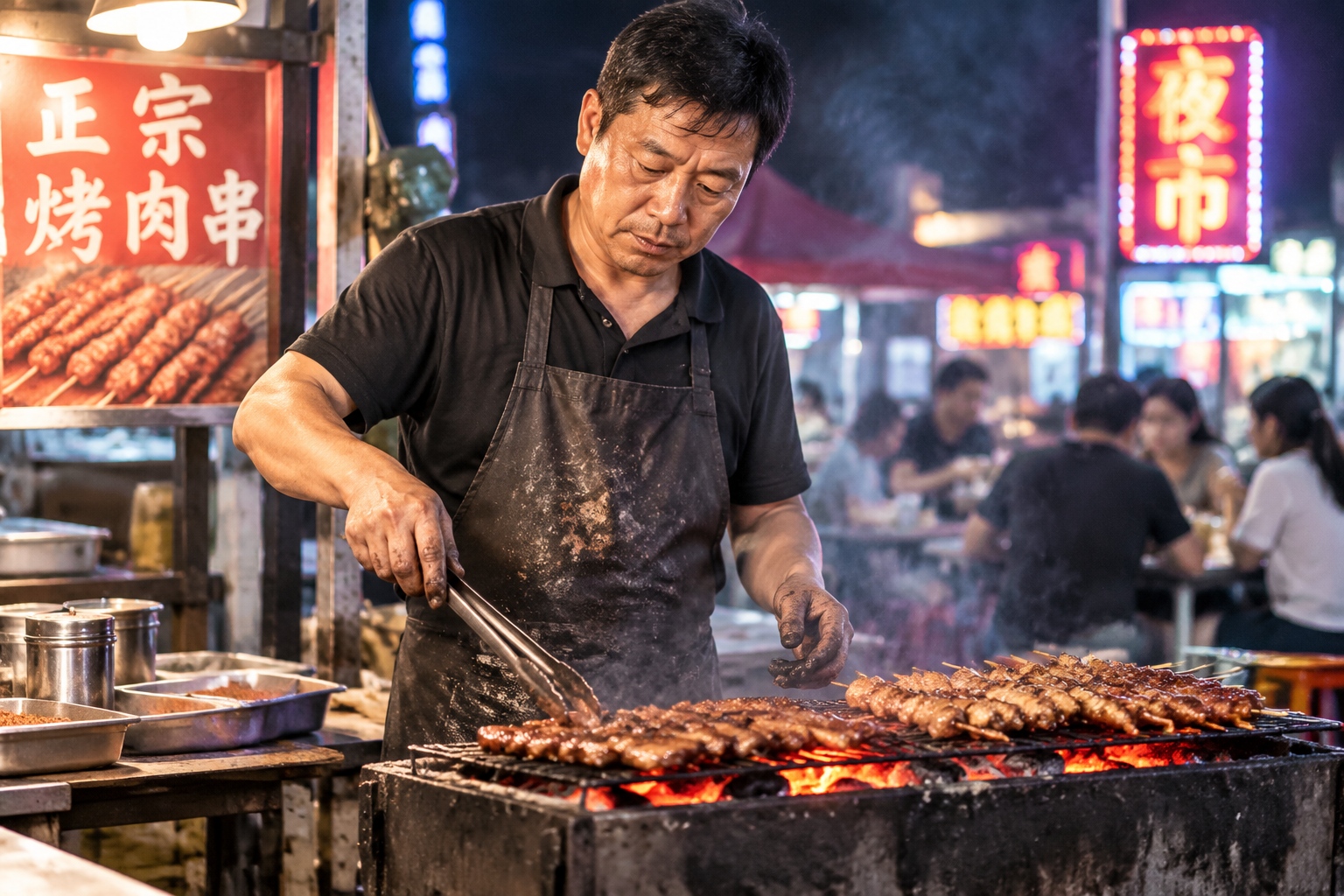
Mr. Zhang has run his corner stall for 15 years, witnessing the lives of his regular customers change over time.
A Life on Fire: The Grill Master’s Story
Behind every stall is a person whose life revolves around this flame. Take Mr. Zhang, 54, who has run his corner stall for fifteen years. His hands are permanently stained with soot and oil, but they move with the speed of a dancer.
“People think it’s just grilling meat,” Zhang says, flipping a rack of pork ribs without looking at them. “But I know everyone. The student who comes here every exam week to calm down. The couple who argues over these tables before making up.”
Zhang doesn’t just sell food; he witnesses the city’s life cycle. He watches the customers grow older, their children start walking around his legs, and new faces replace the old ones. For him, the night market is not a business; it is a living room for the neighborhood.
As the clock strikes midnight, the charcoal glows orange in the dark, and the smell of smoke lingers on clothes and hair. This is the soul of a Chinese summer night: loud, smoky, messy, and undeniably alive.
Start the discussion at forum.chinacomes.com