

The Sound of Steam and Shouts
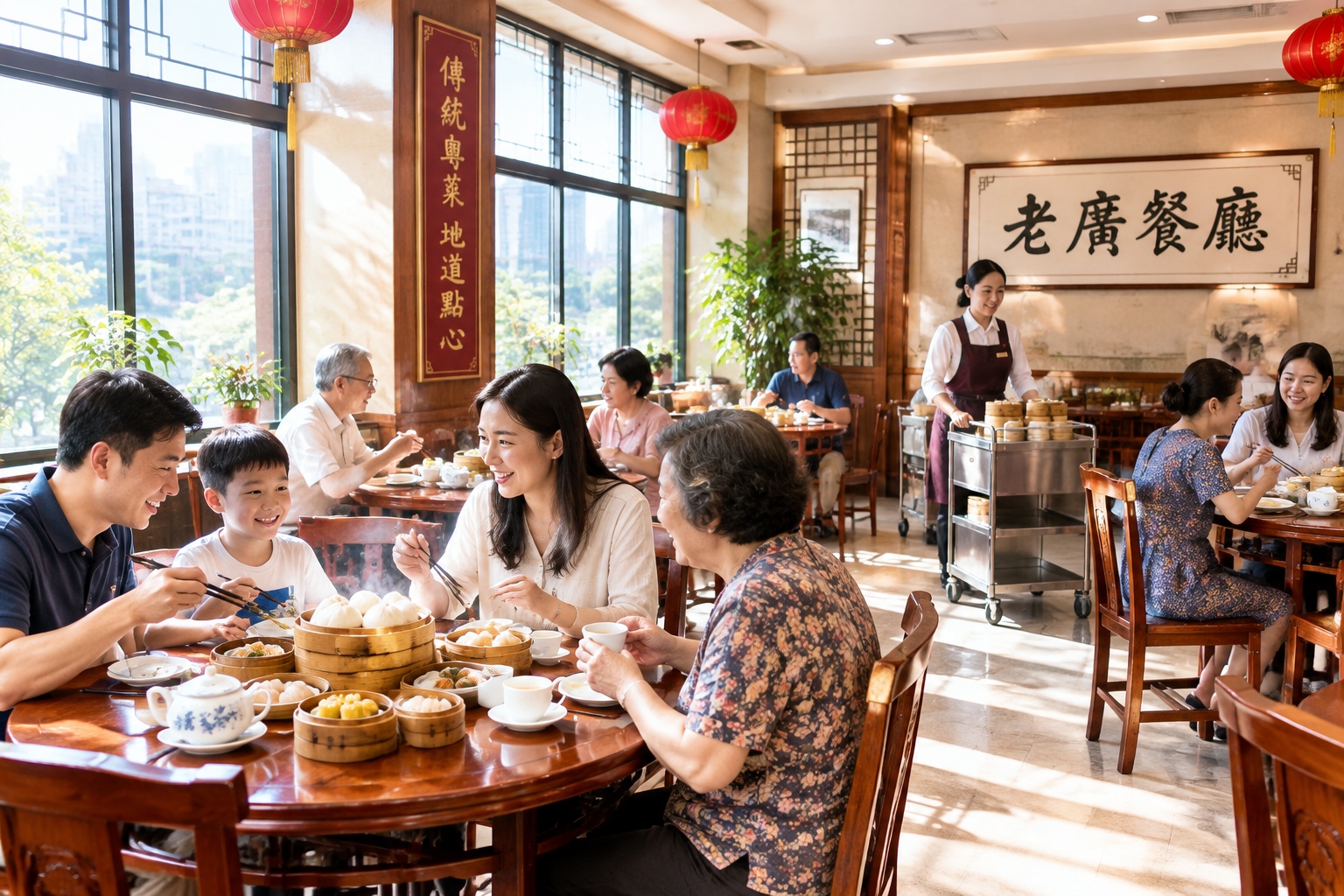
It is 8:15 AM at Panxi Restaurant in Guangzhou. The air is thick with humidity and the sharp scent of boiling ginger tea. A man in a white singlet sits hunched over a plastic table, his eyes scanning the room. He isn’t looking for food; he’s hunting for a seat that hasn’t been claimed by a newspaper or an umbrella yet.
Outside, the city wakes up with traffic noise. Inside, the symphony of morning tea begins: the clatter of porcelain bowls, the hiss of steam escaping bamboo baskets, and the rhythmic shouting of waitresses pushing carts loaded with fresh dumplings. This is not a quiet breakfast; it is a bustling ecosystem that operates on its own time.
A Menu That Never Ends
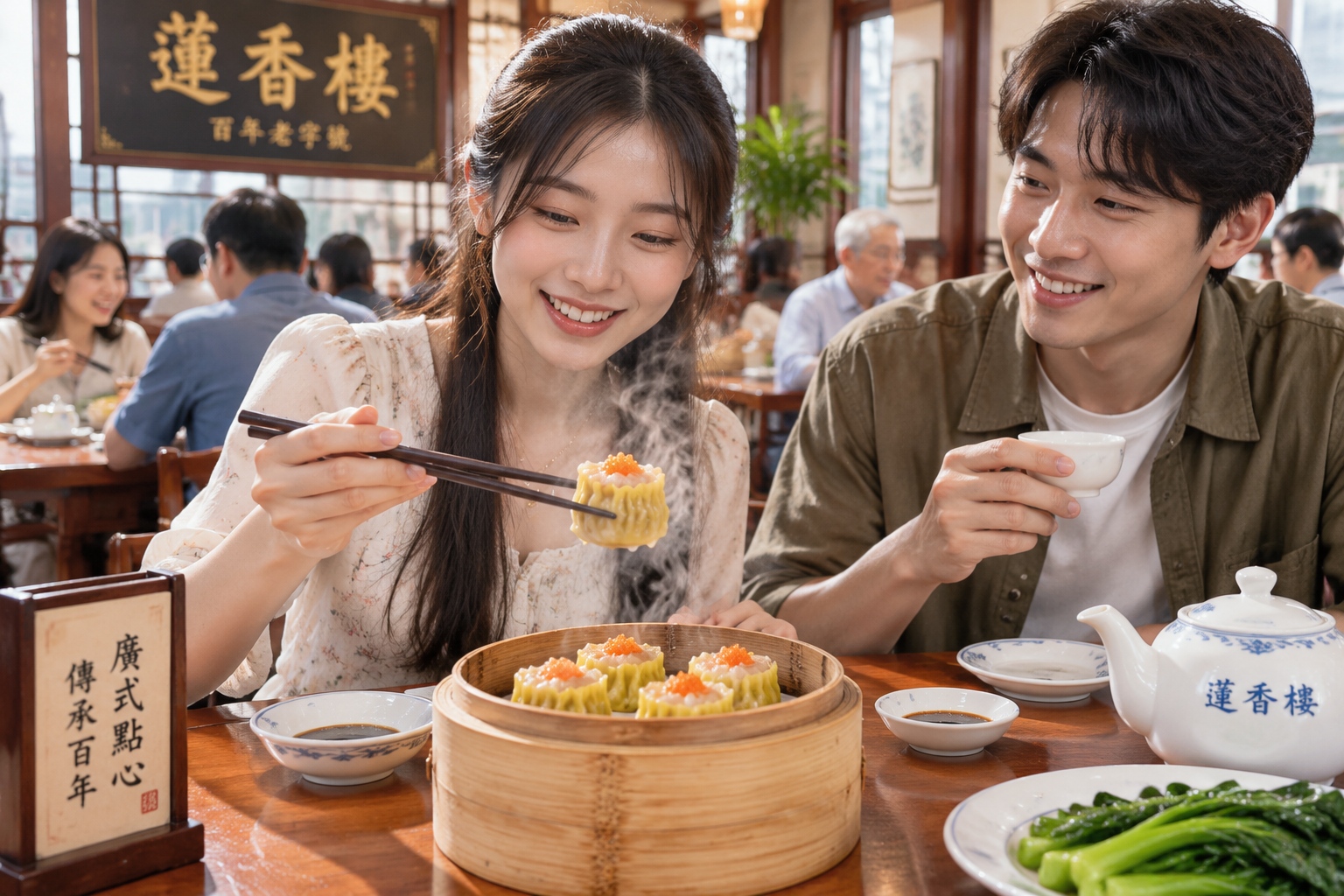
For visitors from New York or London, the menu can be overwhelming. There are over 50 items to choose from, ranging from siu mai (pork dumplings) and siu yuk (char siu bao) to delicate shrimp har gow and sticky rice in lotus leaves. The concept is simple: order a pot of tea and two dishes—yī zhōng liǎng jiàn. But the reality is that “two” is just the starting point.
Unlike Western brunch culture, where people often eat quickly before heading to work or errands, Guangzhou’s morning tea has no set end time. A group of friends can order their first round at 8:00 AM and still be finishing the last pot of tea at 12:30 PM. The food is continuous, refilled as soon as plates are empty. It is a marathon where the finish line keeps moving.
The Cart System: Speed Meets Service
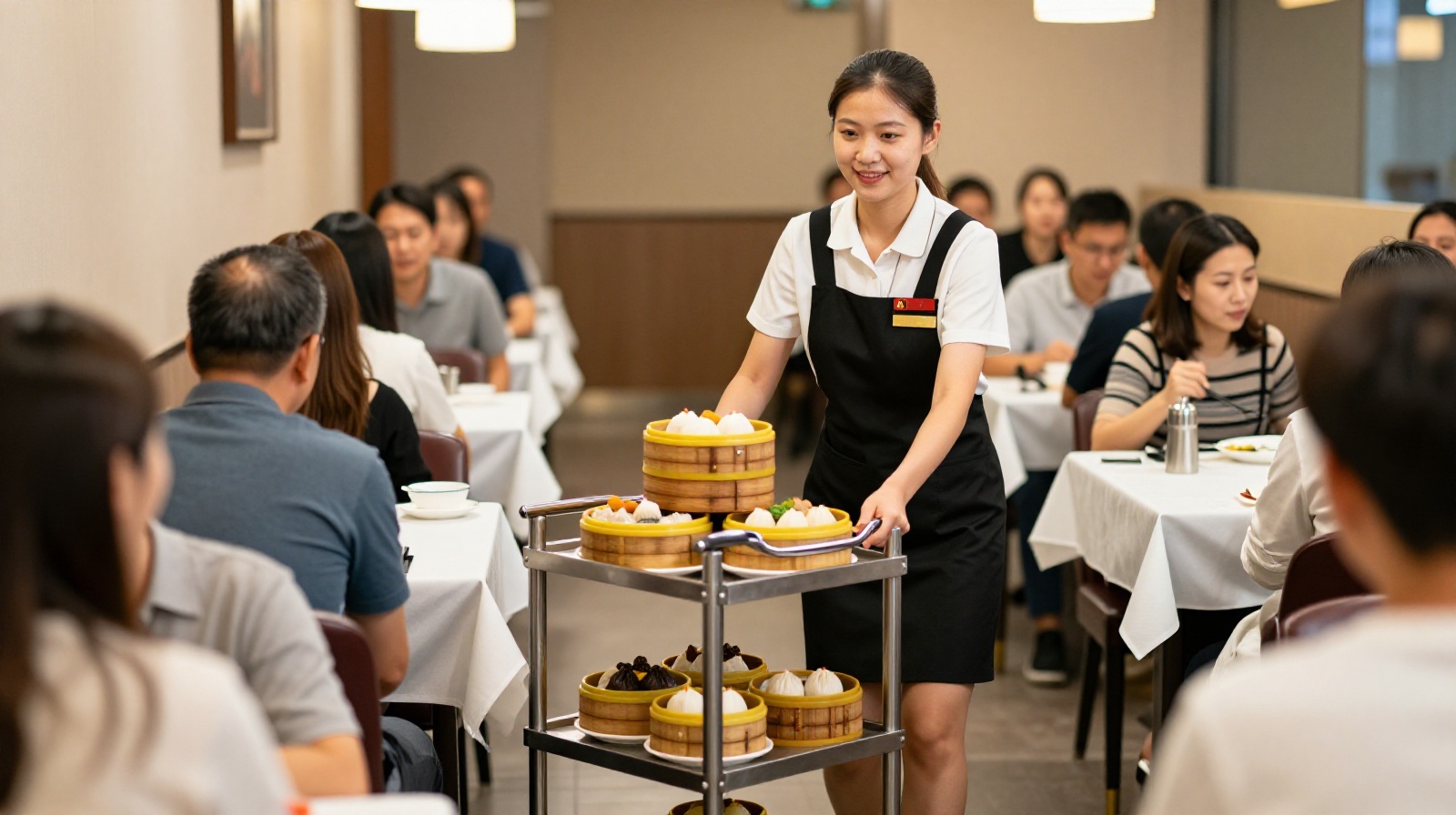
One of the most unique features of traditional dim sum halls is the cart system. Waitresses push stainless steel carts with wheels that squeak slightly as they navigate through the narrow aisles between tables. They shout out their offerings in rapid Cantonese dialect: “Har gow! Siu mai!“
This method creates a dynamic interaction. Patrons don’t just wait for service; they actively engage with it. If you see a shrimp dumpling that looks perfect, you raise your hand and wave to catch the waitress’s attention. It is a tactile, immediate experience that connects the diner directly to the kitchen.
In modern restaurants, digital ordering systems are replacing carts in some places, but the traditional halls remain untouched by this shift. The squeak of the wheels is a sound many older locals consider essential to the atmosphere. Without it, the restaurant feels like just another dining hall, missing its soul.
The Art of Lingering
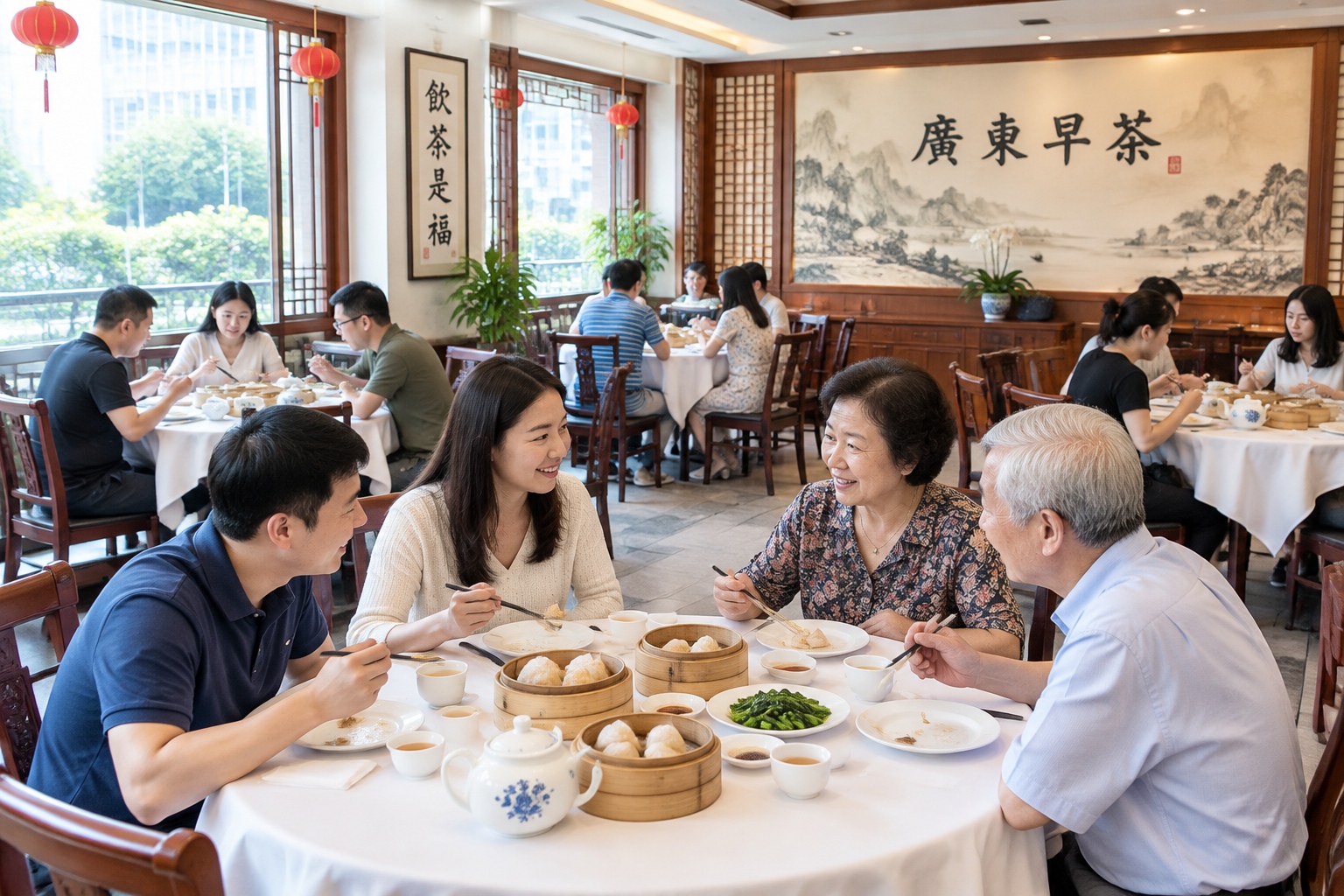
Why do people stay for hours? In a world obsessed with efficiency and “time is money,” Guangzhou’s dim sum culture offers a counter-narrative. It is about the art of lingering. The tea pot is rarely empty; it is constantly refilled to keep the conversation flowing.
For businesspeople, this is where deals are made not in glass-walled boardrooms, but over steaming bowls of chicken feet and turnip cakes. For families, it is a weekly ritual to reconnect with aging parents or check on cousins who haven’t been seen since Chinese New Year. The pace allows for deep conversation that short lunch breaks simply cannot accommodate.
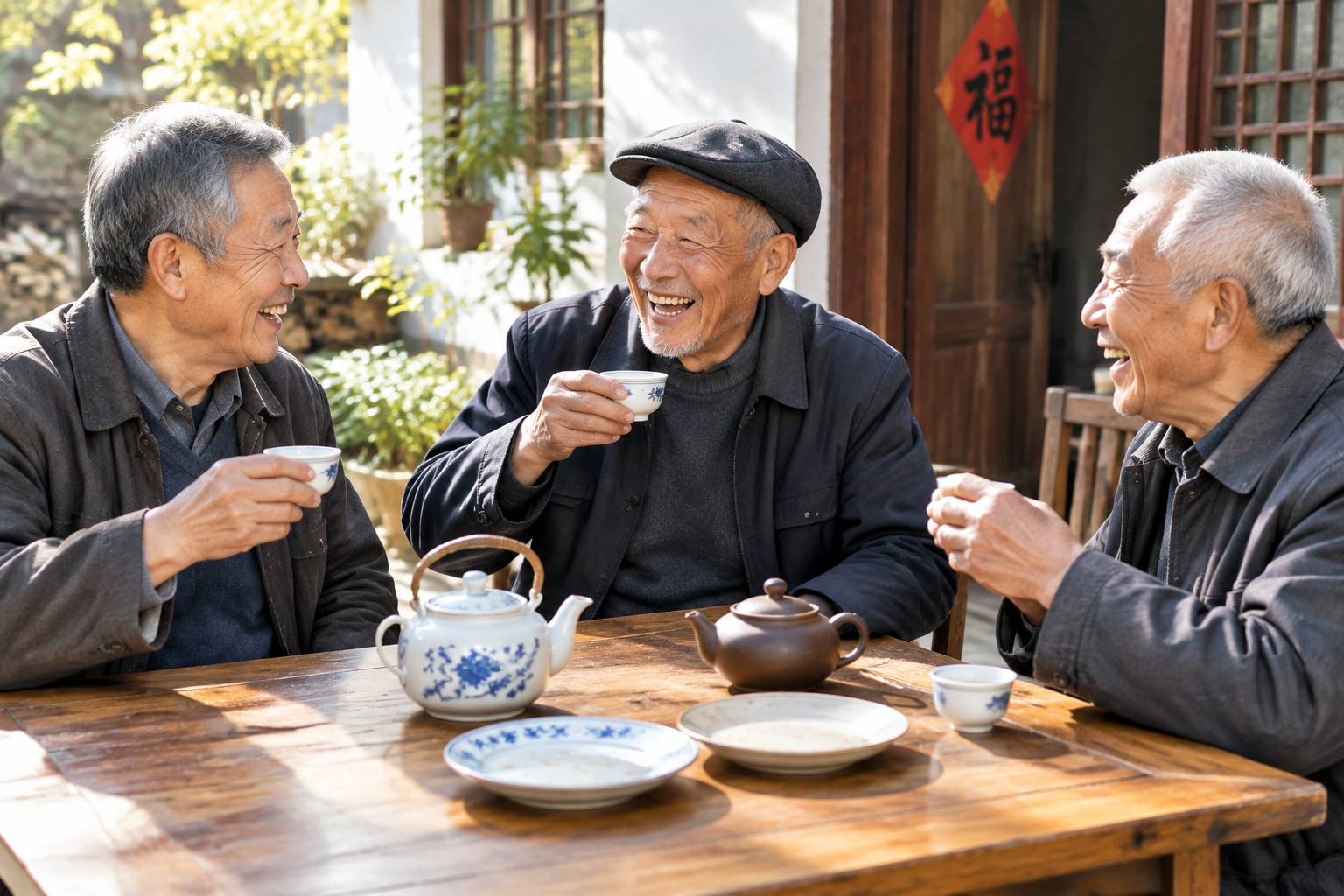
I spoke with Mr. Chen, a retired teacher in his 70s, who visits the same restaurant every Sunday with three friends from his university days. “We don’t talk much about politics or heavy news,” he told me between sips of pu-erh tea. “We talk about our grandchildren, the weather, and how our knees hurt when it rains. It is a safe space where we can just be old men together.”
A Cultural Anchor in a Changing City
Guangzhou has transformed into a futuristic metropolis with towering skyscrapers and high-speed rail networks. Yet, the dim sum hall remains an anchor of stability. It is one of the few places where social hierarchy dissolves. The CEO sits next to the factory worker; the student shares a table with the retired pensioner.
The steam rising from the bamboo baskets seems to blur the lines between generations and classes. In this space, everyone is equalized by the shared experience of waiting for a fresh tray of egg tarts.
This cultural practice teaches an important lesson: life cannot be rushed. It is about finding value in the slow moments, in the act of sharing food with those you love or respect. As China continues to modernize at breakneck speed, these morning tea sessions remind everyone that human connection still requires time.
Start the discussion at forum.chinacomes.com