

The Morning Rush on Empty Streets
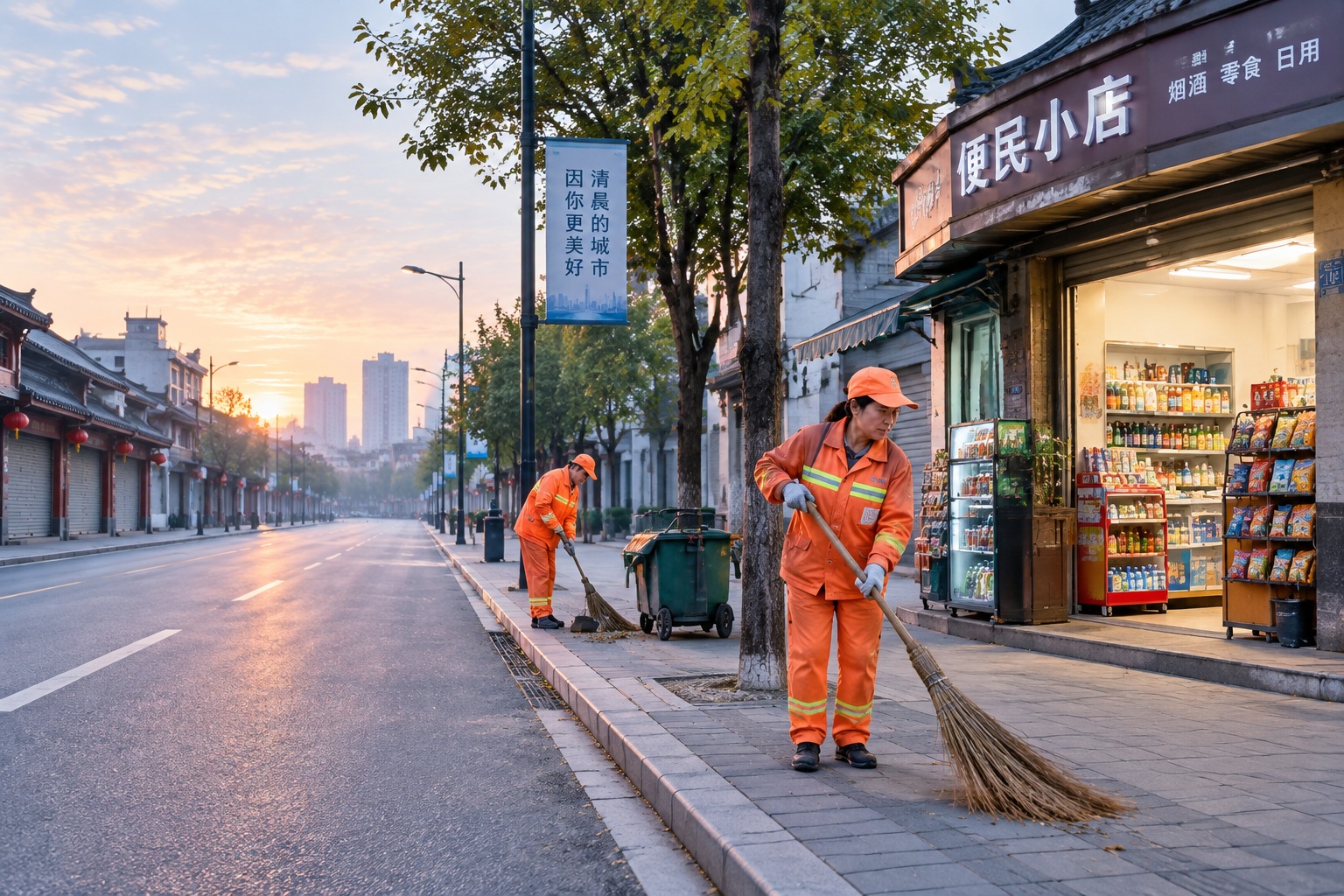
It is 5:30 AM in Shanghai. The city hasn’t fully woken up yet. While most people are still asleep, Li Wei, a sanitation worker in his late fifties, sweeps the leaves off the pavement outside a row of closed shops. The air is crisp, but by noon, the temperature will climb to 35°C (95°F). For workers like Li, this heat isn’t just uncomfortable; it’s a health risk.
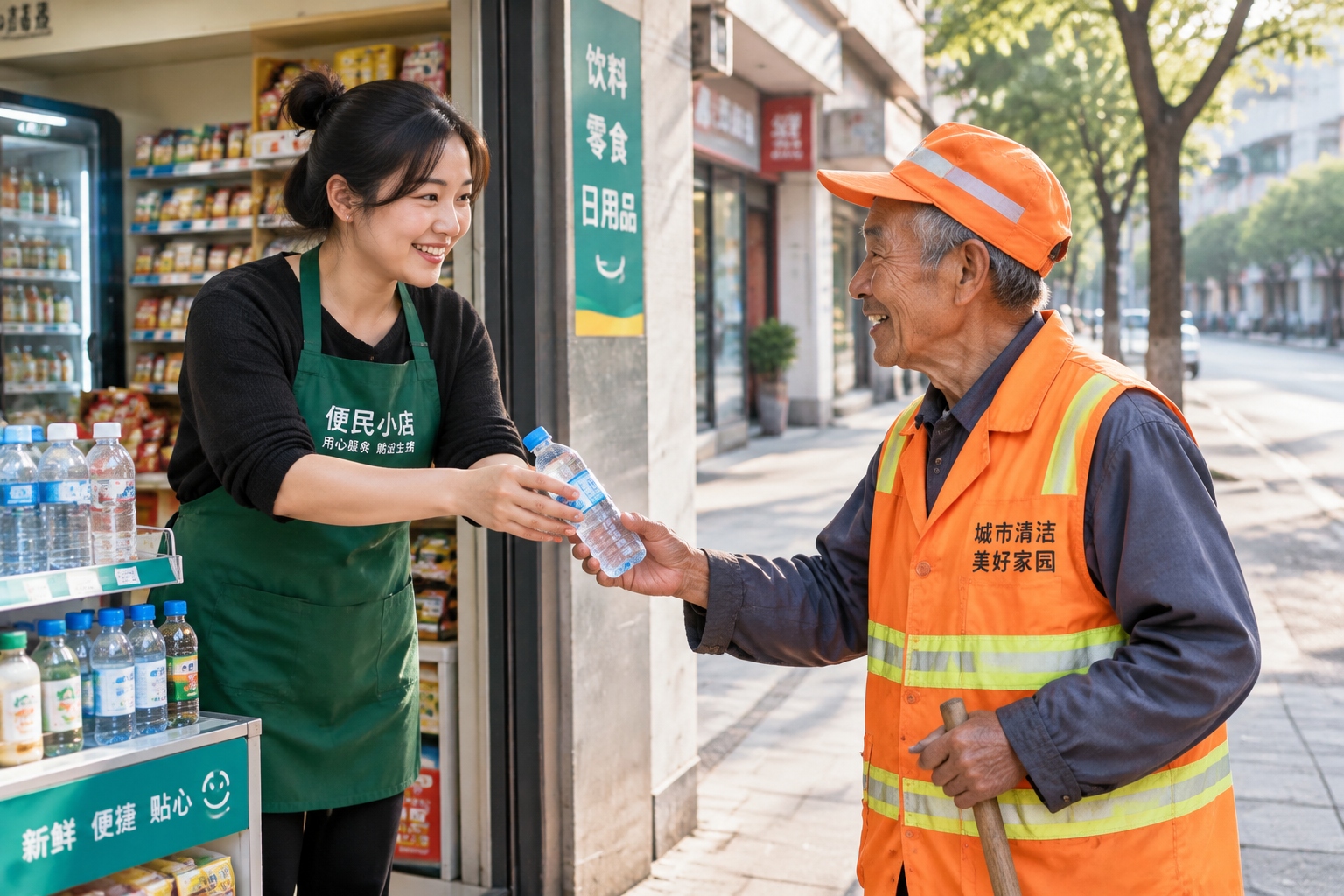
Li wipes his forehead with a rag and walks toward a small convenience store he has passed thousands of times. He doesn’t knock on the door or ring a bell. The owner, Mr. Chen, is already there, pouring tea from a large thermos into plastic cups. “Just water today?” Chen asks, handing over two bottles.
Li nods with a tired smile and takes them without a word. This exchange happens every morning at this specific corner. It takes ten seconds. There are no speeches, no cameras, and no social media posts attached to it. Yet, in the rhythm of Chinese urban life, this small act carries a weight that is hard to explain to outsiders.
A Quiet Habit Born from Shared Struggle
Why does Mr. Chen do this? If you ask him, he’ll likely shrug and say, “It’s not a big deal.” In many Western countries, such gestures might be framed as corporate social responsibility or part of a formal charity program. But here, in the dense fabric of Chinese neighborhoods, it feels more like an unspoken agreement.
Mr. Chen started providing water three years ago after seeing one of his regular cleaners collapse from heat exhaustion nearby. “I saw him lying there,” he recalls. “My son and I carried him to a clinic. After that, I couldn’t just watch the others walk past my door without offering help.”
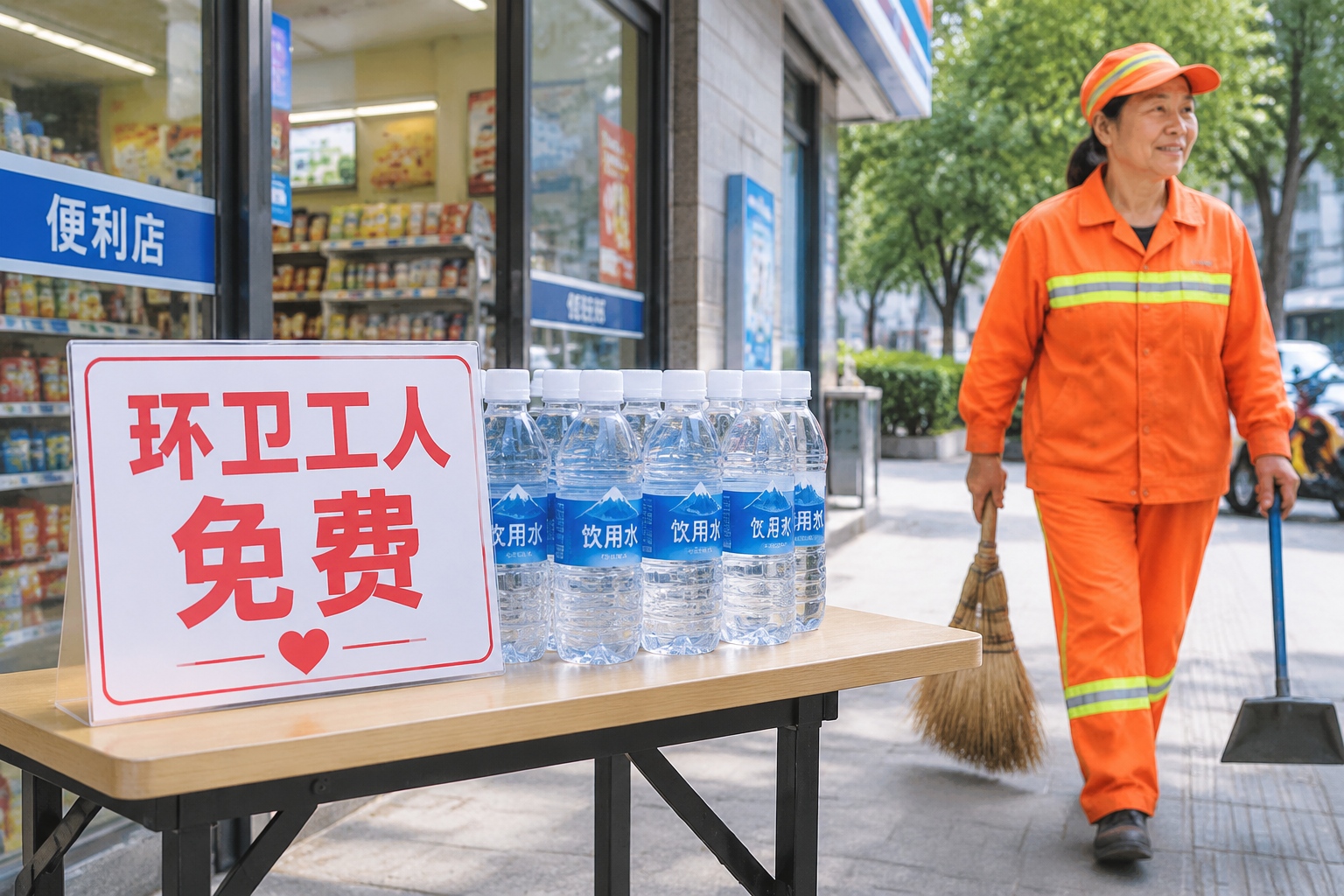
He didn’t set up a formal donation drive or ask for sponsorship. He simply placed a small table outside his shop with a cooler full of bottled water and a sign in big characters: “Free Water for Cleaners.” The cost is low—about 50 RMB ($7) a day—but for Mr. Chen, it’s the price of feeling like part of the community.
For Li and his colleagues, this spot has become a vital oasis. They don’t need to carry heavy water bottles up three flights of stairs at home before their shift starts. The convenience store becomes an extension of their workplace, a place where they are seen not just as service providers, but as neighbors.
Beyond the “Positive Energy” Narrative
When foreign observers look at China, they often encounter two extremes: viral videos of grand infrastructure projects or official campaigns celebrating “positive energy.” These stories can feel distant from daily reality. They focus on what the state does for people.
But this moment between Mr. Chen and Li Wei is different. It belongs to the private sector, specifically the small business owner who operates on thin margins. In China, there are millions of such shops—convenience stores, noodle stalls, barbershops. They compete fiercely for customers. Many struggle just to keep the lights on.
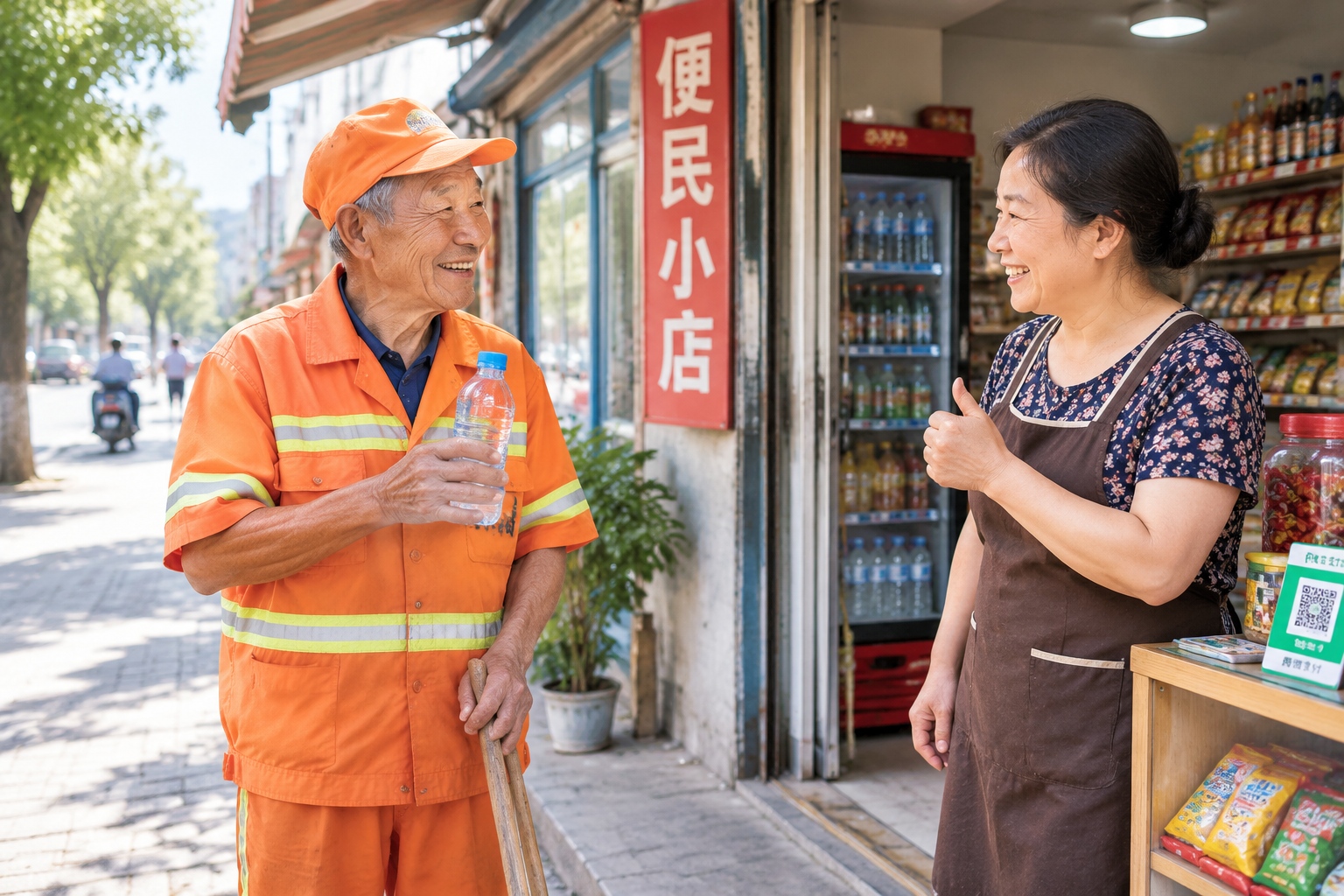
Yet, in this specific interaction, economic logic takes a backseat to human connection. Mr. Chen doesn’t expect Li Wei to buy more bread because he gives him water. He doesn’t ask for a testimonial. The act is purely about dignity and survival. In a society where sanitation workers are often invisible or treated with indifference by the general public, this small gesture signals something profound: “I see you. You matter to me.”
This reflects a unique aspect of Chinese social structure. Unlike in some Western cities where neighbors might rarely speak, Chinese communities often rely on informal networks of mutual aid. The relationship between a shopkeeper and a cleaner is not strictly professional; it is deeply personal, woven into the daily fabric of the street.
A Global Perspective on Local Kindness
If you are from Europe or North America, you might wonder why this isn’t more common elsewhere. In many Western cities, public restrooms and water fountains are often locked, closed for renovation, or simply non-existent in commercial districts. The idea of a private business voluntarily providing free resources to a specific group can raise legal questions about liability or discrimination.
In China, the barrier is lower because the social expectation is higher. There is a cultural concept known as “guanxi” (relationships), which extends beyond business deals into basic human decency. It’s not just about knowing someone; it’s about feeling responsible for the people around you.
This doesn’t mean Chinese society is perfect. Issues like labor rights, social security gaps, and the visibility of migrant workers are real and ongoing challenges. But stories like Mr. Chen’s show that progress isn’t always top-down. Sometimes, it grows from the ground up, in the quiet corners of a busy city.
As Li finishes his break and heads back to his broom, he offers a quick thumbs-up to Mr. Chen. The shop owner waves back. No one takes photos. No one writes an article about it. But for these two people, and for thousands like them across China, the day has started with a simple act of kindness that makes the heat just a little bit easier to bear.
Start the discussion at forum.chinacomes.com