

The Noise and the Noodles
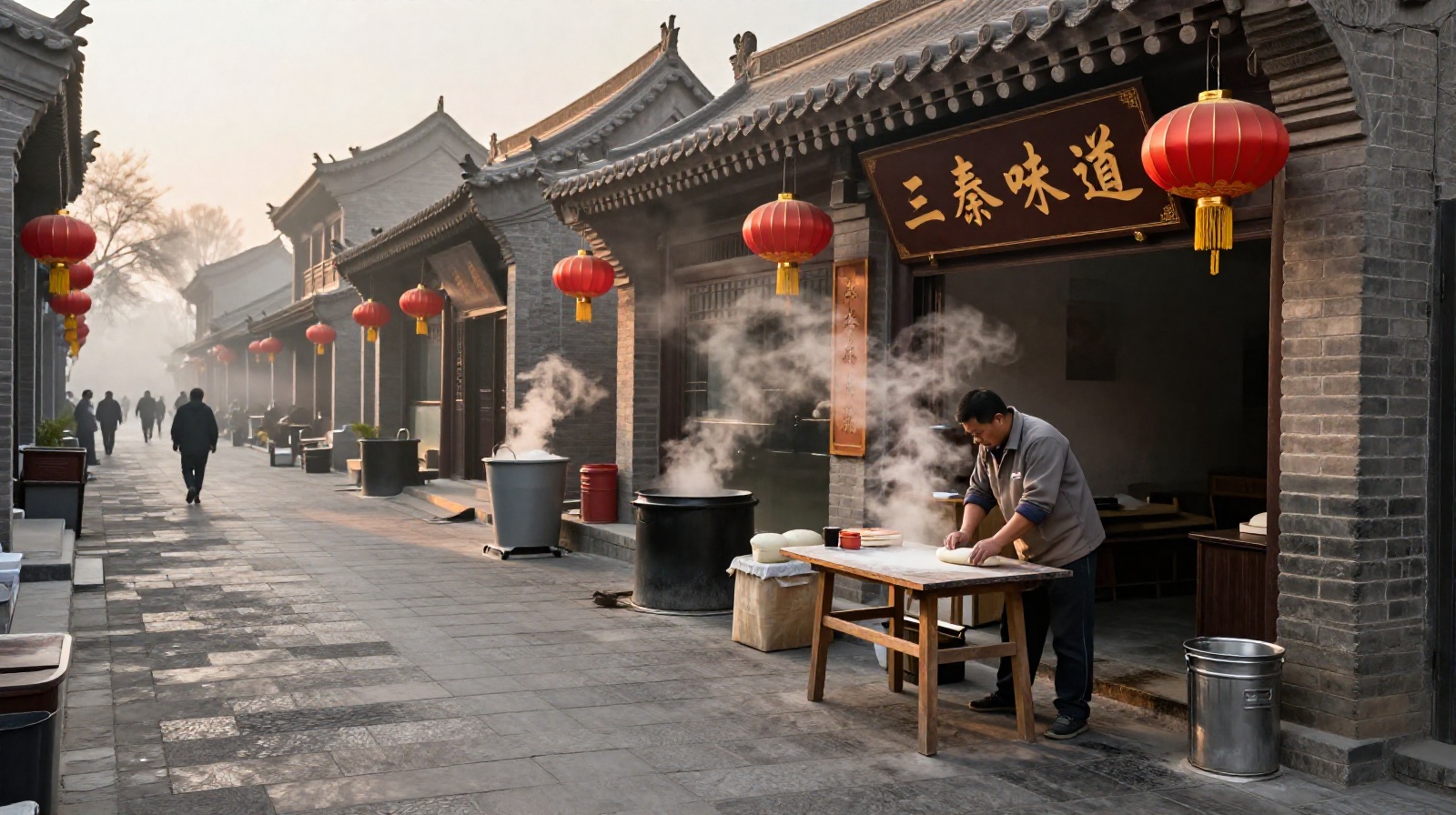
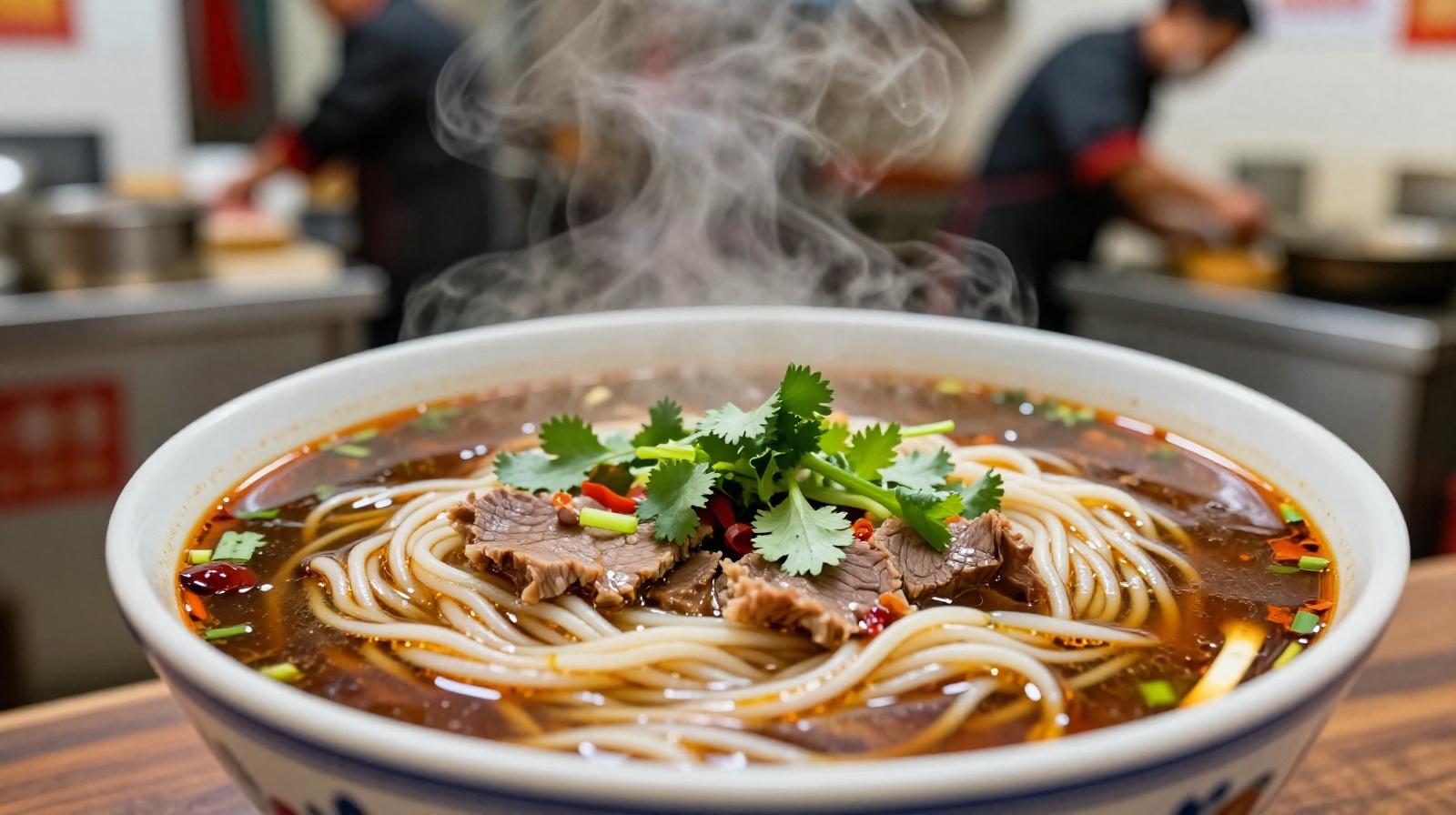
It is 6:30 AM on a Tuesday in Xi’an. The air in the Muslim Quarter (Huimin Jie) smells of woodsmoke, frying cumin, and damp stone. While tour groups are still sleeping, Li Wei, a local chef, is already kneading dough for hand-pulled noodles outside his small shop. He doesn’t speak English, but he gestures urgently to a man in a tracksuit waiting at the counter: “Hot water?” The man nods. In thirty seconds, a bowl of steaming beef soup with thick noodle ribbons arrives, topped with fresh cilantro and red chili oil.
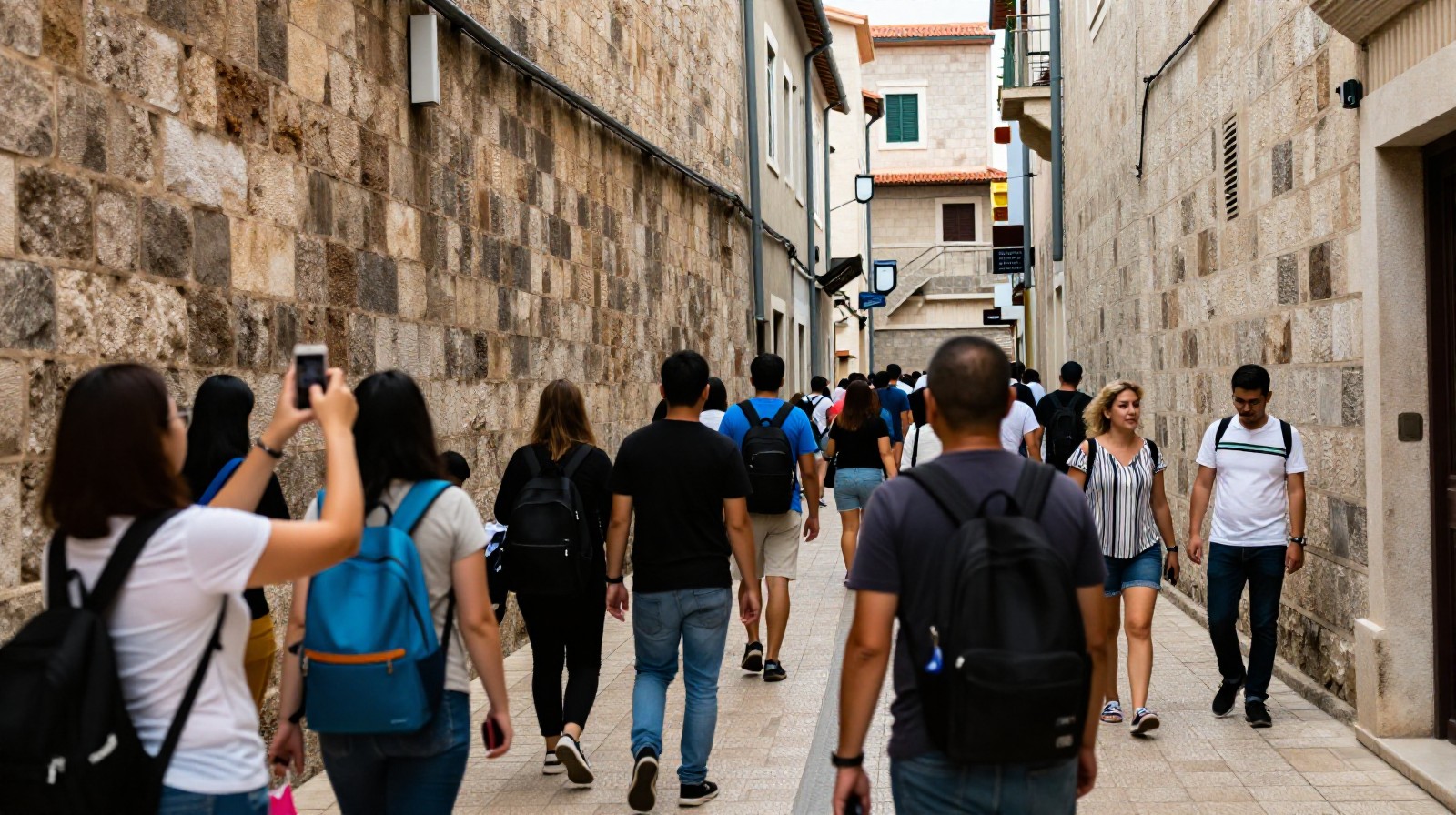
This is the reality that most visitors miss. When you arrive later in the day, the main street is a river of selfie sticks and plastic bags filled with sugary fruit skewers. But turn just one corner into the residential alleys behind the tourist thoroughfare, and the scene changes completely. The noise drops, the prices stabilize, and the food shifts from “photo-ready snacks” to genuine morning fuel for workers.
What Locals Actually Eat vs. What Tourists Get
The biggest misunderstanding about Xi’an’s Muslim Quarter is that it is a single monolithic zone. In truth, it is a dense urban fabric where tourists walk the wide main drag while locals navigate the narrow back lanes.
Tourists are often herded into restaurants with neon signs and English menus. There, you might find “Lamb Stew” served in massive portions that have been sitting under heat lamps for hours. The meat is soft, yes, but it lacks the distinct texture of slow-cooked bone marrow found in older shops.
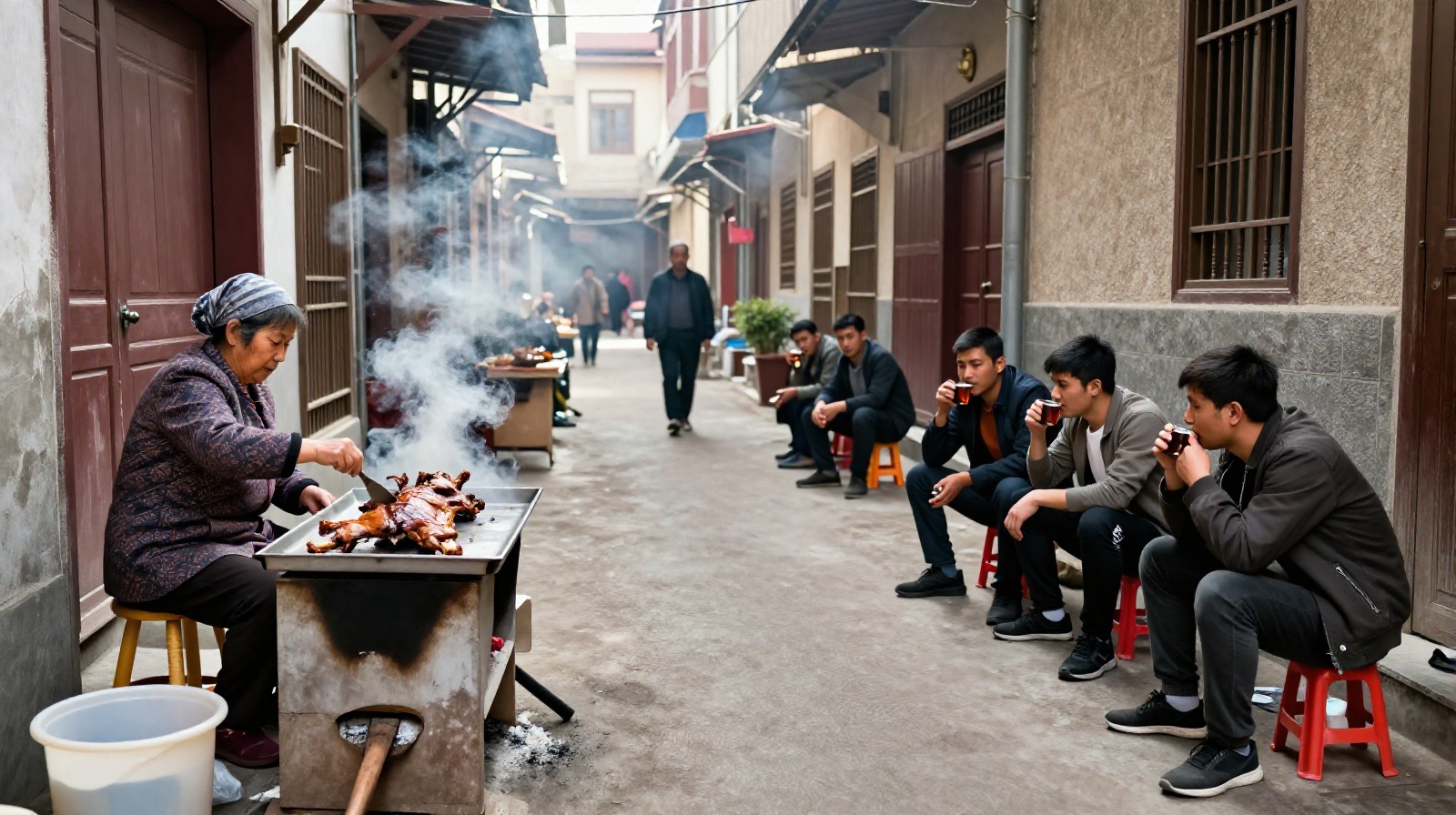
Locals, however, know to walk past the main queue. They head for the alley where an old woman sells “Roujiamo” (Chinese hamburger) from a charcoal stove she has used for forty years. The meat is minced lamb marinated in star anise and ginger, packed into a crispy, flaky bing (flatbread). It costs less than $1.50. The bread should shatter when bitten; the filling should be savory, not sweet.
Another key difference is the soup. In tourist spots, you get standardized beef broth. In the local alleys, specifically near the older mosques, you find “Yangrou Paomo” (crumbled flatbread in mutton soup). The technique requires you to tear the bread into tiny pieces yourself before handing them to the cook. This ritual ensures the bread absorbs the rich lamb and goji berry broth correctly. It is a tactile experience, not just a meal.
A Day in the Life: From Sunrise to Sunset
To understand the rhythm of this place, you have to watch how the day unfolds. The morning rush ends by 9:00 AM. By noon, the main street becomes a performance stage for tourists taking photos with donkey meat burgers and ice cream.
But around 5:30 PM, as the sun begins to dip behind the ancient city walls, the real social gathering starts. This is when the young professionals from nearby tech parks and universities flood the back alleys. They aren’t looking for a quick bite; they are sitting on low plastic stools, drinking strong Chinese tea, and arguing about work or football.
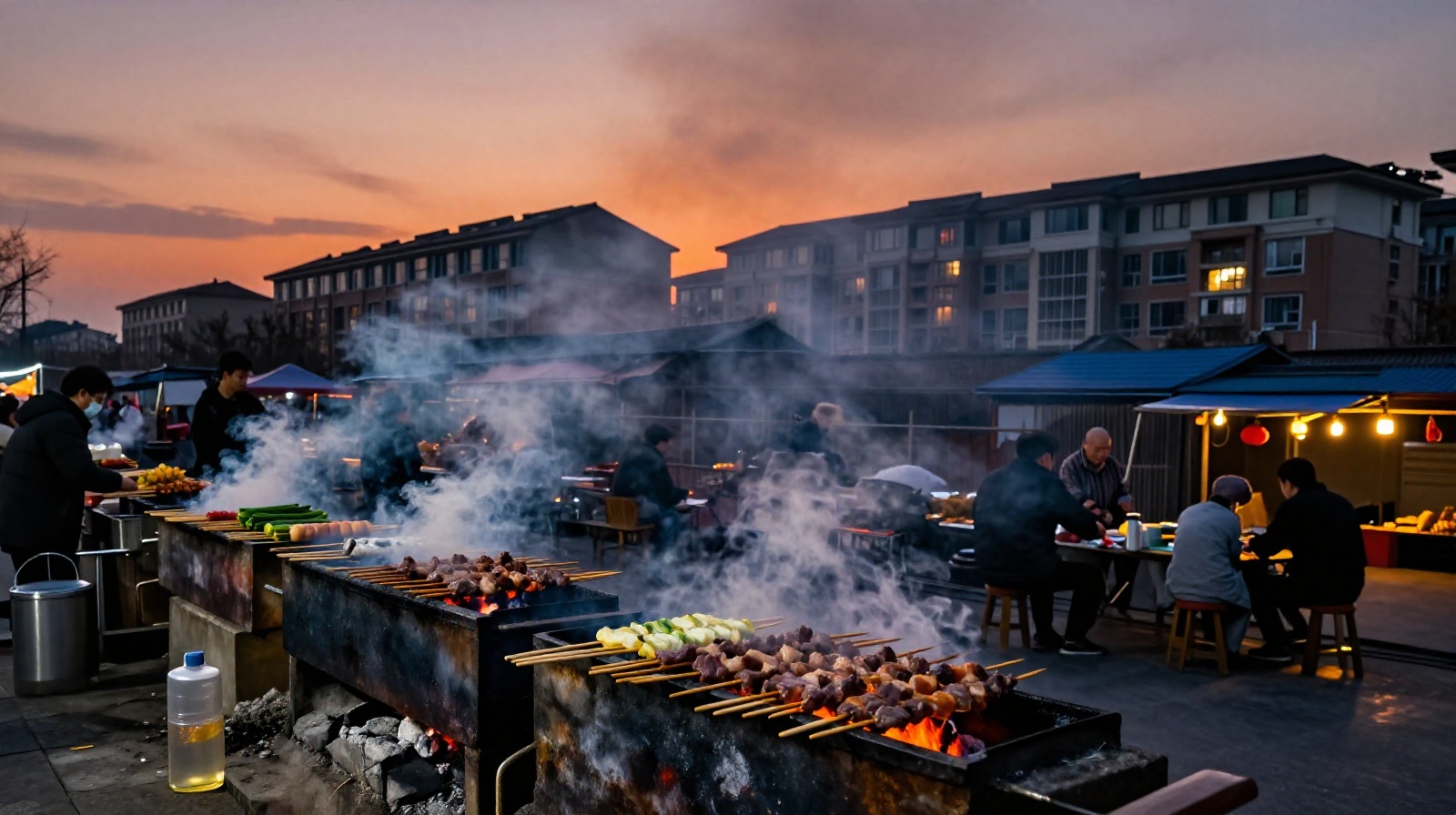
Here, the food is different again. You see grills set up in front of residential buildings. Skewers of beef, lamb, and even quail eggs sizzle over charcoal fires. The smoke rises into the twilight, mixing with the scent of blooming jasmine from nearby trees. This is where the “Three Qin” flavor profile shines: bold, spicy, and deeply savory, relying on cumin, chili powder, and fermented garlic rather than complex sauces.
Navigating the Quarter: Etiquette and Tips for Visitors
If you want to experience this side of Xi’an, there are a few unwritten rules. First, bring cash. While mobile payments like WeChat Pay are ubiquitous, many small stalls in the back alleys still only accept yuan notes, especially the elderly vendors.
Second, embrace the chaos but respect the space. The alleyways are narrow and often shared by pedestrians, delivery scooters, and children playing. Do not stop suddenly to take a photo in the middle of a pathway; move to the side of the stall or wait for a gap in traffic.
Third, ask “locals” where they eat. A simple question like “Where do you go for dinner?” (Ni chifan na?) often yields a different street name than what is on the tourist map. If the guidebook says “Go to Restaurant A,” try walking two blocks further and look for the place with no sign, just a crowd of people in work clothes.
Finally, be prepared for the heat. The spices are intense. In summer, you will see locals drinking “Suan La Tang” (sour and spicy soup) or cold barley water to cool down. It is an acquired taste, but it is essential to the local diet.
Xi’an is More Than a Backdrop
The Muslim Quarter is not just a theme park; it is a living neighborhood that has survived for over a thousand years. The tension between preserving tradition and accommodating tourism is real, but the heart of the place remains in the kitchens where grandmothers teach their grandchildren how to tear bread or pull noodles.
When you step away from the main road, you find a community that eats, drinks, and lives with a rhythm that has nothing to do with Instagram. The food here tells a story of resilience, adaptation, and shared culture. It is not perfect, it is messy, but it is undeniably real.
Next time you visit Xi’an, skip the crowded main square for an hour. Go into the alleys at dawn or dusk. You will find that the most authentic taste of ‘Three Qin’ cuisine isn’t in a guidebook—it’s in the steam rising from a bowl held by a tired worker, ready to feed him and his family.