

The Pressure Cooker and the Morning Ritual
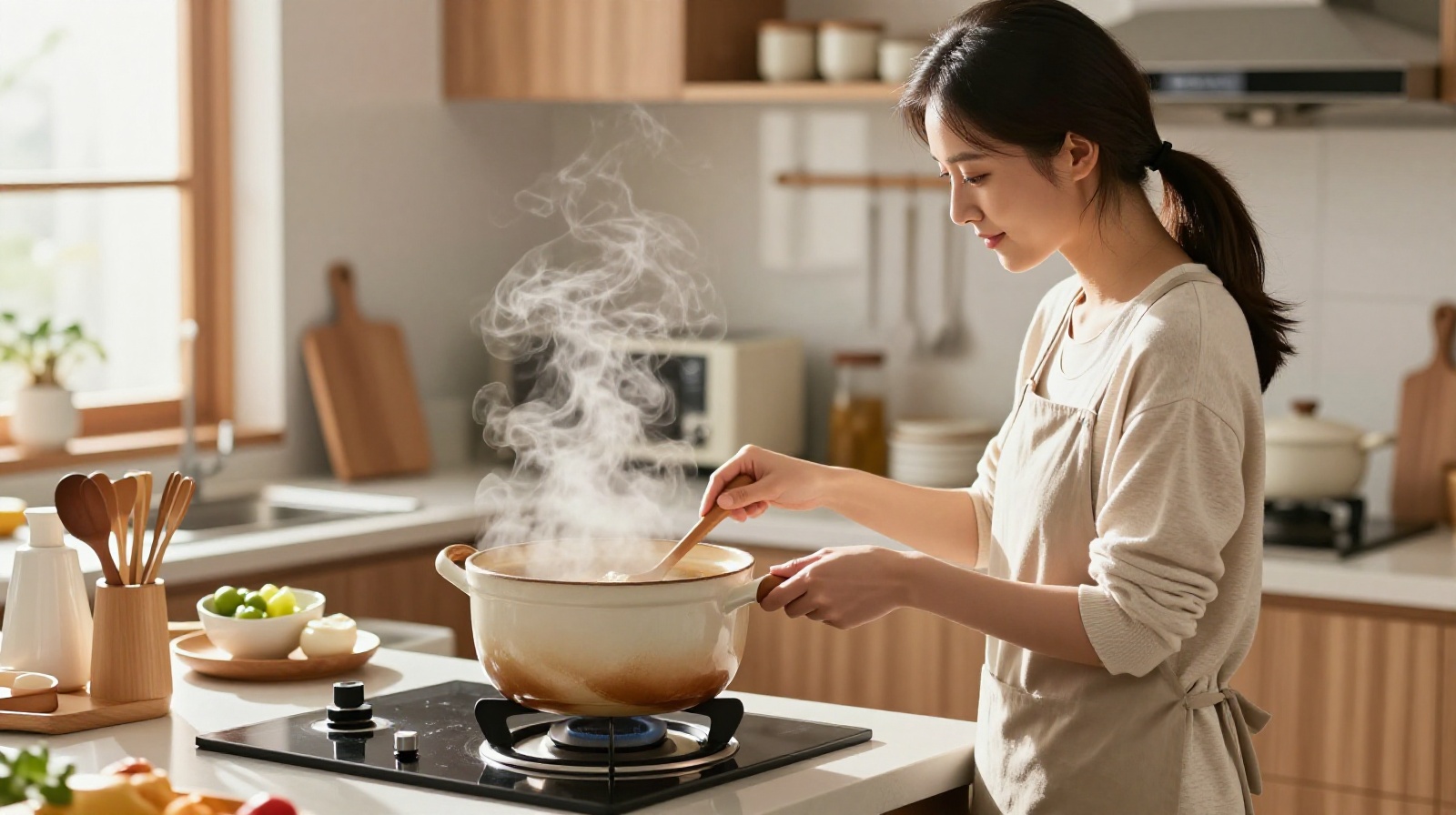
If you visit a Chinese home, you will likely find a pot simmering on the stove at 6 AM. It’s not coffee brewing; it’s soup. For many of us who grew up in China, this ritual is as inevitable as brushing our teeth. The scene often plays out like this: A child wakes up with a mild cold or a sore throat. Within hours, a steaming bowl of chicken and ginger soup appears on the table, sometimes accompanied by a stern lecture about “drinking more water” and “not getting chilled.”
To an outsider from the US or Europe, this might seem like overkill. In Western medicine, rest and hydration are standard advice; soup is just food. But for a Chinese mother, soup is never just food. It is a targeted treatment, a preventive measure, and a language of care.
Beyond Recipes: The Logic of “Yin” and “Qi”
How do you explain concepts like “nourishing the Yin” (yin) or “boosting Qi” to someone who has never heard of Traditional Chinese Medicine (TCM)? It helps to think of it less as ancient mysticism and more as an intuitive system of balancing energy.
In this philosophy, health is not just about fighting bacteria; it’s about maintaining a dynamic equilibrium. “Yin” represents cooling, moistening, and restorative qualities, while “Yang” is warming, active, and energizing. When you are tired, stressed, or recovering from illness, your body might be suffering from a “deficiency of Qi” (low energy) or an excess of “heat.” The solution isn’t always a pill; it’s often a slow-simmered broth made with specific ingredients.
For example, if you feel dry and irritable in the winter—a common complaint for those living in heated cities—a mother might make a soup with lily bulbs and pear to “moisten” the lungs. If you are feeling cold and lethargic after staying up late, she will swap in ginger, dates, and red jujubes to generate warmth.
A Different Relationship with Food
This approach creates a stark contrast between Chinese and Western dining cultures. In many European or American households, soup is an appetizer—a light introduction to the meal meant to stimulate the appetite. It is often thin, creamy, or purely flavorful.
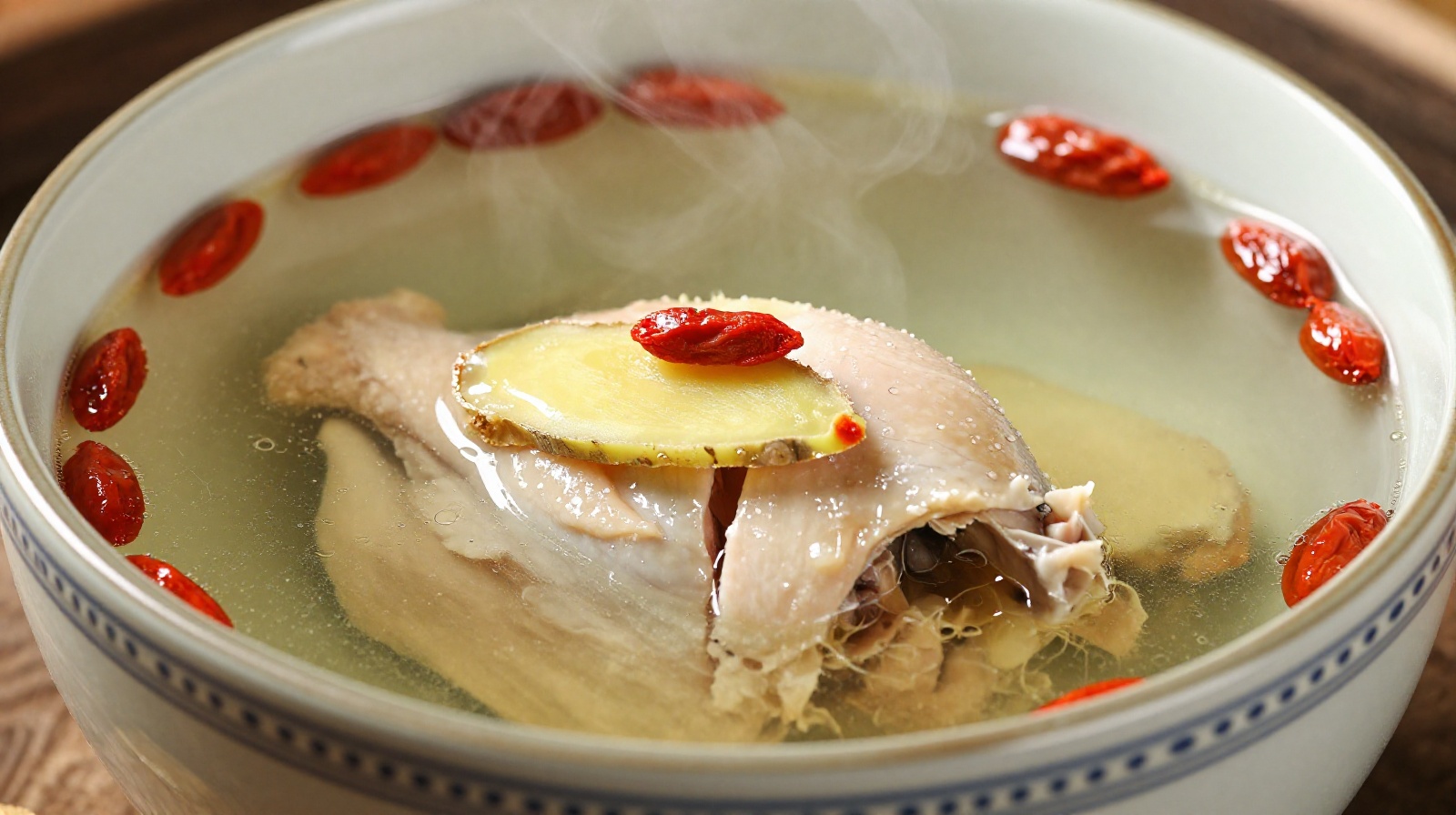
In China, soup can be the main event for health purposes. It is thick, nutrient-dense, and prepared with a specific intent. You don’t rush through it; you sip it slowly over 20 minutes. The texture matters as much as the taste. A good Chinese soup should have a clear, gelatinous mouthfeel derived from long cooking times that extract collagen from bones or skin.
This isn’t just about nutrition in the Western sense of calories and vitamins. It’s about the belief that the water itself absorbs the “essence” of the ingredients. As my grandmother used to say, “The soup is where the medicine lives, not the meat.” The meat might be tough and flavorless after hours of boiling; the liquid holds the healing properties.
The Unspoken Language of Love
Why does this tradition persist in a rapidly modernizing China? Why don’t young professionals simply order takeout or eat instant noodles when they are sick?
The answer lies in how care is expressed. In individualistic societies, “take care” might mean sending a text message, buying groceries for someone, or paying for their Uber to the doctor. In Chinese culture, the most profound expression of love is often physical and practical: making something from scratch to fix your internal state.
When a mother insists you drink soup, she isn’t just feeding you; she is trying to stabilize your energy field. It is an act of control born out of deep concern. You can argue that the science behind TCM varies in Western medical circles, but the emotional intent is universal. The act of standing over a hot stove for three hours to ensure her child feels better transcends cultural boundaries.
Modern Adaptations
Today, this tradition is evolving. Young mothers in Shanghai or Beijing might use high-speed pressure cookers that reduce cooking time from four hours to 45 minutes. They consult apps for “Yin-Yang” balanced recipes instead of relying solely on memory.
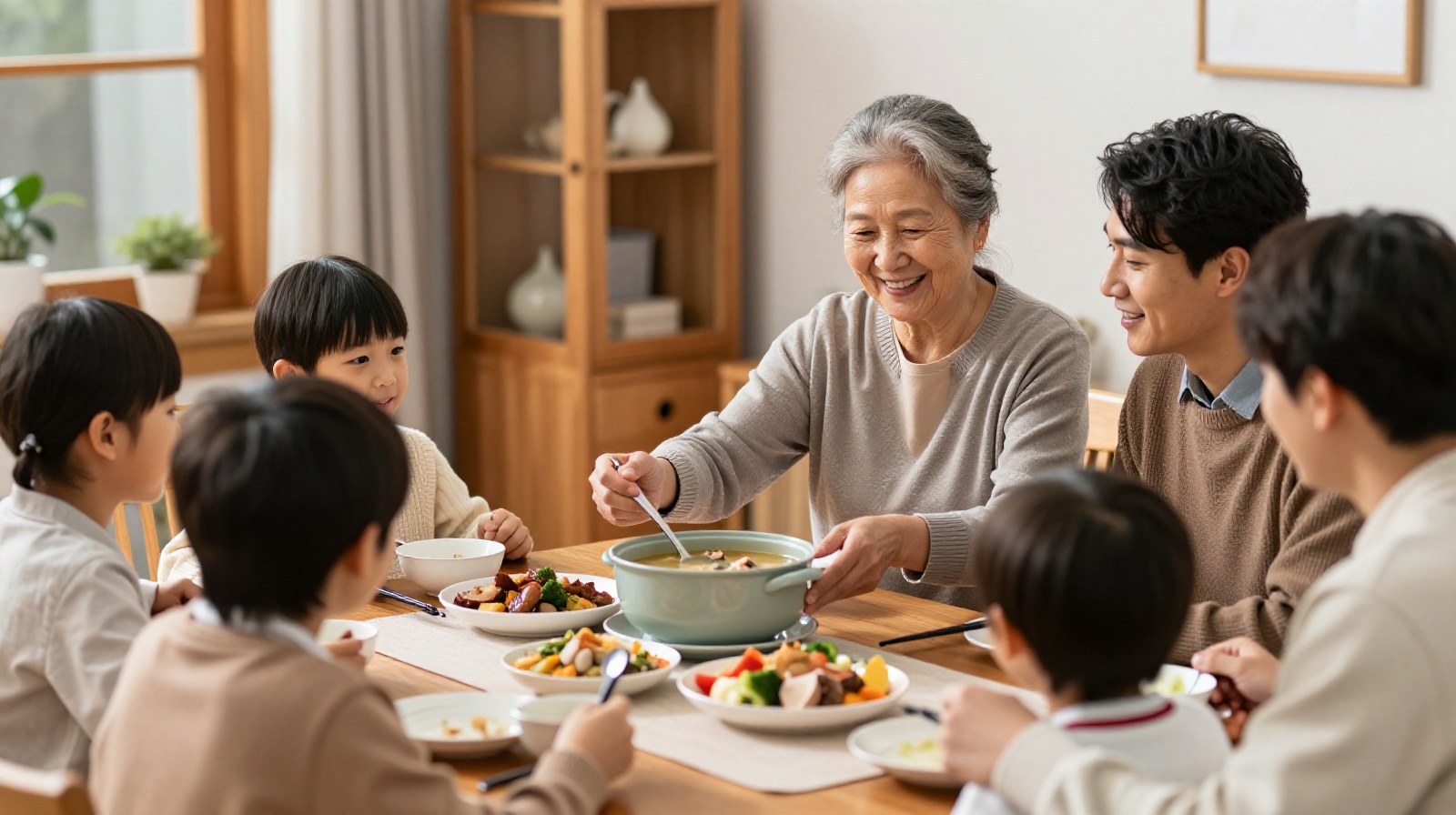
Yet, the core sentiment remains unchanged. Whether it’s a grandmother simmering a pot on a gas stove in an old apartment or a working mom using a smart appliance in a skyscraper, the message is the same: “I am worried about you, and I want to heal you.” In a world that often feels cold and disconnected, the bowl of hot soup remains a powerful symbol of warmth, belonging, and the unspoken promise that someone is watching over your health.