

The Sound of Silk and Incense
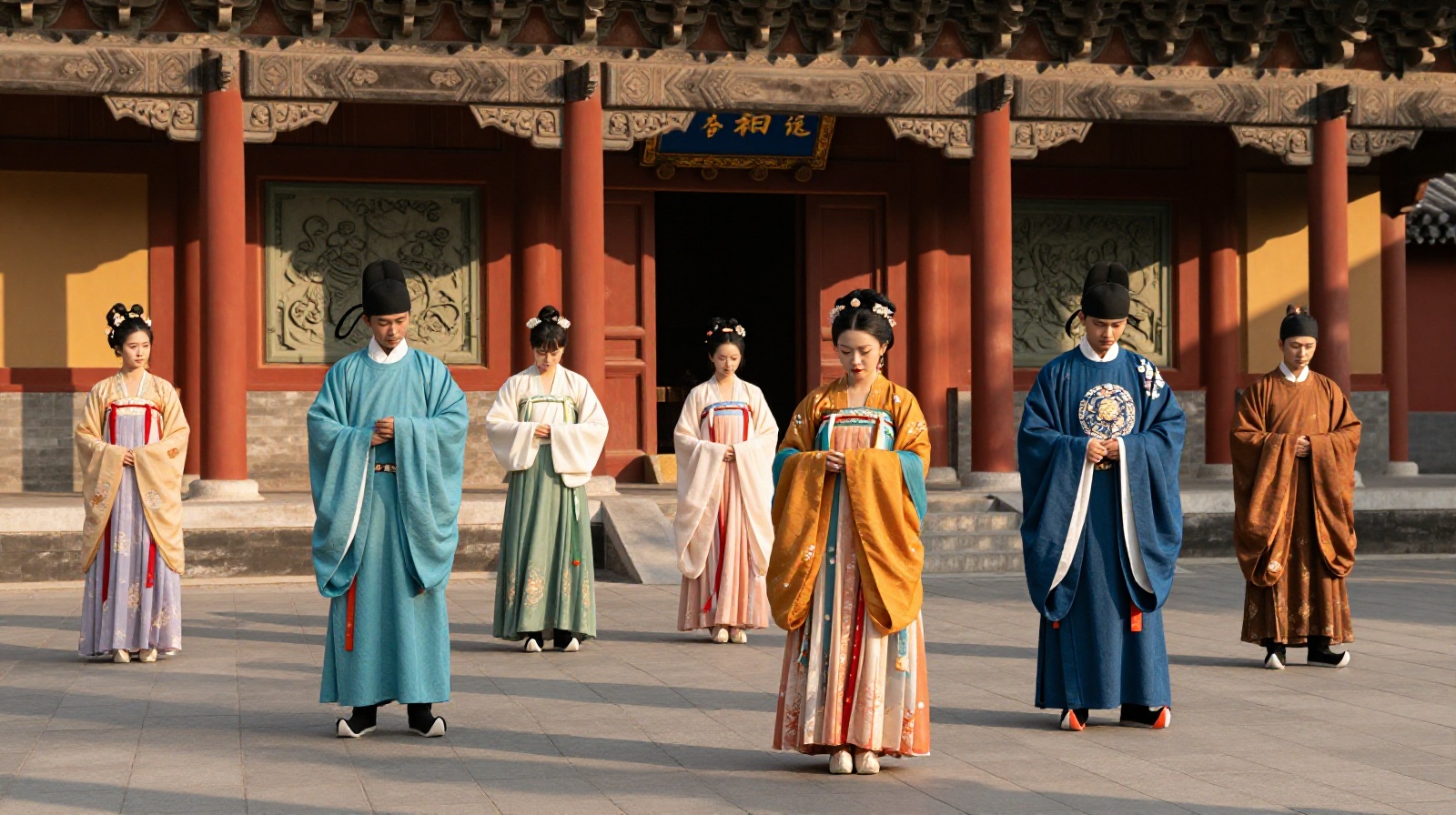
It was late afternoon in Hangzhou when we pushed open the heavy wooden gate of a small, unassuming temple tucked away in a quiet district. The air smelled of sandalwood incense and damp moss. Just as we stepped into the courtyard, the silence was broken by the rustle of layers of silk.
“Excuse me,” I whispered to a young woman adjusting her sleeve. She turned, not with annoyance, but with a quick, polite smile. “We’re just setting up for photos,” she said in English that had been practiced on YouTube tutorials. Around us, six young people were scattered like colorful petals across the grey stone floor.
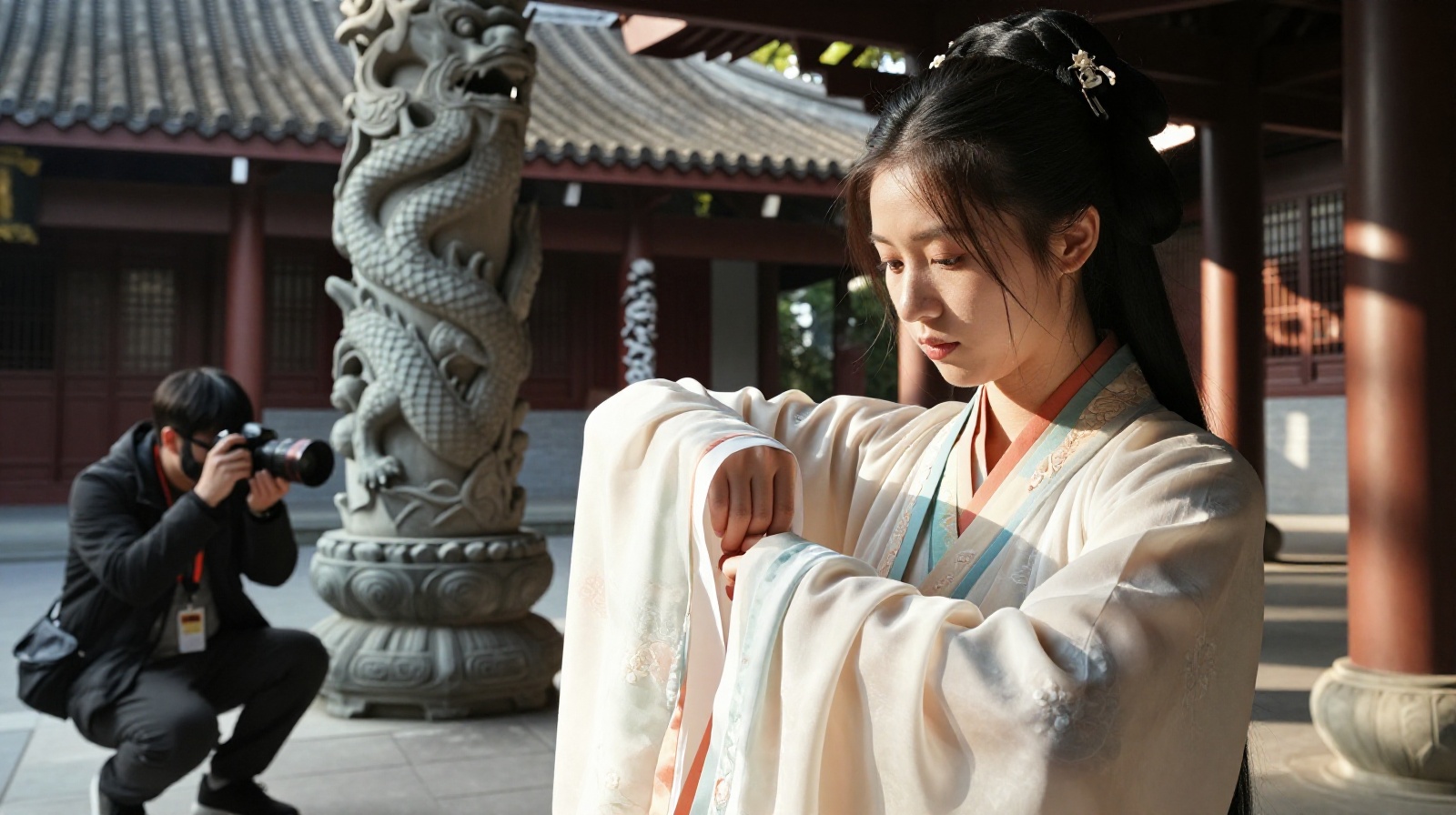
They weren’t tourists taking casual snapshots. They were deep into a production. A photographer was crouching near an old incense burner, adjusting his ISO settings with intense focus. Two assistants were fluffing sheer skirts that dragged on the ground. The contrast was jarring: the ancient stone carvings of dragons from the Ming Dynasty stood silent witnesses to a scene that felt more like a high-fashion editorial than a religious ceremony.
The Ritual of Transformation
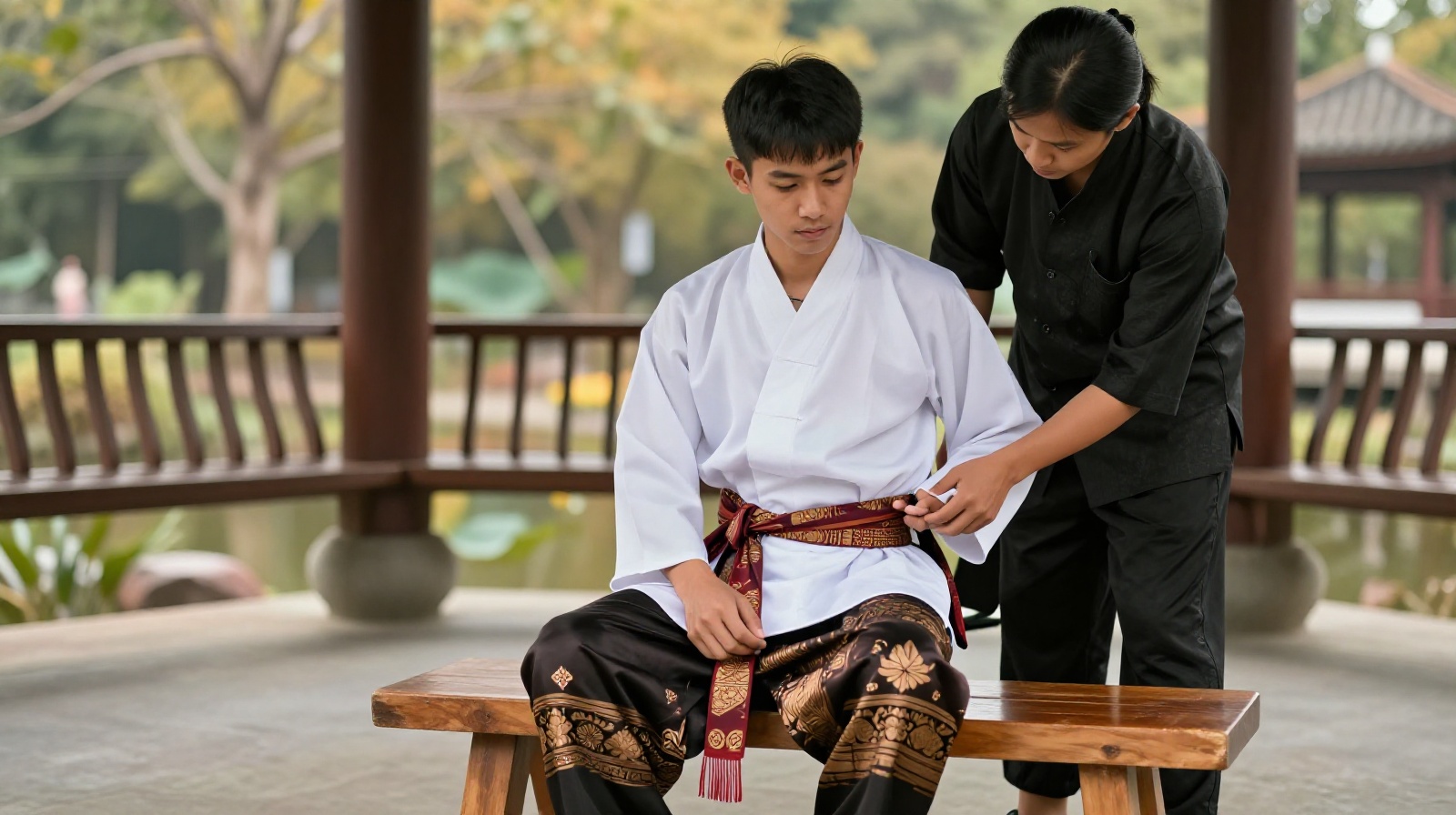
What struck me most wasn’t just the beautiful costumes, but the ritualistic way they changed. In a corner of the pavilion, I watched a young man sit on a low stool while an assistant helped him tie a complex sash around his waist. The process took ten minutes. It wasn’t rushed.
“It’s about respect,” he told me later, pulling down the wide sleeves of his robe. “In modern life, we wear T-shirts and run. But when I put this on, I have to walk slower. I have to think about how my hands move. It reminds me that there was a time when every gesture had meaning.”
This is the core of the Hanfu movement in China today. For many young people, wearing traditional clothing isn’t just about cosplay or aesthetics; it’s a deliberate attempt to reconnect with a cultural rhythm that feels lost in the rush of high-speed digital life. They are trying to reclaim the “ritual”—the idea that how you dress and move matters.
Where Ancient Silence Meets Modern Noise
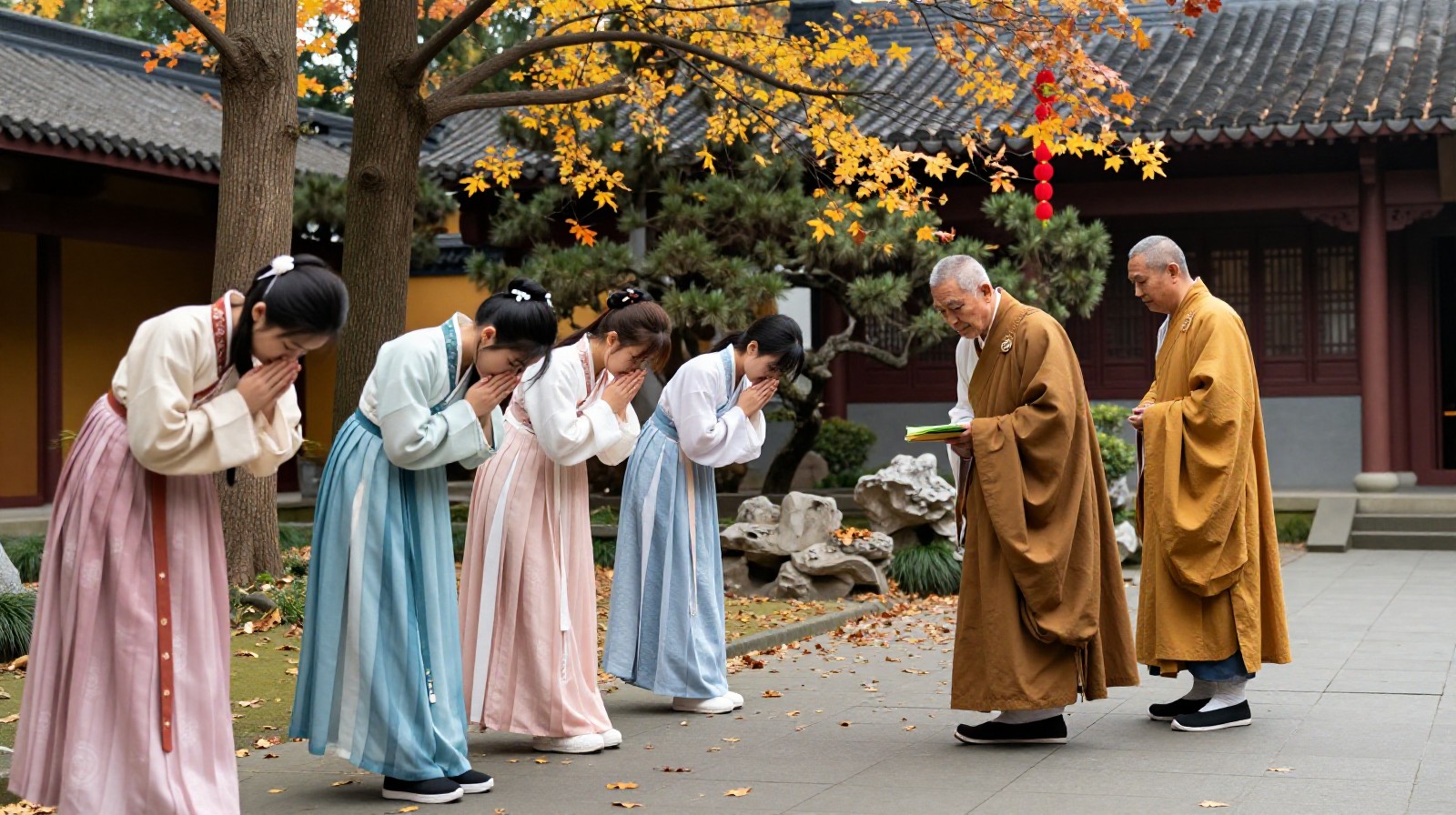
Sitting on the temple steps, watching a group practice a traditional bowing ceremony before taking their first shot, I noticed something interesting. The atmosphere wasn’t mocking the sacred space; it was trying to inhabit it.
The temple abbot had actually given permission for this specific shoot, a quiet nod from the elders that surprised me. In many places today, religious sites and youth subcultures are seen as opposites. But here, the dynamic was different. The young people lowered their voices when entering the main hall. They treated the ancient pillars with the same care one might show in a museum.
“People think we just want to take cool pictures,” said Mei, the lead photographer, wiping dust off her lens. “But for us, this is how culture lives. If we don’t bring our generation into these old spaces, they become dead museums. We need to make them alive again with our own stories.”
There was a moment of shared understanding when a group of local monks walked through the garden and paused to watch. There were no awkward stares. One young model bowed deeply to an elder monk, who nodded back slowly. It wasn’t a performance; it felt like two different generations meeting in a neutral ground.
Beyond the Stereotypes
For outsiders, China often feels like a country of futuristic skylines and neon lights. But this afternoon, in that quiet courtyard, I saw something else entirely. Here was a generation that is obsessed with history, not as a distant textbook subject, but as a living practice.
This isn’t about rejecting modernity. You can see the young people checking their phones between shots, laughing at memes on social media, and wearing sneakers under their silk robes. They are bridging two worlds. The Hanfu movement is proof that tradition in China isn’t static; it’s evolving, adapting, and finding new ways to be relevant.
As we left the temple, the sun was setting, casting long shadows across the stone floor. The photoshoot was winding down, but the feeling of time travel remained. We hadn’t just watched a photoshoot; we had witnessed a conversation between the past and the present, mediated by a group of young people who refuse to let history fade away.