
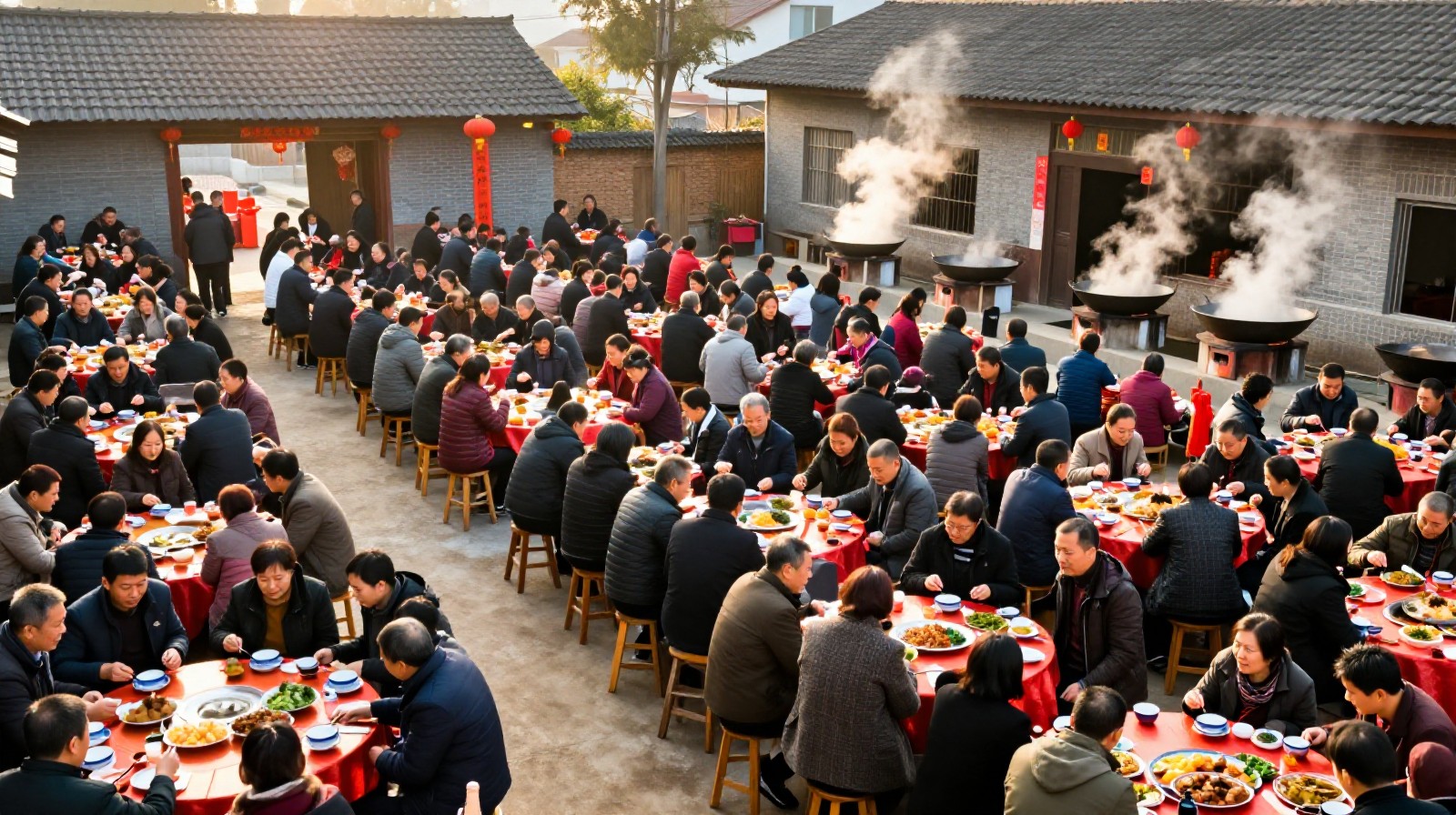

The Smell of Smoke and Pork at Dawn
It is 5:30 AM in a village near Hefei, Anhui province. The air is already thick with the scent of burning wood and frying pork belly. While most cities are just waking up to quiet streets, this rural community is already in full motion.
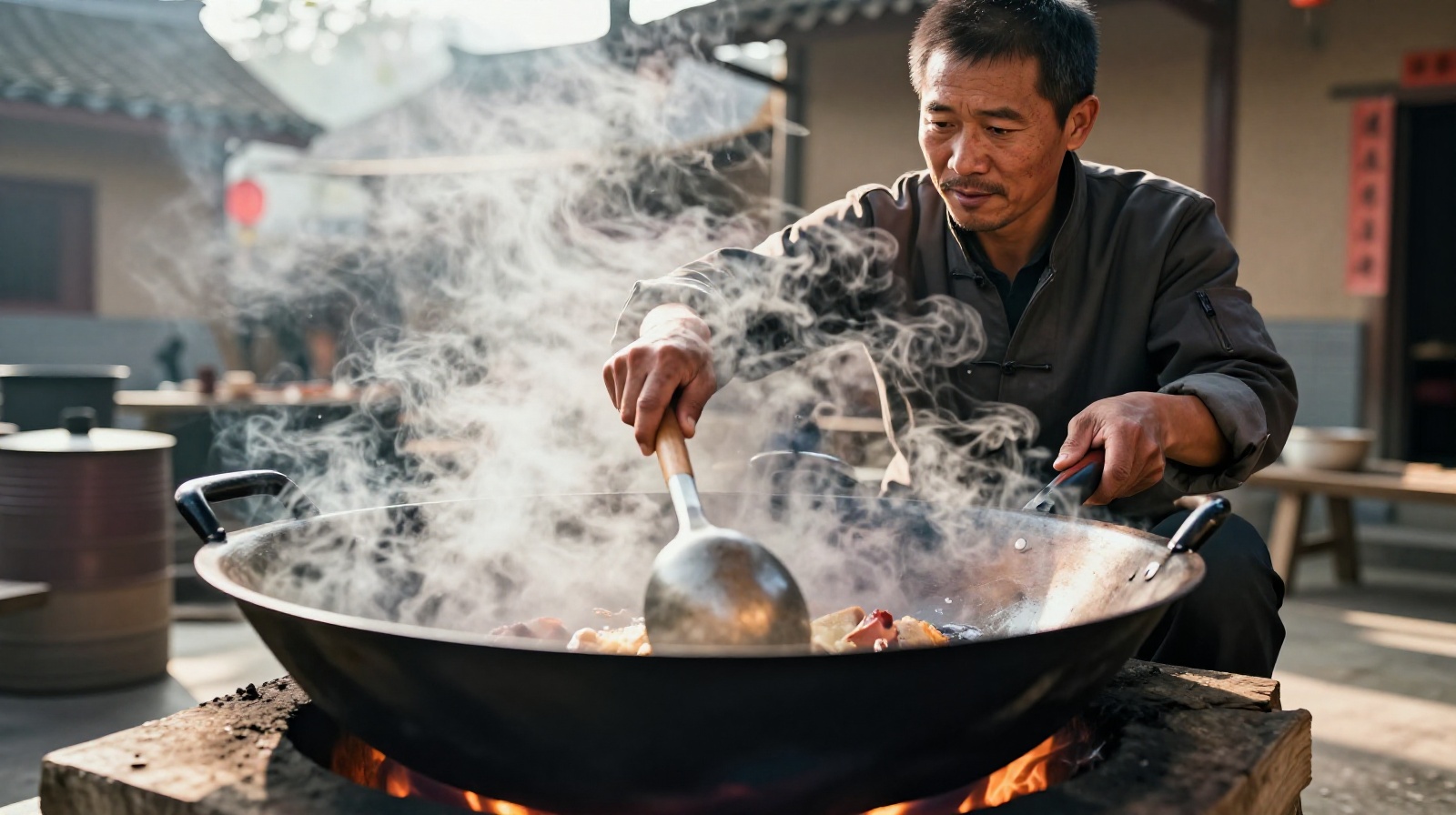
Twenty meters long, a makeshift banquet table stretches across the village square. It’s not set for one meal; it will host hundreds of guests over three days. The “head chef” isn’t a professional from a restaurant chain but Uncle Liu, a local farmer with calloused hands and a reputation for feeding thousands. He stands before a series of massive woks fueled by wood-fired stoves, shouting instructions to a crew of ten.
This is the liushui xi, or “running water banquet.” The name comes from the relentless flow of food: dishes are served in rapid succession without stopping, ensuring guests never leave hungry. For three days, the village transforms into an open-air kitchen.
The Village as a Single Organism
What strikes a visitor most is not the quantity of food, but who is cooking it. In a typical Western wedding, you might see a hired catering team or a professional chef in a pristine white uniform. Here, the staff includes Uncle Liu’s wife chopping vegetables, his teenage son managing the fire, and neighbors from three villages over coming to wash dishes.
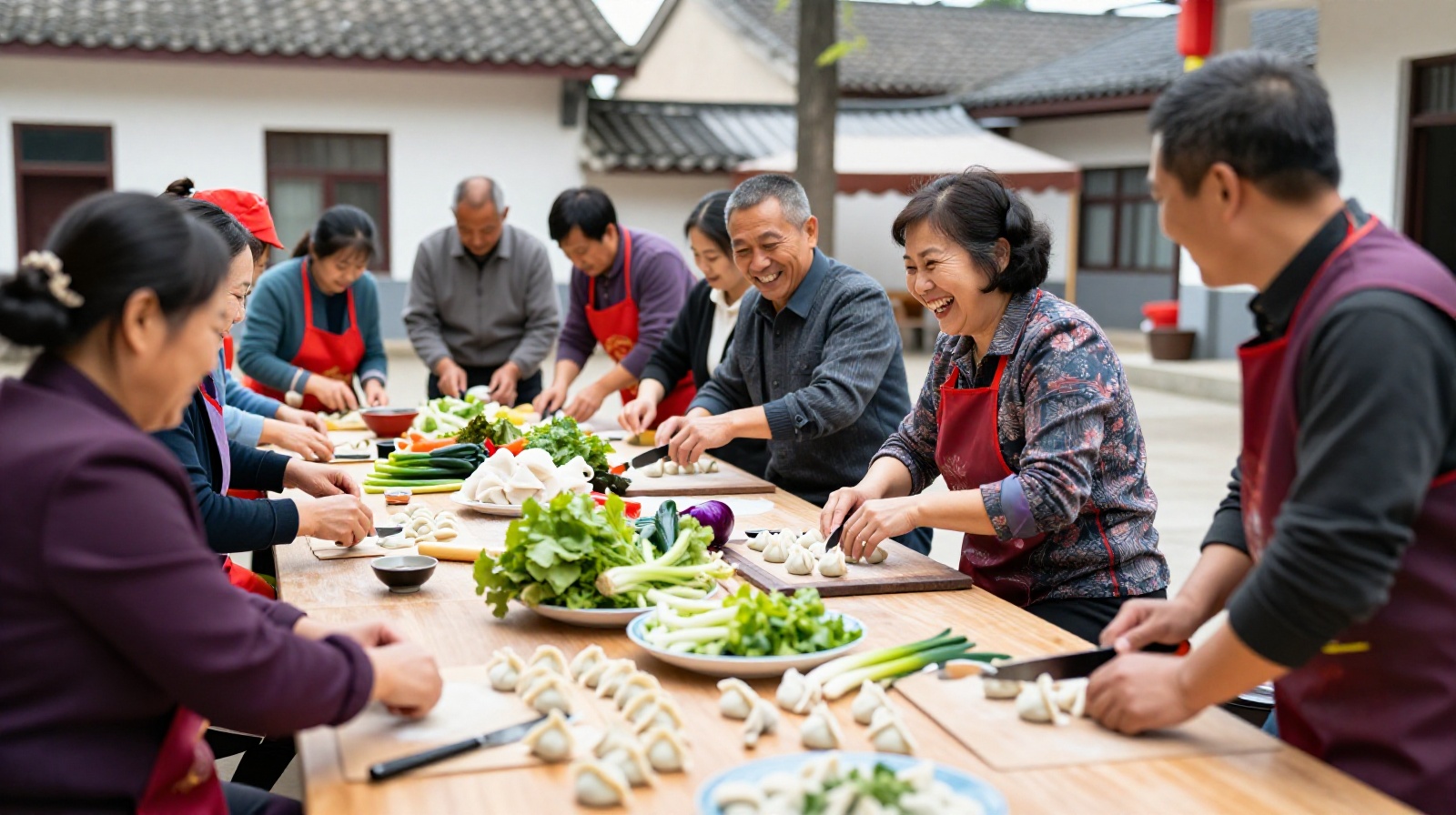
There is no division between “host” and “guest.” Once a task is done—washing rice, peeling potatoes, or folding dumpling wrappers—the person immediately joins the next line. This is cun bang hu, literally “village helps household,” but in practice, it means the entire community mobilizes for a single family’s milestone.
“If my son gets married, everyone will be at my door tomorrow,” says Auntie Zhang, wiping her hands on an apron stained with soy sauce. “It is how we live. If you help them now, they help you later.”
The Social Glue of Collective Cooking
This system isn’t just about saving money; it’s the primary mechanism for maintaining social cohesion in rural China. In a country where urbanization has pulled millions away from their ancestral lands, these weddings act as an annual reset button for community bonds.
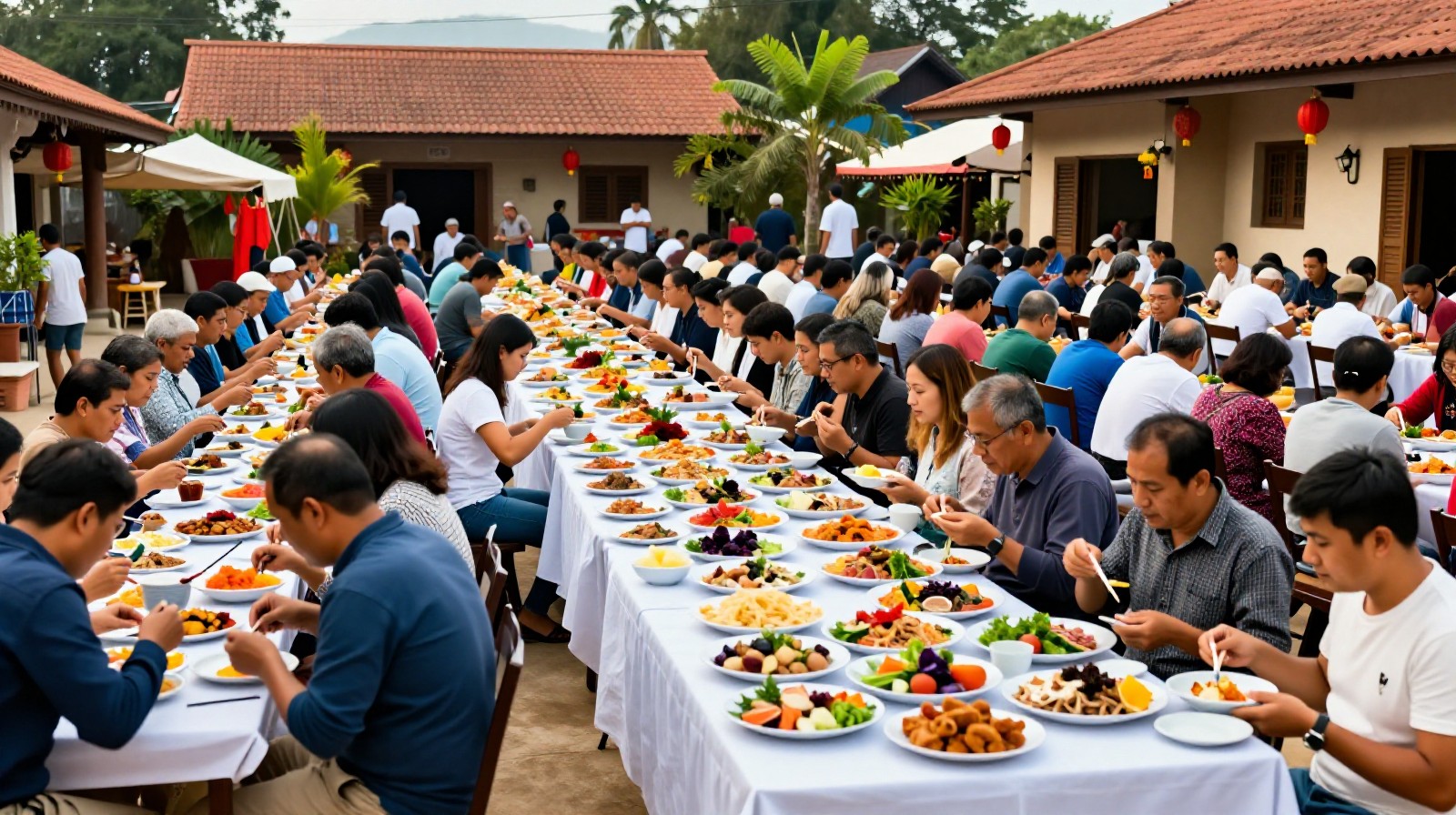
The logistics are staggering. To feed 1,000 people over three days requires processing tons of vegetables and meat daily. The division of labor is precise: one group butchers the pig, another boils broth in cauldrons the size of small cars, and a third arranges hundreds of plates with surgical precision.
The result is a meal that tastes different from anything served in a city restaurant. The food is cooked over wood fire, imparting a smoky depth that gas stoves cannot replicate. But more importantly, every dish carries the energy of dozens of hands working in unison. It is a tangible expression of trust and reciprocity.
Modern Challenges to an Ancient Tradition
However, this tradition faces pressure from modernity. As young people migrate to cities like Shanghai or Shenzhen for work, fewer are available to volunteer their time.

In some villages, the old ways are being replaced by pre-made ingredients. You might see a professional catering truck arrive on day one, unloading trays of frozen dumplings and pre-cooked sauces. While this reduces the physical burden on neighbors, purists argue it strips the event of its soul.
“The food is fine,” says Uncle Liu, stirring a massive pot of stew. “But the spirit is gone when everyone leaves early to check their phones instead of helping us chop.”
A Lasting Ritual in a Changing World
Yet, the core tradition remains resilient. In many places, families still insist on hiring local villagers for at least part of the cooking process. The three-day feast continues to be the most anticipated event in the village calendar.
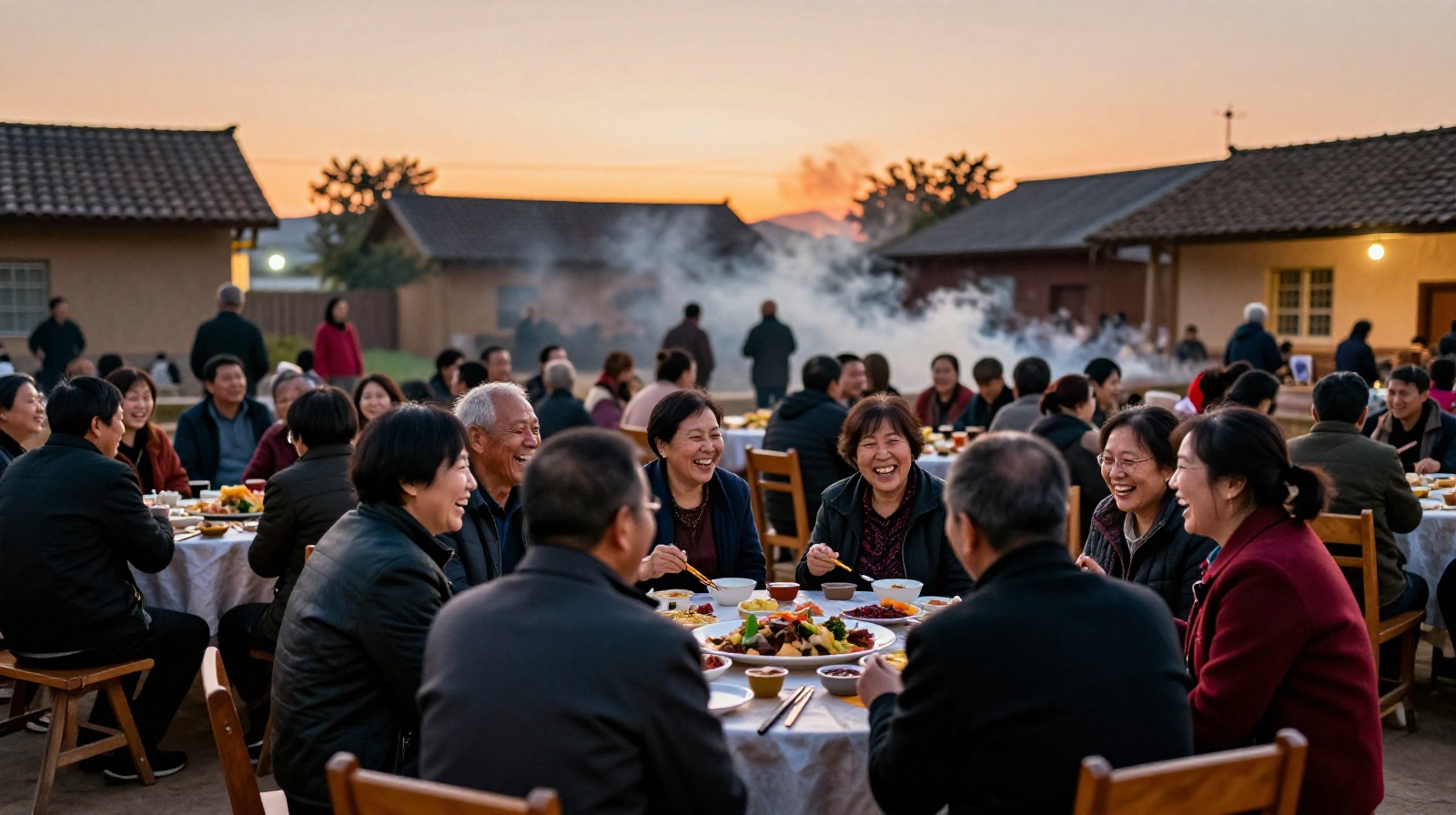
As the sun sets on the second day, the long tables are cleared for a final round of guests. Laughter echoes off the brick walls, and the smell of garlic and chili oil lingers in the humid air. For these three days, the village is not just a collection of houses; it is a single, breathing family.
Whether this tradition survives another century remains to be seen, but for now, the smoke from the wood fires still marks the rhythm of rural life—a reminder that even as China modernizes, the need for community remains deeply human.